Thursday, April 20, 2023

Tackling 'in defence of good grammar'

One of the text extracts that I linked to in this post, was a piece called In Defence of Good Grammar, written by James Innes-Smith for The Critic website, which bills itself as a "monthly magazine for politics, ideas, art, literature and much more". 

The language pieces on there are not very frequent but, when they do appear, seem to me to be a mixed bag. Some of them recycle quite common prescriptive positions. So there's this one from April 2023 which starts off by complaining about supposed Americanisms in the English language before firmly aiming its fire at just Americans more generally.  It even manages to include a language discourses greatest hits in this paragraph: 

Turn on the wireless at any hour, and you may think this country has been infected by a linguistic virus. Words and phrases that were once regarded as intrusive Americanisms have become commonplace. Curveball (what’s wrong with bouncer?) and stepping up to the plate (taking a fresh guard?) are daily horrors which merit six firm strokes of the cane.  

Then there's this one which focuses on language and class through the lens of Angela Rayner's non-standard grammar. But then you also see a few others - like this one on accommodation, class and downwards convergence - which are a bit more linguistically descriptive in their outlook. 

But it's the other article on Angela Rayner and language 'standards' that I want to focus on here, so what follows is an attempt to offer a few things: a bit of analysis, some discussion of some of the techniques and language choices being used and a couple of suggestions about where this article and some of its ideas might sit within wider discourses about language. 

You can probably tell that I've taken quite a critical stance towards it but you may well want to look at it from other perspectives and see if some of its arguments can be supported linguistically or if they might be seen as being more coherent and well-supported than I thought. Towards the end, there are also a few suggestions for other extracts in the article that you could analyse and evaluate. Anyway, here goes...

Sub-editorial features


Title immediately suggests a discourse of conflict: a defence is being made against some kind of attack.

The standfirst presupposes that Angela Rayner is torturing our language and the only question up for debate is why she needs to be stopped.

Interesting choice of verb in ‘torturing’: language is being represented as the victim of a painful process. 

Who is the ‘we’ in ‘our language’ and why has this possessive determiner been chosen? What might be the implications around the portrayal of those who are not part of the 'we', 1st person plural, group?


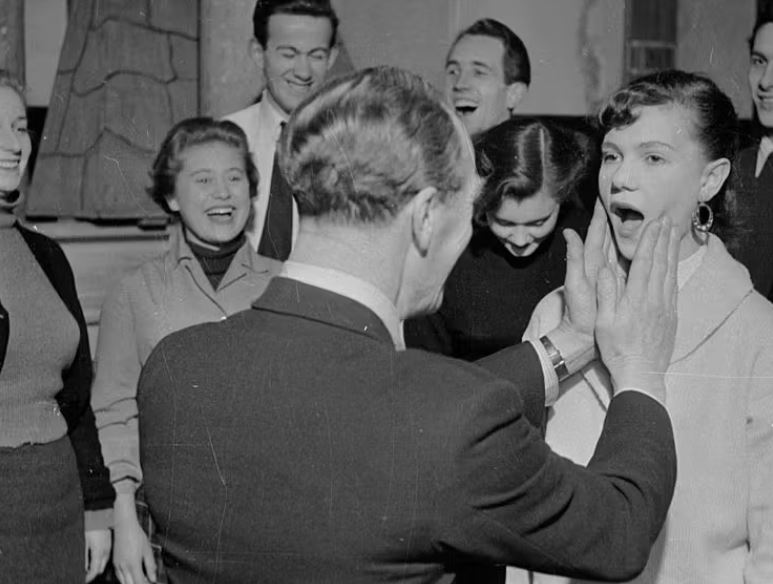
The image (from 1954) is in black and white and presents an elocution lesson. 

Is this the era the writer wants us to return to? A post-war utopia where people were happy to be taught how to speak ‘properly’? A simpler time when rules were rules and everyone followed them? 

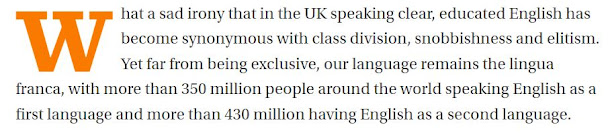
Opening paragraph


  • What is the language issue and how is it being represented here? 
  • Interesting modifiers in this noun phrase: clear, educated English. Why choose these? 
  • And what do we make of these choices of abstract noun? class division, snobbishness and elitism

The second sentence uses a coordinating conjunction as a discourse marker to establish a counter-argument to the position in the first sentence. The idea here seems to be that clear, educated English isn’t ‘exclusive’: it’s welcoming and inclusive. I wonder what the writer of this piece would think about the varieties and styles of English used by many of those close to a billion people…

Selected extracts: 1

…and yes, I do believe “speaking well” has value however unfashionable that may sound.

Have a look at the positioning being used here. 

How is the author representing himself to his readers? Bravely out of touch with modern society? Proud to be out of step with modern, ‘woke’ sensibilities? Traditional, conservative and proud to be upholding standards? 

But what is this fashion that he’s out of step with? We see, on a few occasions in this article, that he makes reference to what it’s supposed to be like these days, but we don’t see a lot of empirical evidence for that. 

Selected extracts: 2

In the UK there remains an underlying sense that speaking well is the sole preserve of a posh elite, which may explain the lack of educational rigour when it comes to teaching the language.

So, where’s the evidence for this claim? It sounds very certain: look at the modality of that first sentence – ‘there remains…’ – as if this is an undeniable fact. 

And in the next clause (speaking well is the sole preserve of a posh elite), it's the the same use of the declarative mood. The adjective choice too (‘sole’) seems to accentuate the exclusivity he claims to be opposing. 

And what about the final clauses. Does that ring true? Ten- and eleven-year-olds in the UK do grammar tests… you’re doing an A level that involves some quite hardcore grammar. But no, this is a lack of ‘educational rigour’. 

And what of the emerging discourses? We started with one around conflict and now we’re into ones around rigour and permissiveness, good versus bad, right versus wrong. It’s a fairly familiar prescriptive discourse.

Selected extracts: 3

By this paragraph, we are well into some fairly common anecdotes about young people these days…

You may have noticed the extent of adolescent inarticulacy when listening to school leavers struggling to construct a coherent sentence without having to fall back on verbal ticks such as “like”, “innit” and “you know what I mean?” Yet this pummelling at the foundations of communication is by no means limited to the less well educated.


The use of ‘pummelling at the foundations of communication’ seems quite hyperbolic as well: as if the very basis of communication is being attacked by young people’s ill-educated language choices. 

And a few lines later, you could analyse the representation of ‘street’ language – whatever that might mean in this context – through the adjectives used in the examples of ‘mangles phrasing and sloppy grammar’. 

Selected extracts: 4

By the time we get to the rather predictable George Bernard Shaw quotation and the author’s assertion that ‘this embarrassment about the way we speak has become endemic’, we are firmly into the kind of language discourse you’ll have seen many times before: language styles and variations as a disease. 

‘Endemic’ has less wide-ranging connotations than ‘pandemic’ but still implies that something has become widespread in a certain community and that’s quite an interesting theme in this article, because the author reflects quite a lot on this problem that he’s identified as being an English thing: a modern English disease, perhaps? 

Does this suggest that his theme - that 'we' are squeamish about 'good grammar' is a modern development and one we should jettison?

Other sections to look at

There’s plenty more to analyse in this article but I’ll leave you with these final extracts to think about.

Look how opposing ideas have been represented here, the metaphors being used and their implications if you take them to their logical conclusions. 

How fair or accurate do you think this might be, when you think about some of the linguistic arguments you’ve explored on your course? 

Instead of lowering standards to meet ideological whims and cultural and class sensitivities we should be lifting young people out of the prison of low expectation and equipping them with the tools they need to live a rich and communicative life.

And what about the discourses conveyed through the metaphor choices in these two extracts? What kind of arguments about language and society are being advanced?


What language deconstructionists fail to acknowledge is that without these vital literacy skills, children will always struggle to find purpose and meaning. By allowing language to become part of the culture war we deny children access to the great works of literature as well as limiting their chances of gainful employment.


Angela Rayner may have lucked out but millions of working class people remain trapped in systemic disadvantage brought about by a lack of will on the part of teachers and parents to instil a love of language.

...without fluency of language, they will remain trapped in a cycle of ignorance and poverty...


Analysing texts about language

While I'm doing posts about Section B of Paper 2, I'd better mention the kinds of texts that appear here and that you have to analyse and respond to. They're often (but not always) articles from newspapers and online sources, but can also be book extracts or something like, as was the case of the 2019 paper, an article from an accent tutoring website. I've summarised a few of the others below: 

  • An extract from an online piece equating political correctness with ‘thought control’ and a blog post complaining about ‘Orwellian’ language reform.
  • A feature article from the Mail Online focusing on young women’s speech and a feature article from The Guardian complaining that young women won’t be taken seriously unless they change the way they speak.
  • An extract from The Telegraph reporting on the use of emojis in writing making people appear ‘incompetent’ and an extract from an online student newspaper complaining about emojis ‘destroying’ the language.
  • An extract from a 2002 Independent article about English as a world language and an introduction to a book from 2017 complaining about American English. 

What you'll probably see from these texts is that many of them come from a position of criticising or complaining about an aspect of language change or diversity, often with a prescriptive slant to them, and that they are often open to linguistically-informed criticism and challenge. Not all of them are totally unreasonable rants; in fact some of them are carefully assembled to foreground opposing and contrasting views. The 2022 paper even had a text that included a 'head to head' style article as one of its texts, where two opposing language commentators argued their cases. 

Bear in mind too, that you're being assessed using 3 AOs in Question 3, so you'll need to be approaching these texts from a few different angles, such as:

  • what aspects of language the texts are focusing on
  • what arguments and views about language are being presented to the readers and what we might be supposed to make of that
  • how these views about language might fit into the bigger picture of language discourses we see in debates about language out there in the world all the time
  • how the text producers are using language to represent the issues 
  • how the text producers represent themselves and try to convince the reader of their views
  • how the texts might be connected: how are they handling the theme, approaching it similarly/differently etc?
Here are a couple of recent texts that might make for some good material for analysis. I've chosen ones that I think link nicely to wider discourses about language (perhaps you can spot a few of those discourses straight away and dig deeper for others) and ones that have a pretty clear view. I'll post a few more in days to come where it's a bit more subtle, as I think you need to be prepared for that too. 


If anyone is interested in discussing these texts and what you make of them, I'll start a thread on the @EngLangBlog Twitter feed so you can reply with observations, points and questions. 

Wednesday, April 19, 2023

Specialist knowledge for non-specialist readers

Yesterday, I posted a few links to articles that I thought were pretty good examples of opinion pieces about language. There's always a bit of a caveat with this kind of advice though, because the activity you're engaged in during the exam is basically an exercise to secure marks from the available assessment objectives, rather than actually write something for publication and payment. 

That's why you need to be a little bit careful about using anything as an exact style model; while there are really informative and linguistically-informed pieces out there (and I think there's lots of good stuff in the ones I posted), they can also be a little bit thin on language detail and you need to provide that to get your 20 marks from AO2. 

What you might want to do - as well as looking at how those opinion pieces work - is have a mosey on over to The Conversation website, where linguists (and psychologists and many other experts) write about their research for non-specialist readers.  What you'll be able to see from many of the excellent articles there is how complicated and technical ideas can be explained clearly to people who don't necessarily work in the field. 

Some of my favourites also happen to be from some of my favourite linguists...

Rob Drummond on regional accent attitudes

Grammar pedants and fashion victims

Amanda Cole on attitudes to working class and ethnic minority accents

Posh Spice and accent change

Devyani Sharma on accent attitudes in the workplace 


Tuesday, April 18, 2023

Opinion pieces for exam revision

 As you get ready for the exam season this summer, it's a good idea to read lots of opinion pieces to soak up the features of the genre: the style, structure, sub-editorial choices and the ways that arguments are constructed, among them. 

It probably helps too to focus most of that reading and preparation on opinion pieces about language, because that's the course you're studying and what you're going to be writing about. So, here are a few suggestions for recent pieces about language that you might find useful. 

It's worth bearing in mind that in your exam, AO5 is worth 10 marks and AO2 20 marks, so you probably want to err on the side of caution with the language content and maybe offer a little bit more knowledge about language and ideas from language study than a few of these, while also making sure that every bit of language knowledge and research that you introduce is made accessible to your target readers. 

London Evening Standard piece on MLE

The i on MLE

Indy Voices on regional accent pride

A Nov 22 piece on the language round migration

An older (2015) Guardian piece on the language associated with migration

Next time round, I'll suggest a few recent pieces that could be useful for a bit of analysis for Question 3 on Paper 2. 


Friday, December 16, 2022

Getting the Word Out 2022

WOTY (Word of the Year) Season is in full swing and the lists from the various dictionaries and organisations who produce them, along with the blogs, the explainers and articles in the press about them are always a useful resource for the A Level, especially when looking at Language Change. 

I'll put together a fairly comprehensive set of links next week to all the stories I've come across, but in the meantime, here's a link to a piece I wrote for The Independent about WOTY2022. 

These stories (that aren't mentioned in my article) are also worth a look:

Gaslighting

Woman and woman again

Goblin mode and more goblin mode

Hybrid work

There's also the American Dialect Society's WOTY2022 to look forward to which is probably one of the most exciting dates on the linguistic calendar. Last year's overall WOTY for them was insurrection

Thursday, November 24, 2022

Accent bias: a guest blog for TEFL Workers' Union

I don't normally blog opinion pieces on here but thought I'd share this one as I was asked to write a few things for the TEFL Workers' Union (here on Twitter and here on Facebook) on language discrimination. (And A level students might find it a useful model to look at/critique!)

Accent bias is real and affects people in tangible social and economic ways. Worst affected – according to the research – are those from working class and/or racialized minorities, as well as younger people starting off at university and in the workplace.

For many people, the accent norm is seen as a southern, often RP, voice, but the reality is that the majority of people in the UK don’t have those kinds of accent. ‘Regional’ accents associated with industrial cities are often among the most stigmatized.

Accent bias is about more than just a few jokes and hurt feelings: it’s about making people feel they are not good enough, making them feel like they need to change to ‘fit in’, and about overlooking people’s potential, expertise and intelligence, all because of lazy stereotypes.

The problem is obviously widespread & structural too. Attitudes to accent are often more about attitudes to social groups, so the language is often just an index of that. Interviews we’ve done on the Lexis podcast with language experts like Devyani Sharma, Amanda Cole and Lauren White all show this. 

Educators have an important role to play in fighting back against accent bias and all it entails. We can’t argue for equality of opportunity on one hand and uphold reactionary and discriminatory language attitudes on the other. It’s incumbent on all of us working in education to challenge this inequality.

While it’s usually good news for language educators to see issues about language prejudice getting an airing in the media, it also tends to show the gulf between what linguists think about language and what the general public thinks.

Last week, various newspapers and online outlets ran stories on the publication of a report from The Sutton Trust about accent bias in the UK. The report featured work from linguists on the Accent Bias Britain project at QMUL.

The findings made pretty grim reading: 30% of university students and 25% of professionals in workplaces said their accents had been mocked, while similar percentages felt self-conscious about their accent.

There was also a pattern of accents belonging to racialized minorities and people from working class backgrounds reporting more mockery of their varieties, leading to some people feeling a stronger need to change their accent to fit in.

Tellingly, even when responding using exactly the same words, accents indexed as working class and/or minority ethnic were rated as lower for professional expertise and competence. Of course, who these lower ratings came from were interesting too… mostly southern and upper class people.

None of this is particularly new: accent bias studies have been conducted for the best part of 50 years (and the Accent Bias Britain site is excellent for mapping and summarizing these studies) and the accent hierarchy of the UK seems deeply entrenched, along class, ethnic and regional lines.

What then can linguists and the wider education community do to challenge this? There are positive noises from the project about making people aware that accent bias exists and to be conscious of it, and that seems to have an effect on responses straight away in professional settings.

The comments that followed many of these news articles give us an insight into what we’re up against. One tweeter offered the cry laugh emoji at the end of their deeply empathetic reply:  “Do you need to ask why anyone ‘would want’ to lose a brummie accent?”.

Others variously saw the report as some form of ‘wokeness’ (yawn) or an appalling lack of ‘resilience’ on the part of the respondents. ‘Get over it’, ‘deal with it’ and ‘it never did me any harm’ seemed to be the order of the day for many others, with reactionary narratives the norm.

The ‘it never did me any harm’ response is perhaps one of the laziest of all and brings to mind other favourites of the reactionary boomer - smacking, power cuts or even world wars (fought before they were born) among them - as things we should just get over without complaint.

What’s so lazy about this is the self-assurance that just because the person thinks it’s never done them any harm that no harm has been done. What about those opportunities you were never aware of because you’d been written off as unsuitable the moment you opened your mouth?

When presented with research like this showing that accent prejudice is rife and has real world consequences - denial of opportunity and equal opportunities for large parts of the population – we’ve really got to do better than writing it off as the hurt feelings of woke Gen Z snowflakes.

Language bias and discrimination is an issue that is at the heart of a lot of work that language educators get involved in education to fight against – often because we come from backgrounds that bear the brunt of these prejudices but also because it’s about fairness and equality. And kicking back against reactionary narratives around accent bias, challenging prevailing popular discourses and offering a critical and socially just response is something that I think is incumbent on us all to offer.

Tuesday, November 08, 2022

Accent attitudes: lessons in discourses

As I posted a day or two back, accent attitudes have been back in the news. Following a report from The Sutton Trust, using research from the team behind Accent Bias Britain, various newspapers and online sources decided to cover the broad findings of the report and discuss attitudes to UK regional accents and those associated with people from working class and/or racially minoritised backgrounds.

Accent stories are pretty popular in the press and we’ve seen a lot of coverage of them in the last year or two. Whether it was the attacks on TV presenter and footballer Alex Scott for her pronunciation of -ing, BBC presenter Amol Rajan’s appeal for a wider variety of accents at the BBC or Artificial Intelligence being used to make call centre workers sound ‘whiter’, accents get you clicks. And in the (anti) social media hellscape (thanks Elon) that we’re heading into in 2022, a lot of those clicks are hateclicks.

While the stories and op-eds are pretty good sources for A Level students to analyse and evaluate and even use as style models, the replies and online comments are more visceral… and sometimes pretty vile. But having said that, they are useful short texts to pull apart in class, so here are a few ideas for what to do with them.

1. Assemble a cline of contempt: take each tweet/reply/comment and copy it onto a grid where you can cut them out and line them up. Rank them in order of their negativity to the linguistic position being discussed. Is this one more negative about certain accents than this one? How can we tell? Are they equally awful but just focusing on different things?

2. Group them into patterns of peevery: what are the themes behind their complaints? Are they annoyed at the absolute wokeness of a linguist even arguing that there such a thing as accent bias, or just annoyed that young people are being sensitive about accents? Group them into shared themes and discuss what these concerns might tell us about these language discourses.

3. Analyse them for discourses of doom: blow up each message onto a sheet of A4 and pull them apart linguistically, annotating them and using your three AOs for P2Q3 as a guide. AO3 for meanings and what is being represented, along with the discourses being tapped into and reproduced; AO1 for linguistic descriptions of the techniques and structures being used; AO4 for connections between these texts and the wider discourses you have identified in previous lessons, and perhaps even connections to the other texts as your analysis develops. Maybe you could even start to write comparative analytical paragraphs on two or more messages. 

4. Answer back: choose a couple of texts that you can respond to and use this as practice for your P2Q4 work (where you write an opinion piece in response to the issues raised in the texts from P2Q3). Write back to the message. Perhaps you could discipline yourself to just sticking to the length of a tweet or a couple of sentences; perhaps you could develop this into a couple of paragraphs. Think too of how you can show your AO2 knowledge to challenge uninformed and prescriptive views of language. If you see a message that you think is actually right about something but not very well-supported, think about how you can develop a more linguistically informed way of phrasing it, by referencing research, theory and examples from case studies.

5. Ask what they're on: "I'm not earth to bow to ridiculOus", I ask you....

Here are a few anonymised responses to the accent stories that you might want to use.


And of course, before social media existed, we had letters to the editor (ask your gran) and some of these were nicely crafted. You still find them in the wild occasionally, like here in The Guardian. So these could be mixed in too to spread the range and offer some more rhyme and reason.   

Thursday, November 03, 2022

Accent bias in the media

It's been a while, sorry! Most of the posts I used to add here seemed simpler to do as tweets, linking to news stories, but I might start blogging more regularly again as Twitter seems to be taking a turn for the worse. 

Anyway, here's a load of stories and links connected to a recent report from The Sutton Trust and using research by Accent Bias Britain into... well, accent bias, as you might expect. The Sutton Trust tweeted about it here as well. 

BBC story

Sky News

Guardian

A Guardian comment piece on it

I might come back to the comments and replies another time and we'll probably address some of this in a future episode of Lexis

Nice YouTube explainer here from Devyani Sharma too.


And an unconnected accent piece from a day or two back: James Bond


Wednesday, June 02, 2021

What Opportunities can Technology afford beyond the Pandemic?

This is a guest blog by Dr. Clara Vaz Bauler is an associate professor of TESOL/Bilingual Education at Adelphi University, New York. Thanks to Clara for writing this and for the ideas shared here.

Typical, face-to-face learning environments offer advantages that online learning does not. The same can be said for online learning. This year, in the midst of the chaos of the pandemic and the rushed changes I had to make, I was pleasantly surprised by the many new opportunities my students and I had to communicate and share ideas. I could see all my students’ names and learn how to pronounce them by having students share on Flipgrid. This same video platform also allowed me and my students to share about ourselves without worrying about class time or period ending, as we could post videos and comments on our own pace. Above all, I could see and hear my students’ thinking in online discussions as ALL contributed their ideas. 

As “Zoom classrooms” can be very frustrating with distracting noises, intrusion to privacy, and wifi interruptions, it is only natural that we blame the online medium for everything that went wrong in education during the pandemic. However, if we stop and ponder about what fundamentally constitutes the educational experience, especially the relationship between teachers and students, online spaces have much to offer. Online pedagogical practices have the potential to amplify student participation in ways that typical face-to-face environments cannot. So, it is imperative that we take this opportunity to engage in deep reflection about the possibilities technology can offer as we transition to physical buildings and face-to-face environments. Here are a few of my own reflections.

Multiple “Entry Points”

One of the main dilemmas I faced during remote learning was the use of cameras in my class. At first, I quickly condemned the online environment for my students’ apparent lack of participation. However, in digging deeper, I realized that the disruption of typical classroom practices aligned with the stressful conditions of the pandemic might have been a source of anxiety to my students. Instead of focusing on what my students could not do, I started rethinking how I was organizing my virtual synchronous meetings, paying close attention to alternative ways my students could actively engage. This reflection prompted me to reimagine what participation might look like given our difficult circumstances. I found out that helpful alternatives to cameras on included multiple “entry points” for participation based on choice and non-verbal modalities. I started experimenting with multimodal tools, using Jamboard to share emotions and brainstorm and Pear Deck to express ideas via drawing, labeling and polling. 

Digital media also helped me foster and support self-expression by allowing students to post images, GIFs, memes, and videos on Padlet. Visuals are widely used for “comprehensible input” or for language receptive tasks. However, there is tremendous power in also using images, drawings and charts for language production. These symbolic tools afford students multiple possibilities to express meaning. Flexibility is key. Below is how we used Padlet to share a create a multimodal class glossary.

Equity and inclusion demand  re-examination of our practices. It can be hard to teach with cameras off or to change the ways we organize spaces for education, but allowing multiple entry points to the lesson enabled ALL students to engage. In the face-to-face classroom, students should also have the option of “turning their cameras off.” As teachers, we can focus less on the (often) few students who raise their hands and more on providing a space for EVERYONE to share input, either via writing, drawing or choosing from the many languages students speak. Multilingual learners especially benefit from this rich multimodal environment as they are able to tap into both their linguistic and semiotic resources to engage with varied types of literacy. This flexibility helps in developing reading, writing and vocabulary (Ascenzi-Moreno, Güílamo, & Vogel, 2020). To me, making slides interactive, manipulating and actively using texts, images and symbols to communicate have become indispensable for fostering an equitable and inclusive environment. 

A Room for Emotions

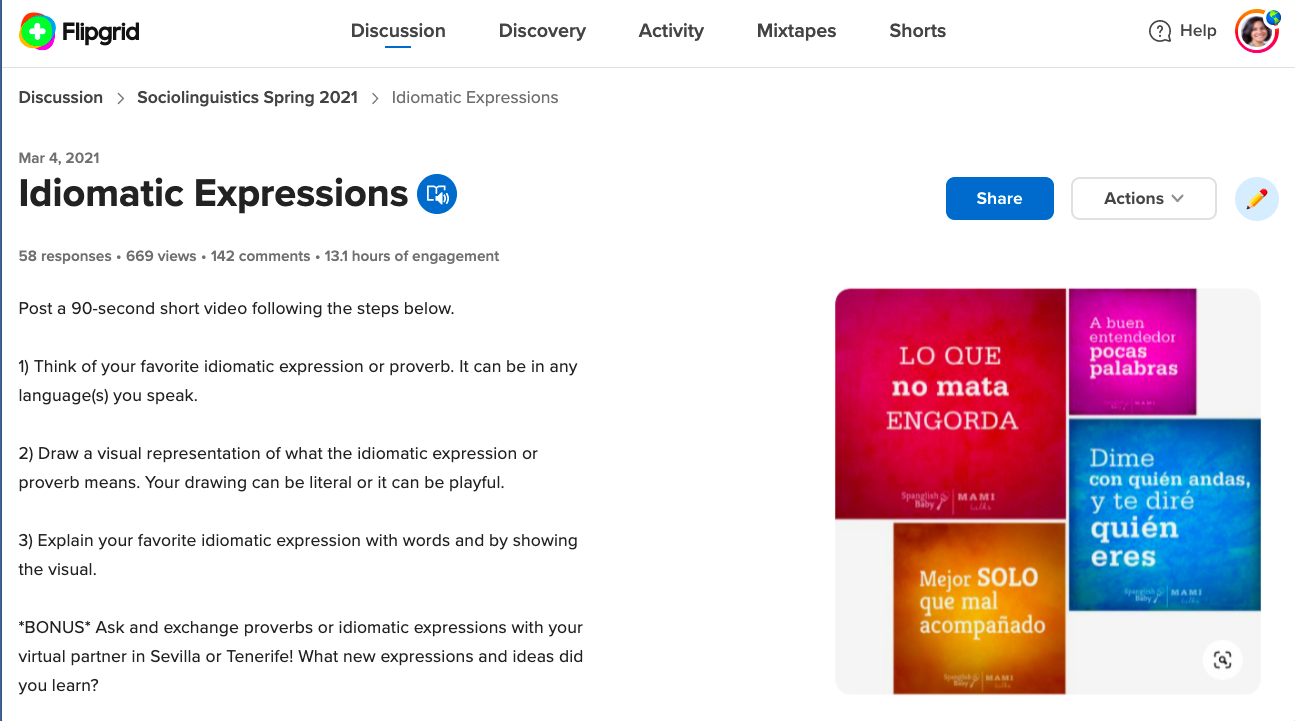
One of the most important things I lost in typical face-to-face teaching practices was the ability to connect and immediately attend to students’ feelings by just approaching students or saying hello. Although dramatically different from physical spaces, the virtual environment also became a place where my students and I could connect. In particular, Flipgrid was very helpful in providing a platform for community building. We shared weekly journals about ourselves, our languages, and our cultural practices. I also used Flipgrid to create a question corner where my students and I could drop videos about anything, from actual questions, to saying hello or provide comments on the topics for the week. When posting on Flipgrid, students could choose to keep cameras on or off. Below is one example of a weekly journal where we shared about our favorite idiomatic expressions.


Asynchronous video platforms such as Flipgrid are perfect for building and sustaining community as they are not bound by a class period time or physical space. Because of that we all had time to share and get to know each other more deeply. I can honestly say that without Flipgrid, I would not have had the opportunity to meet each one of my students as individuals as they shared their stories, expressed their emotions and revealed their personalities every week through short video messages. This is one of the dearest learning moments I had this year. For this reason, Flipgrid will remain my favorite digital tool which I will definitely continue to use in my face-to-face classes. 

Mimicking Social Media Conversations

I have always been a huge fan of online discussion boards and it is something I have always integrated with my face-to-face teaching. I even did my whole PhD dissertation on it! During the pandemic, I could experiment with different, more engaging ways, to mimic online discussion boards after social media conversations. I have always wanted to do that because I knew deep down that although great, discussion boards were still considered “assignments” my students needed to “turn in.” I wanted these discussions to feel real and authentic. So, this semester, I started designing online discussion boards very differently. I created routines that would encourage my students to be creative, rely on visuals to make meaning, straying away from the usual “paragraph” format. 

The routines involved responding to prompts based on readings and watching videos, as usual, but forced students to craft a more thoughtful post by having them create some sort of visual that would represent their thinking about the texts they were reading and videos they were seeing. We used word clouds, sketches and mind maps to summarize and illustrate our ideas. In addition, the post needed to be short. In some discussions we even experimented with the old 140-character Twitter format. Most importantly, specific prompts for commenting involved responding and reacting based on the visual thinking shared by peers. Below is one example of such discussion where students followed three steps to post and comment. They first took notes using the “I notice, I wonder” format; then they drew relationships and ideas using a physical notebook or google drawing tools. They shared their visual thinking as a screenshot, a very common practice on social media. Finally, they wrote a response to the prompt in Twitter format. The comments were focused on building upon insights, questions, reactions and opinions based on their peers’ sketches.  


Another advantage of online discussions was the personalization of the messages as we could access students’ profiles as they posted and shared their ideas, just like on social media. Most course management systems, such as Moodle, Google Classroom or Canvas, include a profile option. I often did not pay enough attention to them until the pandemic. The profile option was completely underutilized in my class. But with the need to connect and see each other during the pandemic, creating a profile became an important way students could get to know more about each other. It was also fun because the profile was very visible anytime students posted and looked each other up. Students created a complete Moodle profile that represented who they were. They were asked to include one image (e.g., best selfie, favorite pic or preferred symbol) and three things about themselves (e.g., favorite hobbies, subjects, places, languages you speak or would like to learn, music and food preferences, etc.). Below is an example of a creative student profile. 


Promoting democratic conversations requires active engagement in dialogue about controversial issues and divergent opinions. The classroom is often a place where we try to foster these types of conversations via socratic seminars and debates. However, the physical environment and the fast-paced schedule of the typical school day impose real constraints for equitable and inclusive democratic conversations. When we compare classroom discussions with the hot debates and conversations we witness on social media, the limits become even more evident. Online discussion boards have the potential to maximize dialogue as students can post on their own time, affording time to think and craft a careful argument in response to a prompt or a rebuttal from a peer. This discussion can be even more exciting if we employ social media strategies such as the use of shared texts, videos, visuals to enforce the message and a reason to continue the back and forth dialogue. I will continue to refine online discussion boards and use them as the main form of dialogue in my face-to-face classes as they allow for every student to voice their opinions in a personal and meaningful way. 

Final Thoughts...

This year, online learning offered me and my students alternatives to often rigid and frequently inequitable schooling practices. If we want to say face-to-face learning is better and there is nothing like having students in school in person, we need to rethink how we organize education spaces no to constrain and limit the kinds of interactions we want to foster. Surprisingly, online environments tend to offer more options for collaboration and participation for all students. This is especially true for many linguistically, culturally and racially diverse students, who can be particularly impacted by the lack of flexibility in a system that was not designed for adaptability and creativity, but conformity. I hope we can build upon important changes and discoveries we made during the pandemic. Let’s not rush to get back to “normal,” but use this opportunity to reimagine how we organize rich spaces for learning, using what works in both physical and virtual environments.  

References
Ascenzi-Moreno, L., Güílamo, A., & Vogel, S. (2020). Integrating Coding and Language Arts: A View into Sixth Graders' Multimodal and Multilingual Learning. Voices From the Middle, 27(4), 47-52.

Dr. Clara Vaz Bauler is an associate professor of TESOL/Bilingual Education at Adelphi University, New York. She has a Ph.D. in Education with emphasis in Applied Linguistics and Cultural Perspectives and Comparative Education from UCSB. Clara taught EFL and ESL for thirteen years before becoming a teacher educator. She is passionate about finding and implementing digital media technology to validate and leverage multilingual learners’ linguistic, cultural and racial assets. Dr. Bauler is the co-author of @aumultilingualism podcast with her multilingual freshman college students and is always sharing ideas about language learning and technology on Twitter @Clara Bauler.


Friday, April 09, 2021

Putting the F in NEA: making language investigations work

The latest guest blog comes from David Chew, a teacher in the East Midlands. Here he looks at how he approaches the NEA language investigation from its earliest ideas and inception through to the detailed analysis needed to make it work, and he looks at how the mysterious F score can add a new dimension to discussions of formality in texts. 

“It’s more maths and science than a literature essay.”  This is my opening announcement to a class of English Language students as we embark on the AQA Language Investigation NEA (coursework). The subsequent groans could fill a pandemically-induced empty football stadium.

In an attempt to shift students’ perceptions of having opted for an “Arts” based A level, I riff on about creating “a fair test” and identifying “measures of central tendency”.  I am fully aware, after teaching variations of this investigative language study for over 20 years now, that I need to shock Mark into realising that he will need to find something to count, count it and then report what the count tells him about language and language users.

Don’t worry. I hear your gasps of “you can’t reduce the niceties of language analysis to bean counting” and “where are your socio-linguistic sensibilities?”. We will come to that; especially since AO3 is the weightiest of the three AOs awarded to this study and trades marks for appreciation of contextual factors and meanings.

But Mark needs to understand this isn’t an essay; it isn’t a commentary; and it certainly isn’t a report. It is however a precursive experience to a university dissertation.

Assumptions challenged, the next pitfall is approach. There are two processes which students must engage in: conducting an investigation and writing about it.  These processes exist in a chicken and egg symbiosis. Do I teach one and assume the other will follow? If they don’t know how the writing will be structured, how can they cover all the bases when they launch themselves into investigating? If they haven’t assembled data and identified variables, how can they formulate a hypothesis? I tend towards spinning both plates at once, knowing that different students will develop their understanding of these processes in different ways.

And what to investigate? I advise students to go with what they know and enjoy. After all, they will be engaging with the material for several months: that’s a prison sentence if your teacher has foisted an idea onto you just because your initial reaction was “I don’t know what to investigate”.  So, will it be editorials in Horse and Hounds magazines? Perhaps you’ve noticed that sports commentaries on radio stations are more effusive than TV commentators. Your swimming coach has a different way of addressing the team competitors whether you are winning or losing. You’ve noticed that your young female cousin is learning to read faster than your little brother. You suspect that the talk on reality TV shows featuring young people doesn’t match what you have been told about 20th century theories of genderlect. 

However, I draw the lines at poetry and advertising slogans. Not because there isn’t anything to be discovered in these texts: there most certainly is. But you’ve got to write 2000 words covering at least two language levels (or systematic frameworks in old money) and “Guinness is good for you” repeated over the decades with different images of Toucans can only get you so far. Similarly, there is a post grad thesis to be had looking at the implicature of e e cummings dispensing with capitals, but not a successful A level NEA.

There’s always one, though. However much you encourage them to tell you about their latest loot box disappointment, their bilingual grandmother, or their moonlighting gig shelf-stacking on Fridays when they should be attending PSHE lessons, they will still succumb to the lure of an investigation into the comparison of tabloid and broadsheet newspapers. They don’t see any downside to this choice, even when they admit that they don’t read newspapers, and can you just remind them why the Guardian is a broadsheet anyway.

What have I learned over twenty years? A wise colleague transformed my teaching, and students’ outcomes, when she pointed out that moving from a general hypothesis to a detailed analysis was a bit of a stretch for the investigator and the reader.  So, the Queen’s Christmas broadcasts have become more informal during her 68-year reign, but what exactly will you look for to support this hunch? This is where a series of language level-based expectations come in. In terms of lexis, there will be fewer Latinate words now than there were in 1952.  There will be more colloquialisms in 2020 than ever before. And that use of first-person pronouns, unique to royalty (and Margaret Thatcher), might also have changed semantically. These organised, structured, and coded expectations then become the organising framework and structure for the analysis section. Everything is now set up clearly for the investigator to investigate and the reader to read.

Ideally you would start the investigation at the end of the two-year course. This would allow students to reference theories and theorists which they have already studied in Language and Gender, Child Language Acquisition, power, change, diversity etc. But this isn’t practical, so you’re faced with signposting students to ideas and concepts which they don’t yet know are relevant to their investigation. At this stage you are grateful that, although you don’t know much about anything, you do know a little about everything.  There is one theory, however, I discovered that you can bank on to bolster most investigations. One panacea theory; one magic bullet. That is the F Score. 

It’s great. It assigns numerical value to word classes based on whether the word class is deemed to be more formal or more informal. So, adjectives are more formal whilst adverbs are more informal. Students look at their data samples, identify the word classes being used, and apply a formula: [F = (noun frequency + adjective freq. + preposition freq. + article freq. – pronoun freq. – verb freq. – adverb freq. – interjection freq. + 100)/2]. Now they have a number for the degree of formality of each data set. We are talking charts, graphs, means, modes, medians, trendlines….. At this stage Mark wishes he had paid attention in GCSE maths. His classmate Sophie did pay attention though and, having analysed a sample of 6 editions of The Aberdeen Press and Journal over 220 years, she has a wealth of statistical analysis about the formality of language.


Even Mark can now see how he could measure the spoken formality of his favourite sports stars:


At this stage you throw in the curve ball. “Well done, Mark. Now which of your subjects are monolingual?”  Now you’re sold on this universal remedy, I would love to claim ©dchew, but I can’t. Instead get the full monty here.

Don’t misunderstand me. I’m not an English teacher simply because the Maths department wouldn’t have me. I don’t think that there is beauty in numbers alone; but they do have their place when your student’s investigation needs some close comparative analysis and some marks for AO1 and AO2.

Context really is everything, though. Once you have counted those Latinate derivations, those run of the mill colloquialisms, and “did she mean ‘we’ as a singular or a plural”, you need the context. Why was the 1992 Christmas message an anomaly in the bar chart representation of the Queen’s increasing informalisation? Perhaps because saying “annus horribilis” ad infinitum takes the Latinate lexis count sky high for that year!  When those reality TV shows go out after the watershed and editorialise the hours of recorded talk to 45 minutes of the most dramatic dialogues between two self-serving egotists, then perhaps you really do need to consider the Observer’s Paradox. When you have squeezed the pips out of the numbers, you need to recognise that the F score won’t tell you about semantics, production, reception, representation and variables.

Ah, variables. To keep them open or closed? If Mark is comparing female and male language use (go with me on binary for now), he needs data sets from each group. But if he is going to attempt to ascribe any causal links to his findings, then all the other factors in the data set such as age and audience and familiarity and function had better be the same. Every year I find myself trying to explain the implications of correlation and causality to students who would have preferred media studies on their GCSE timetable to pipettes and Van der Graaf generators. I have honed it down to this example which I tell students every year. “I have looked at the latest test results for this class and I have to say I am pleased that on the whole the boys did better than the girls in the class. So, girls, since all the boys wear ties and none of you wear ties, I suggest that you start wearing a tie if you want to be as good as the boys in the next test.” 

Four months into the investigation you overhear Mark telling his classmate that trendlines only really work for comparing data sets over time. He then points out that using mode rather than mean would allow the anomalous data set to be included without skewing the results. He berates his friend for ignoring audience demographics and begins to explain synthetic personalisation. You sit back and smile. Your work here is done. The groans which filled that pandemically-induced empty football stadium are no more. 


Thursday, April 08, 2021

Quickfire Comparisons: Paper 1 Question 3

This is an activity I've been using for revision of Question 3 on Paper 1. The texts are all ones I've used before and some might be recognisable from courses and/or resources I've presented before, but I think the activity is a new one (for me, at least). The idea is to think about connections (the AO4 bit of Q1-3) by quickly identifying them (points of similarity or difference) and then including a language point to support each one. This starts with short texts and then moves on to slightly longer ones, so you might want to find more than 2 connections in these later ones. The point is to read the extracts and identify points as quickly as possible...

Rather than look at lots of pairs of full texts, you might want to try some quick comparisons of shorter texts for Question 3. Read each pair of extracts quickly and identify two points to compare/contrast. Each time, try to make the representation of the topic one of your two points, but then vary the other point from the following list, so you have discussed a range by the end:

  • mode
  • genre
  • time
  • audience
  • purpose
  • representation of author/text producer

Identify at least one feature of language for each example to help you illustrate your points.

Pair 1

A. Extract from TV cookery show

so I’ve got some pancetta here (1) and (.) I’m gonna fry it (.) in the pan (.) need a bit of oil (2) I love pancetta (.) such a lovely flavour

B. Extract from cookery book (Lorraine Pascale, Glam Mac and Cheese recipe)

Fry the pancetta in a medium frying pan over a gentle heat until it just starts to brown and crisp up, then add the thyme leaves and spring onions and cook for a further 3 minutes.

Pair 2

A. Spoken account from beginning of a story about an incident at school (Source: QMUL spoken language resources)

Zack:  no it was like (.) it was the end of school yeah so that school's finished yeah

                      and everyone was going home 

                      and I was getting my bike from the bike rack 

                      and I was going out 

                      and I was riding my bike 

                      and he stopped my bike.

                      I was like "yeah" 

                     and he goes "get off the bike”

B. Extract from an Arthur Conan Doyle story (1903)

A quarter of an hour passed, and then a second cyclist appeared. This time it was the young lady coming from the station. I saw her look about her as she came to the Charlington hedge. An instant later the man emerged from his hiding-place, sprang upon his cycle, and followed her. In all the broad landscape those were the only moving figures, the graceful girl sitting very straight upon her machine, and the man behind her bending low over his handle-bar with a curiously furtive suggestion in every movement. She looked back at him and slowed her pace. He slowed also. She stopped. He at once stopped, too, keeping two hundred yards behind her.

Pair 3

A. An extract from The Scotsman website (2011)


B. An extract from The Scotsman newspaper (1871) 


 Pair 4

A. An account of an anti-fascist demonstration against “alt-right” Trump supporters in 2017 from an American politics website


B. An extract from a letter giving an eye-witness account of part of the “Gordon Riots” in London in 1780


Tuesday, April 06, 2021

Many Ways to Climb the Mountain

And the guest blogs keep coming... 

This one is another from Neil Hutchinson, who teaches at Kirkbie Kendal School in the Lake District (on Twitter as @Hutchinsonnet) and here he looks at the foundations of Meanings and Representations when approaching Paper One: Section A.

For students and teachers it can sometimes feel as though the analysis of texts is an arduous uphill struggle. It needn’t be. It’s always heartening to discover you’re not alone on the expedition. The thought that you’re isolated in your decision making is so often the foundation of existential panic. So it was a huge relief to me, and I’m sure countless others, to read this post from fellow guest blogger Mr McVeigh. In this excellent entry, he talks about his approach to Paper One: Section A with a focus on questions 1 and 2. It was heartening to see that there are other practitioners out there making planning a response by examining meaning, before effect, the focus of approaching the questions. 

My own approach is broadly similar, with a few differences, and based on the needs of the small bunch of Year 12 students sitting in front of me, sometimes struggling to meet the demands of these questions and scale the heights of the mark scheme, due to shaky foundations beneath their feet. 

To remedy this I decided to refine my approach. The historical ‘framework’ approach is of course useful. I do want my students to be able to spot clause elements a mile away. Or label lexical items, with precision, but these alone are not summit markers in a response. Making meanings and representations the top and bottom of their approach, with terminology acting more like the gear to help them along the journey, seems the most sensible route plan. 

Mr McVeigh wrote:

I like students to identify at least three representations. I normally say that the author is always represented within a text so that is always a good starting point.

This after he has them, “contextualise the text by identifying the purpose, audience and form of a text (PAF)”

This is similar to my approach. We spend a lot of time focusing on the layers of representations as a starting point and then allow the meaning to reveal itself as the trek begins. I use the simple image of a triangle (mountain if my extended metaphor has landed thus far), which I will go into in more detail below. 

As an example, for upcoming exam(ish) preparation we looked at the June 17 paper, featuring the article from the Metro on athlete Veronica Campbell Brown. Spoiler warning ahead. 

The ‘What’

The first thing I asked the students to do was to read the text and simply list all of the representations they can find in the text. I don’t want them to come up with ideas about these representations at this stage. For the students who struggle to generate ideas to discuss in the questions I find this is extremely valuable as it gives them something to aim for. They’re mapping out their route through the questions already before they’ve even thought of anything analytical to say. 

At this stage I will write all of these representations on the board: 
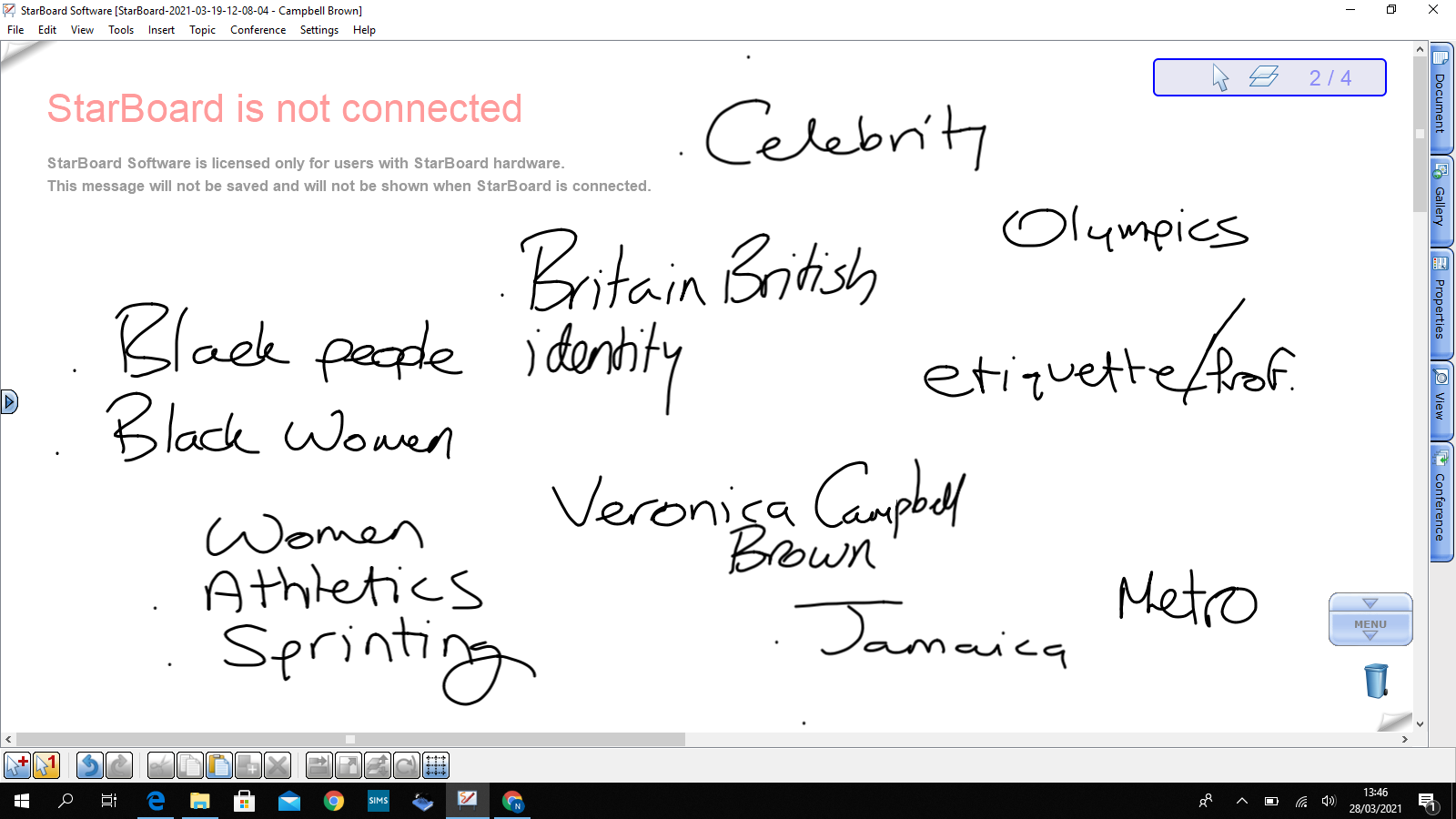

They listed Veronica Capbell Brown as the most obvious person represented, but from there I encouraged them to consider who else or what else was being represented through her. It stands to reason that people don’t exist in representational vacuums. Especially with celebrities and the world of sport, people see themselves reflected back in those they look up to or hold in high esteem. They were then able to say:

  • Women
  • Black People
  • Black Women
  • Jamaica

And just as the students wearing their uniforms outside of school represent our institution I ask them to consider how the individual might represent organisations or institutions. This led to:

  • Athletics
  • The Olympics
  • Sprinting
  • Professional Etiquette
  • Celebrity

And then through polarisation present in the article, and again similar to Mr McVeigh, they were able to identify:

  • Britain/British Identity
  • British Athletics

And as Mr McVeigh always reminds them, I ask them to consider how the writer is representing themselves or the publication they’re writing for. So to cap it all off:

  • The Metro
  • Will Giles (writer)

This really gives the students a solid base camp with a variety of routes to follow. And it is something every student of every ability can do in an exam context. Naturally, those aiming for the highest bands will be more able to discuss the wider implications of the representations on display. They will even be able to spot patterns of wider discourse, which is really going to help them with AO3. More on that later. While those at the lower end will all be able to explore the representation of the individual named in the text, often the most obvious, yet still, the most salient of all listed above. 

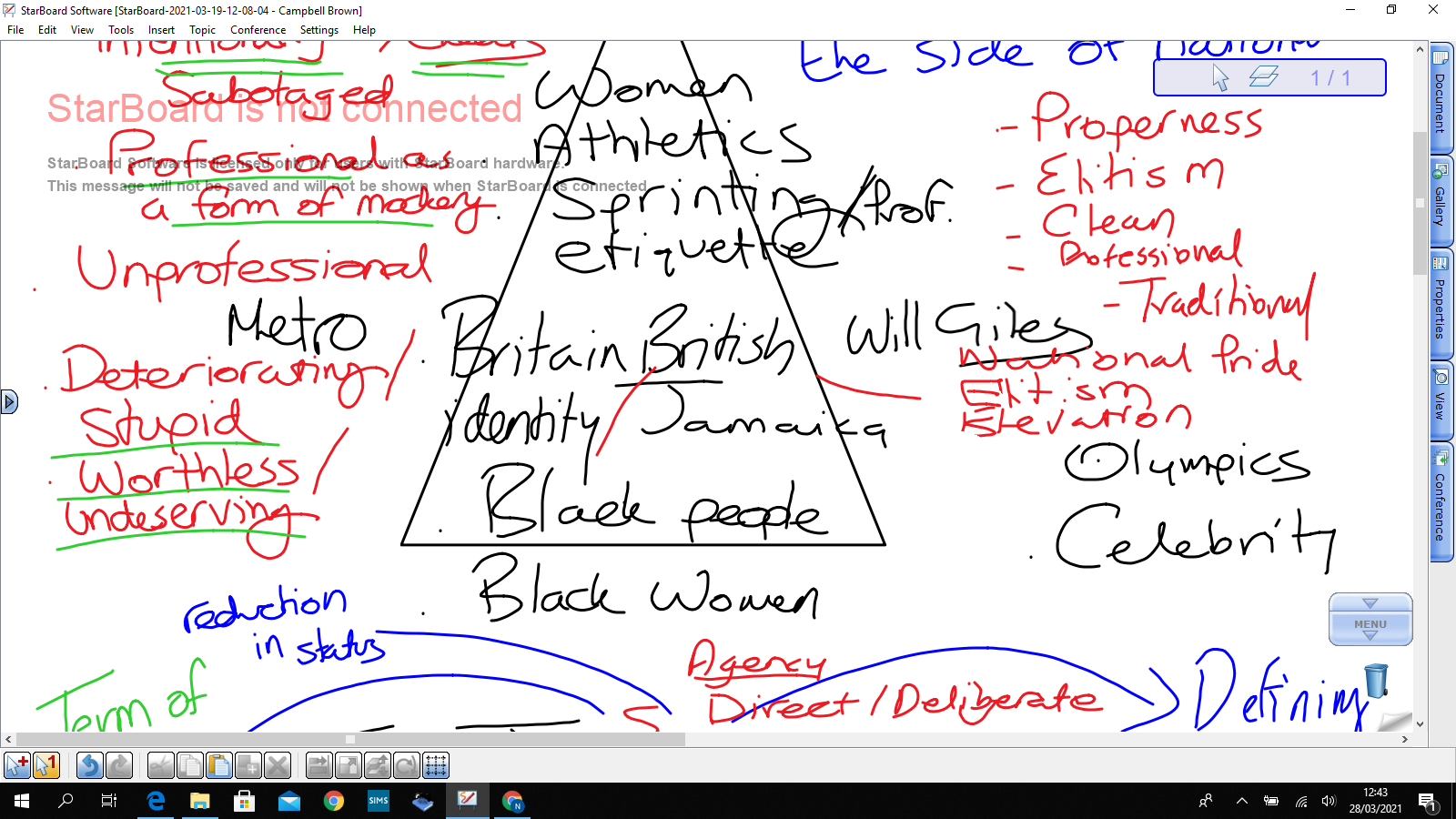
At this point it is worth reminding them that they can’t discuss everything. This is where the interactive whiteboard comes in handy because we now organise that list into a hierarchy (see images below). We decide on this together based on the text in front of us. I ask them is the representation of Veronica Campbell Brown more salient than the representation of black people or women in general? We decide yes. After all she is named in the headline as opposed to say, “Black athlete runs in wrong lane…” or “Female athlete runs in wrong lane…” We do discuss that Campbell Brown is referred to as “The Jamaican” but we consider this as part of the patriotic, tribal stance The Metro is adopting, which we discuss later.

Before developing that, I first ask them if this seems more openly critical of black people or of women? For simplicity, does it seem more racist or sexist? That is not to say it is neither, arguably these prejudices exist between the lines because they feed into the wider social discourses, which are still present in our society. What we are doing at this stage is glancing back over the whole text and spotting what jumps out, again before we have really started to think of the ‘How’. They decide that for a number of reasons, the representation of women seems salient. They look to the overall discourse structure of listing Campbell Brown’s achievements in the opening and then following it with the angry sounding second paragraph, in which Giles utilises the verb phrase, “managed to RUN…” They felt this fed into a wider social discourse of belittling successful women’s achievements. 

The final order is listed above in the images of my board. The triangle/mountain image comes into its own here because although Veronica Campbell Brown is undoubtedly the peak in terms of representation, that can only exist on the foundation of typical/historical representations that exist within society. Her image in this article rests on the patterns of how women, black people, athletics etc are represented in our wider culture. 

Before moving on to discussing how these representations were being established through language, I emphasised with students that once they had organised them in order of salience they could choose any three to focus on in their answer. Again this is crucial in eliciting a response from every student which is personal and potentially different. The lower ability students may want to focus on the top three whereas those aiming for the highest marks may want to start at the top and pull in something less obvious and perhaps more perceptive. 
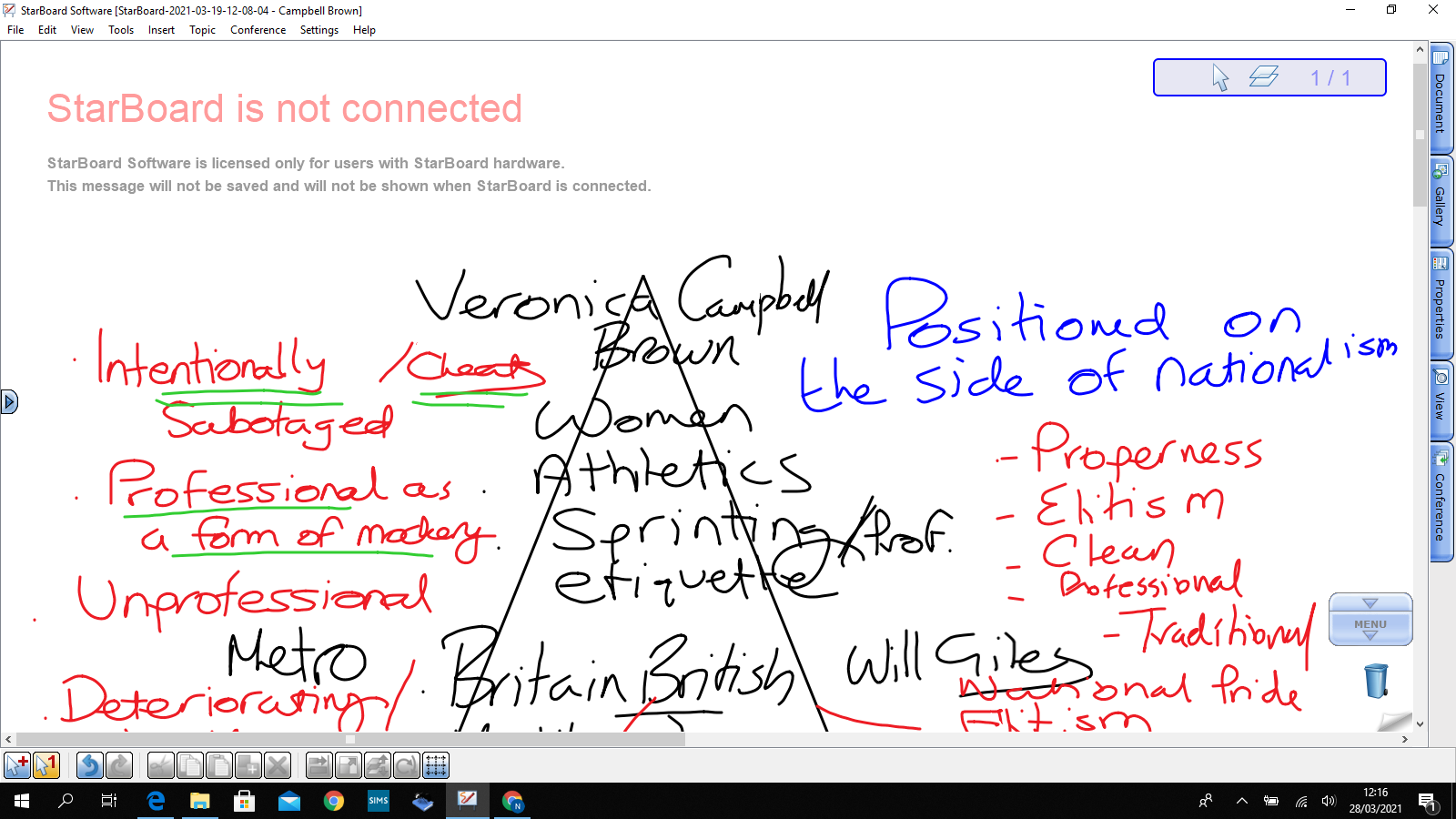
The ‘How’ 

As this article is more about an approach to the questions, I will focus less on this part. But it is here where we start to come up with statements about how these people and institutions are being represented. Again, nothing too linguistic at this stage. Simply what seems to be jumping out? These can be seen in red in the image, but they decided VCB was being represented negatively as either a heartless cheat or as an incompetent woman who did not seem deserving of her accolades. As mentioned above it was very easy for them to now suggest that women are often ridiculed in our wider culture as a way to downplay their achievements. Some discussed, away from the world of sport, the ongoing, relentless and hateful treatment of Mary Beard here. 

It is only now we get to frameworks. Once they have organised their thinking in this way, the language and structure seems to reveal itself in a way it otherwise wouldn’t have done before. They have a solid route and the terrain looks easier for them to negotiate. If you want a more detailed approach for this stage, I recommend this one

With these representations and meanings in mind we explored that second paragraph in more detail:

But despite all that experience, she has still managed to run in the wrong lane. 

Verb phrase aside, they discussed the sentence opening with the coordinating conjunction functioning as the opening of the adverbial, something I’m sure would have led to much prescriptivist moaning, if they happened upon the Metro that morning on their commute. Why make this deliberate “error”? Well it must be to emphasise that what follows is bigger than all of those achievements just listed. This ramps up the tone of anger, sarcasm, humour and does a great job of reducing this successful athlete to the status of either ‘silly girl’ or ‘evil witch’ or both. We re-wrote this sentence in a variety of ways and decided the fronted adverbial was loaded with meaning, which supported what they had already said about the representations. Then there’s the obvious graphology of the capitalisation to anchor this. 
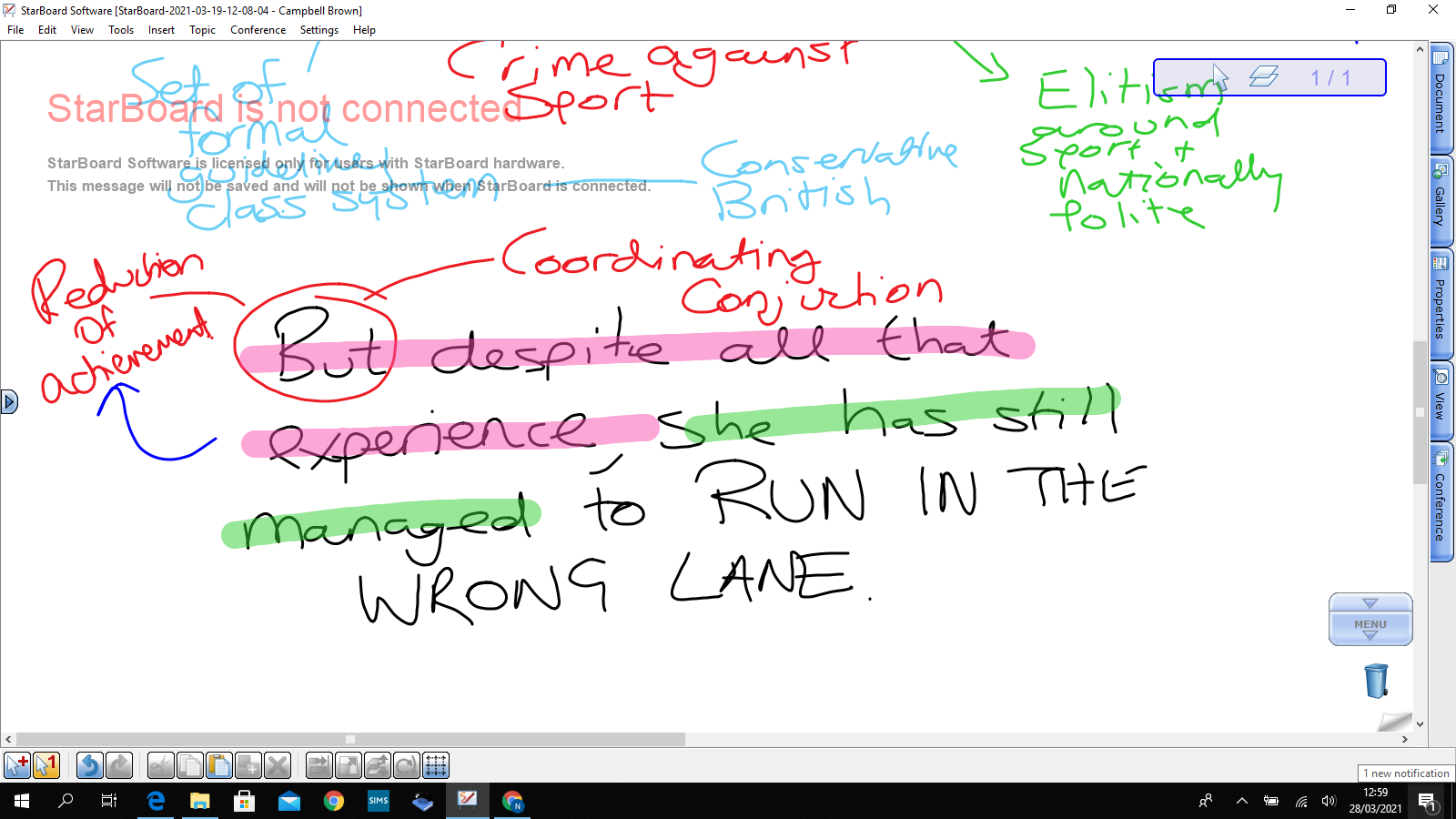
The ‘Why’

If in reading this so far you have wondered where the PAF (purpose/audience/form) or GCAP (genre/context/audience/purpose) as I teach, comes in. Well it’s here. I call these the macro concepts of linguistic analysis. The micro elements come from the areas of the frameworks or language levels and should always be used to comment on the macro concepts. 

We now make decisions about these macro concepts and the impact they have had in the writing of the text. Did Will Giles set out to destroy this athlete because she is a woman or is this an unfortunate consequence of something else from GCAP? Starting with the macro concept of Context of production, we looked at the date (2015), and the patterns of language which seemed to focus on British athletics and came up with the idea that there may have been a renewed interest in the sport in this country as a result of the 2012 Olympics. This focus on nationalism and tribal loyalties to Team GB goes some way to underpinning what The Metro might have been trying to do in this article through these representations. They have perhaps tried to position us against this Jamaican athlete to drum up tribal support for our team, but have used conventional negative representations of women to do it.  We also discussed the impact of The Metro and its tabloid style in the informal register adopted in our example. On the part of the producer, it may only be a funny (not funny) story for someone to read in 5 mins on the bus (Audience+context), but as we know, context of reception is everything and for a young woman aspiring to be an athlete this could have a far reaching impact. 

This layering of meaning according to GCAP is going to unlock a variety of interpretations of features and patterns that will allow the students to score highly in AO3. As with subject terminology for AO1, points about genre, context, audience and purpose are only as valuable as the argument you pin them to.  

So just because we come to the macro concepts of GCAP last in this strategy does not make it an afterthought. Quite the opposite in fact. An understanding of the construction of a given text from the perspective of GCAP is part of the foundation to understanding the representations in the first place. But rather than taking the approach of, ‘this is a tabloid newspaper article therefore it will represent x as y’, I much prefer, ‘x is represented as y, possibly because this is a tabloid newspaper article but it may be more to do with z.’

I think that the macro concepts should be something outlined and discussed in introductions as part of the foundation on which the students can build. As long as they’re tied to meanings and representations and contribute to the direction of travel. So putting all of the above together a successful intro to a Question 1, with this text as a basis, may look like:

In Text A, The Metro and writer Will Giles, offer a stereotypically negative representation of women, through Veronica Campbell Brown, as a means of generating national support for British Athletics in the wake of the 2012 Olympics. At various points Campbell Brown is represented as foolish and dull-witted, someone undeserving of her previous achievements and at worst, a dishonest cheat. Giles adopts a classically tabloid style to create these meanings, potentially for click-bait in an online format or to entertain a tribal sports fan on their daily commute. 

This is slightly wordy, but you get the picture. This intro condenses everything into one paragraph, which covers three strands of representation and their link to audience, genre and two contextual factors. 

Hopefully this has given you some ideas about how to approach the Paper One mountain with students, particularly mixed ability students. Well done for reaching the summit! 


Teacher blogs: a quick list

Back in the mists of time, I started this blog for my students at St Francis Xavier Sixth Form College in south London (hence why it's still got SFX in its URL) to support what we were doing in class for A level English Language. I posted links to news stories about language and short activities linked to what we did in class and we used the blog as a way of keeping up to date with what was being discussed in our subject. I kept the blog going when I left SFX to go and work at UCL on the Teaching Grammar in Schools project and then back to teaching again in Essex and working at the English and Media Centre. 

The blog started in the days before Twitter appeared, so since then, a lot of the short links to news stories have appeared there on the EngLangBlog account instead and the posts here have become a bit more sporadic but also a bit longer and with different audiences in mind. Many of them are still aimed at students but a few of the newer ones are now aimed at teachers too. So, if you're new to teaching A level English Language - or just interested in what other teachers do - you might find a few of those teacher blogs handy to have in one place. Not all of them were necessarily aimed at teachers to start with, so if you're a student you might find them handy too. 

Anyway, here are a few to get you started:

Paper 1

https://englishlangsfx.blogspot.com/2021/04/many-ways-to-climb-mountain.html

http://englishlangsfx.blogspot.com/2021/04/rules-regulations-paper-1-exam-style.html 

http://englishlangsfx.blogspot.com/2021/03/finding-meaning-in-meaning-and.html

http://englishlangsfx.blogspot.com/2021/03/paper-one-section-trying-something-else.html


Paper 2

http://englishlangsfx.blogspot.com/2021/04/paper-2-question-3-slaying-beast.html

http://englishlangsfx.blogspot.com/2021/03/paper-2-section-marrying-ao1-and-ao2-in.html

http://englishlangsfx.blogspot.com/2020/12/thinking-big-planning-and-structuring.html

http://englishlangsfx.blogspot.com/2020/11/guiding-reader-essays-for-paper-2.html

http://englishlangsfx.blogspot.com/2020/11/planning-and-writing-paper-2-essays.html

http://englishlangsfx.blogspot.com/2020/03/paper-2-section-b-resources.html

http://englishlangsfx.blogspot.com/2019/01/when-dan-asked-what-he-should-post.html

http://englishlangsfx.blogspot.com/2019/01/lists-concepts-different-ideas-thinking.html


NEA

http://englishlangsfx.blogspot.com/2020/09/using-lexis-podcast-to-inspire-language.html

https://englishlangsfx.blogspot.com/2021/04/putting-f-in-nea-making-language.html

Friday, April 02, 2021

Rules & Regulations: Paper 1 exam-style question

If you're a teacher and you've exhausted all the previous papers from AQA and are yourself just a bit exhausted after the... stuff... that's been happening over the last year, I thought I'd try to offer a few possible exam-style questions here. I won't claim any great originality for these as they have all appeared in some form or other in different places - either in textbooks or resources I've worked on - but some of them are in a slightly new form, so they might prove useful. 

Anyway, here's a possible pair of Paper 1 texts for Questions 1-3, based on school rules. Both of these texts originally appeared in a Workbook I did for the old AQA B spec which is now long out of print. I've also done a mark scheme for this which you can find here.


Follow EngLangBlog on Bluesky

The old Twitter account has been deleted (because of both the ennazification and enshittification of that site) so is now running on Bluesk...