The old Twitter account has been deleted (because of both the ennazification and enshittification of that site) so is now running on Bluesky here.

The old Twitter account has been deleted (because of both the ennazification and enshittification of that site) so is now running on Bluesky here.


The latest episode of Lexis is out and it features an interview with Ife Thompson about lots of issues connected to Black British English, including linguistic justice, anti-Black discourses in stories about language in the media, plus how Back British English is treated in schools and the courts.
She takes a very different view to many linguists on the language variety/style/multiethnolect that's been called MLE and argues that actually it should be termed Black British English. There's a lot to think about, not least because linguistics is still a very white field and the language being discussed is commonly used by Black speakers (among others).
Have a listen here and see what you think. It would be interesting to compare what Ife says with what Paul Kerswill talked about in this episode and to cross reference some of her points about the coverage of MLE/BBE with these media stories.
If you haven't already come across it, the latest episode of our Lexis podcast features an interview with Frazer Heritage from Manchester Met on the representation of gender in videogames (among many other things).
You can find it here.
We also talked to Heidi Colthup at the University of Kent, back in early 2023, about her work on video gaming and narrative. That episode is here.
It's here! A new *free* resource from the English and Media Centre and University of Essex.

You can find it here.
It's Word of the Year season again and 'tis the season to be rizzy, apparently. Here are all the stories that I could find about #WOTY2023 so far. One of the big beasts, the American Dialect Society, is yet to decide on theirs but all the others are accounted for.
News stories about WOTY2023
AI named word of the year by Collins Dictionary - BBC News
Rizz named word of the year 2023 by Oxford University Press - BBC News
Dictionary.com’s 2023 Word Of The Year Is…
The Cambridge Dictionary Word of the Year 2023
The Collins Word of the Year 2023 is…
Word of the Year 2023 | Authentic | Merriam-Webster
» Nominate the 2023 Words of the Year American Dialect Society
Japan chooses ‘tax’ as kanji of the year amid concern over cost of living
Opinion pieces about new words
The Collins word of the year shortlist shows we’re more self-obsessed than ever
Hallucinating AIs and What The Words Of The Year Lists Reveal About our Modern World
Rizz: I study the history of charisma – here's why the word of the year is misunderstood
Thread on Twitter responding to the ‘manosphere’ links:
Who's got 'the rizz'? Apparently, just men
I get the need for ‘rizz’, but ‘influencer’ should be banned for ever
In our New Directions: Language Diversity research and resource pack, we have set up an activity that asks students to research different media articles about MLE. Below you will find the media stories about MLE that have been covered in 2016, 2022 and 2023.
2016
Queen's English to be WIPED OUT from London 'due to high levels of immigration' (Daily Express)
Laziness is killing the magnificent English language, says James Delingpole (Daily Express)
'Th' sound to vanish from English language by 2066 because of multiculturalism, say linguists (Daily Telegraph)
It's the end of the frog and toad for regional slang, says report. Sounds of 2066 report says ‘talking to machines and listening to Americans’ will kill off British accents and slang in the future. (The Guardian)
2022
Wagwan? Street Slang to be Britain's main dialect (The Telegraph)
Wagwan? Why are more and more Britons speaking Multicultural London English (The Guardian)
Wagwan with our beautiful language? (Daily Mail)
Britain would be dull if my London accent wipes out all of the others (The London Evening Standard)
The Multicultural London English dialect is 40 years old but middle class Britain is still terrified (i news)
2023
Cockney and Queen's English have all but disappeared among young people – here's what's replaced them (The Conversation)
King’s English and Cockney replaced by three new accents, study finds (The Telegraph)
Cockney and King's English becoming less common, researchers find (BBC News)
Language barrier: why even Harry has stopped speaking the king’s English (The Guardian)
I've not updated the links on here for a while but I'll get round to that soon as there are some really excellent resources available for the A level now and more on the way.
One great resource that I would recommend is Heddwen Newton's English in Progress Substack, which you can find here. Heddwen curates a regular newsletter full of links to interesting stories about language, many of which are perfect for the A level course. We spoke to Heddwen in the second half of this episode of Lexis too so have a listen!
With Twitter (X... lol) going down the pan, I've set up a Bluesky account for @EngLangBlog so you can access that here if you're on that app. It seems to be growing nicely with more and more linguists on there, so I have some hope that it will be a useful resource. In the meantime, the Twitter account will stay posting but I'll be cross posting everything there to Bluesky.
Question 3 on Paper 1 has often been a bit of a low-scorer for students and you can maybe see why. It comes an hour in to the exam, and you’ve still got all your knowledge about child language to unleash, so perhaps you treat this one as a bit of a stopgap question. On top of that, you’ve already rinsed Text A in Question 1 and Text B in Question 2 for all the inspiration you could find and now you’ve got to go back and compare them. Why not just do that in the first place? Well, that’s a good question but have a look at Question 3 on Paper 2 and you can see that’s actually quite a tough thing to do. What you’re doing here is a slightly more staged process of exploring the two texts and actually a bit more straightforward.
So, what can you talk about in Question 3? The question is marked using AO4 which is the connections AO (you’ll see it in Question 3 on Paper 2 and in the NEA commentary too) so it’s important to think about the kinds of connections you can make between the two texts and how you can do that.
If Questions 1 and 2 are largely about avoiding too much unnecessary contextualising and cutting to the chase to analyse what the texts are about and what they are saying (and I think that’s the usual message about them), then Question 3 is a chance to talk more about some of those other contextual things. In other words, if the topic is broadly similar (and both texts are always on the same theme) then how and why do the two texts handle that theme in similar and different ways? What is it about the types of texts they are, the modes they are in, the purposes and audiences that they have, the time that they were produced in, that makes them do that differently. And how does their use of language show that?
While there’s bound to be some discussion of context in your answers to Questions 1 and 2 (because the AO3 requires you to talk about meanings in context), there’s more chance to develop that focus here. And as long as you use specific features of language to do that, you should be able to hit Level 3 or above.
A quick look at the mark scheme should reveal that Levels 1 and 2 are largely about spotting and identifying quite implicit and basic (Level 1) or quite literal (Level 2) connections without focusing on the language itself. This will probably be quite descriptive, so perhaps saying that a text is written and formal without identifying an example of this, or noting that the texts have different audiences but not illustrating how you can tell or how the address to those audiences is different in the language choices being made.
Levels 3 and above require you to discuss language, “compare use of xxx” being the key descriptor here, where the xxx will be the specific language features that you think are relevant. And here it’s about linking these to a specific aspect of context such as how an adjective helps describe flat-sharing/the rules of boxing/goths/how a runner missed her lane, or how a sentence function is used to engage or address the audiences. Comparison is important too because that’s what AO4 is all about, so make sure your language points are ones that can be used to discuss similarities and differences across the two texts.
For example, if you think pronouns are being used in a way that strikes you as interesting – lots of direct address in one text but often quite impersonal address in the other – that’s a good AO4 point to base a paragraph around. Equally, there’s this semantic field used in one text and that one used in the other – to describe the same topic – so that could be another good comparison. This text has been scripted to be spoken so there are frequent discourse markers to structure it, while that one has been laid out as a webpage so the structuring comes from its subheadings as part of its graphology.
At Levels 4 and 5 you’re taking this further. Level 4’s buzzword is connect and Level 5’s is evaluate so you’re engaging much more here with the ways that language is linked to mode, genre, purposes and audiences, and the historical and social contexts to each text. I’ve often reminded my students that it’s not just the older text that has historical context; the contemporary one does too and that’s also worth focusing on, even if that history feels very ‘now’. This doesn’t mean just offloading a lot of historical knowledge or trying to summarise all the social movements of the last 100 years, but instead it means discussing ways in which the texts themselves have been produced and consumed within a historical and social context and how that might have affected or even shaped them.
What is there in the text about student flat shares that makes you realise that going to university has only become an opportunity for a large minority in the last 30-40 years? What tells you that while vegetarianism has been around for well over a hundred years, it’s still treated as something of a food fad? What tells you that in 1743, boxing was relatively new to the public and therefore had to have its rules explained? These things could all be relevant to the contexts of the texts and to the language used within them and what that language is used to do.
But the other thing to notice is that as you work your way to the top of the mark scheme you’re expected to think less literally and more holistically. What’s the significance of these connections that you’re starting to see? Why are these texts treating the same material in different ways? By the time you hit Level 5 you should be evaluating all of that and also placing these texts within their wider discourse, taking the AO4 beyond just the connections between the texts themselves and into the texts’ connections to the wider world.
If you’re looking for a few ways to do this as practice for Paper 1, then this post from 2021 should offer you a few ways in.
When I'm teaching students how to approach text analysis questions (like Paper 1 Questions 1 and 2 and Paper 2 Question 3), I often advise them to take a look at the bigger picture first, before diving into the analysis. So looking back at yesterday's blog about tackling the In Defence of Good Grammar article, I probably should have taken my own advice as I have definitely dived into that before discussing what it's actually about.
One way of doing this is to have an initial read and just ask yourself a few basic questions:
If you start with a few questions like these, then the analysis can actually be pinpointed a bit more closely on the really important parts of the text/s. I've tended to adopt a hotspots approach with these questions (and those on Paper 1) and having that bigger picture and sense of what's going in is vital when you're trying to build an analysis of the whole text rather than just isolated moments.
Another way to do this is to produce a summary of the text. Imagine that you've just read the article and someone says "What are you reading?". You've got two or three sentences at most to explain what it is and what's being said. If you can't do that, then you probably need to go back and read again to unpick the information you need.
So, why not go back to this post from a couple of days ago and try these approaches on the three texts I've suggested there?
One of the text extracts that I linked to in this post, was a piece called In Defence of Good Grammar, written by James Innes-Smith for The Critic website, which bills itself as a "monthly magazine for politics, ideas, art, literature and much more".
The language pieces on there are not very frequent but, when they do appear, seem to me to be a mixed bag. Some of them recycle quite common prescriptive positions. So there's this one from April 2023 which starts off by complaining about supposed Americanisms in the English language before firmly aiming its fire at just Americans more generally. It even manages to include a language discourses greatest hits in this paragraph:
Turn on the wireless at any hour, and you may think this country has been infected by a linguistic virus. Words and phrases that were once regarded as intrusive Americanisms have become commonplace. Curveball (what’s wrong with bouncer?) and stepping up to the plate (taking a fresh guard?) are daily horrors which merit six firm strokes of the cane.
Then there's this one which focuses on language and class through the lens of Angela Rayner's non-standard grammar. But then you also see a few others - like this one on accommodation, class and downwards convergence - which are a bit more linguistically descriptive in their outlook.
But it's the other article on Angela Rayner and language 'standards' that I want to focus on here, so what follows is an attempt to offer a few things: a bit of analysis, some discussion of some of the techniques and language choices being used and a couple of suggestions about where this article and some of its ideas might sit within wider discourses about language.
You can probably tell that I've taken quite a critical stance towards it but you may well want to look at it from other perspectives and see if some of its arguments can be supported linguistically or if they might be seen as being more coherent and well-supported than I thought. Towards the end, there are also a few suggestions for other extracts in the article that you could analyse and evaluate. Anyway, here goes...
Sub-editorial features

Title immediately suggests a discourse of conflict: a defence is being made against some kind of attack.
The standfirst presupposes that Angela Rayner is torturing our language
and the only question up for debate is why she needs to be stopped.
Interesting choice of verb in ‘torturing’: language is being represented as the victim of a painful process.
Who is the ‘we’ in ‘our language’ and why has this possessive determiner been chosen? What might be the implications around the portrayal of those who are not part of the 'we', 1st person plural, group?
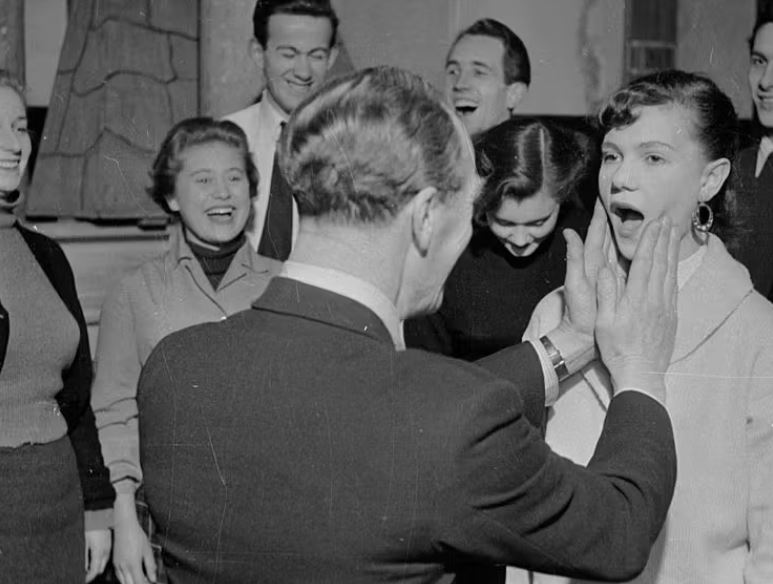
Is this the era the writer wants us to return to? A post-war utopia where people were happy to be taught how to speak ‘properly’? A simpler time when rules were rules and everyone followed them?
Opening paragraph
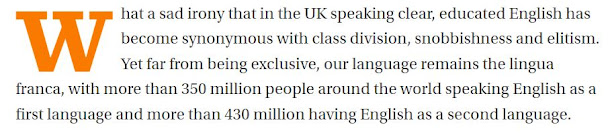
…and yes, I do believe “speaking well” has value however unfashionable that may sound.
In the UK there remains an underlying sense that speaking well is the sole preserve of a posh elite, which may explain the lack of educational rigour when it comes to teaching the language.
You may have noticed the extent of adolescent inarticulacy when listening to school leavers struggling to construct a coherent sentence without having to fall back on verbal ticks such as “like”, “innit” and “you know what I mean?” Yet this pummelling at the foundations of communication is by no means limited to the less well educated.
Instead of lowering standards to meet ideological whims and cultural and class sensitivities we should be lifting young people out of the prison of low expectation and equipping them with the tools they need to live a rich and communicative life.
What language deconstructionists fail to acknowledge is that without these vital literacy skills, children will always struggle to find purpose and meaning. By allowing language to become part of the culture war we deny children access to the great works of literature as well as limiting their chances of gainful employment.
Angela Rayner may have lucked out but millions of working class people remain trapped in systemic disadvantage brought about by a lack of will on the part of teachers and parents to instil a love of language.
...without fluency of language, they will remain trapped in a cycle of ignorance and poverty...
While I'm doing posts about Section B of Paper 2, I'd better mention the kinds of texts that appear here and that you have to analyse and respond to. They're often (but not always) articles from newspapers and online sources, but can also be book extracts or something like, as was the case of the 2019 paper, an article from an accent tutoring website. I've summarised a few of the others below:
What you'll probably see from these texts is that many of them come from a position of criticising or complaining about an aspect of language change or diversity, often with a prescriptive slant to them, and that they are often open to linguistically-informed criticism and challenge. Not all of them are totally unreasonable rants; in fact some of them are carefully assembled to foreground opposing and contrasting views. The 2022 paper even had a text that included a 'head to head' style article as one of its texts, where two opposing language commentators argued their cases.
Bear in mind too, that you're being assessed using 3 AOs in Question 3, so you'll need to be approaching these texts from a few different angles, such as:
Yesterday, I posted a few links to articles that I thought were pretty good examples of opinion pieces about language. There's always a bit of a caveat with this kind of advice though, because the activity you're engaged in during the exam is basically an exercise to secure marks from the available assessment objectives, rather than actually write something for publication and payment.
That's why you need to be a little bit careful about using anything as an exact style model; while there are really informative and linguistically-informed pieces out there (and I think there's lots of good stuff in the ones I posted), they can also be a little bit thin on language detail and you need to provide that to get your 20 marks from AO2.
What you might want to do - as well as looking at how those opinion pieces work - is have a mosey on over to The Conversation website, where linguists (and psychologists and many other experts) write about their research for non-specialist readers. What you'll be able to see from many of the excellent articles there is how complicated and technical ideas can be explained clearly to people who don't necessarily work in the field.
Some of my favourites also happen to be from some of my favourite linguists...
Rob Drummond on regional accent attitudes
Grammar pedants and fashion victims
Amanda Cole on attitudes to working class and ethnic minority accents
Devyani Sharma on accent attitudes in the workplace
As you get ready for the exam season this summer, it's a good idea to read lots of opinion pieces to soak up the features of the genre: the style, structure, sub-editorial choices and the ways that arguments are constructed, among them.
It probably helps too to focus most of that reading and preparation on opinion pieces about language, because that's the course you're studying and what you're going to be writing about. So, here are a few suggestions for recent pieces about language that you might find useful.
It's worth bearing in mind that in your exam, AO5 is worth 10 marks and AO2 20 marks, so you probably want to err on the side of caution with the language content and maybe offer a little bit more knowledge about language and ideas from language study than a few of these, while also making sure that every bit of language knowledge and research that you introduce is made accessible to your target readers.
London Evening Standard piece on MLE
Indy Voices on regional accent pride
A Nov 22 piece on the language round migration
An older (2015) Guardian piece on the language associated with migration
Next time round, I'll suggest a few recent pieces that could be useful for a bit of analysis for Question 3 on Paper 2.
WOTY (Word of the Year) Season is in full swing and the lists from the various dictionaries and organisations who produce them, along with the blogs, the explainers and articles in the press about them are always a useful resource for the A Level, especially when looking at Language Change.
I'll put together a fairly comprehensive set of links next week to all the stories I've come across, but in the meantime, here's a link to a piece I wrote for The Independent about WOTY2022.
These stories (that aren't mentioned in my article) are also worth a look:
Goblin mode and more goblin mode
There's also the American Dialect Society's WOTY2022 to look forward to which is probably one of the most exciting dates on the linguistic calendar. Last year's overall WOTY for them was insurrection.
While it’s
usually good news for language educators to see issues about language prejudice
getting an airing in the media, it also tends to show the gulf between what
linguists think about language and what the general public thinks.
Last week,
various newspapers and online outlets ran stories on the publication of a report from The Sutton Trust about accent bias in the UK. The report featured
work from linguists on the Accent Bias Britain project at QMUL.
The findings made pretty grim reading: 30% of university students and 25% of professionals in workplaces said their accents had been mocked, while similar percentages felt self-conscious about their accent.
There was
also a pattern of accents belonging to racialized minorities and people from
working class backgrounds reporting more mockery of their varieties, leading to
some people feeling a stronger need to change their accent to fit in.
Tellingly,
even when responding using exactly the same words, accents indexed as working
class and/or minority ethnic were rated as lower for professional expertise and
competence. Of course, who these lower ratings came from were interesting too…
mostly southern and upper class people.
None of
this is particularly new: accent bias studies have been conducted for the best
part of 50 years (and the Accent Bias Britain site is excellent for mapping and
summarizing these studies) and the accent hierarchy of the UK seems deeply
entrenched, along class, ethnic and regional lines.
What then
can linguists and the wider education community do to challenge this? There are
positive noises from the project about making people aware that accent bias
exists and to be conscious of it, and that seems to have an effect on responses
straight away in professional settings.
The comments that followed many of these news articles give us an insight into what we’re up against. One tweeter offered the cry laugh emoji at the end of their deeply empathetic reply: “Do you need to ask why anyone ‘would want’ to lose a brummie accent?”.
Others variously saw the report as some form of ‘wokeness’ (yawn) or an appalling lack of ‘resilience’ on the part of the respondents. ‘Get over it’, ‘deal with it’ and ‘it never did me any harm’ seemed to be the order of the day for many others, with reactionary narratives the norm.
As I posted a day or two back, accent attitudes have been back in the news. Following a report from The Sutton Trust, using research from the team behind Accent Bias Britain, various newspapers and online sources decided to cover the broad findings of the report and discuss attitudes to UK regional accents and those associated with people from working class and/or racially minoritised backgrounds.
Accent
stories are pretty popular in the press and we’ve seen a lot of coverage of
them in the last year or two. Whether it was the attacks on TV presenter and footballer Alex Scott for her pronunciation of -ing, BBC presenter Amol Rajan’s appeal for a wider variety of accents at the BBC or Artificial Intelligence being used to make call centre workers sound ‘whiter’, accents get you clicks.
And in the (anti) social media hellscape (thanks Elon) that we’re heading into in
2022, a lot of those clicks are hateclicks.
While the
stories and op-eds are pretty good sources for A Level students to analyse and evaluate
and even use as style models, the replies and online comments are more visceral…
and sometimes pretty vile. But having said that, they are useful short texts to
pull apart in class, so here are a few ideas for what to do with them.
1. Assemble a cline of contempt: take each tweet/reply/comment and copy it onto a grid where you can cut them out and line them up. Rank them in order of their negativity to the linguistic position being discussed. Is this one more negative about certain accents than this one? How can we tell? Are they equally awful but just focusing on different things?
2. Group them into patterns of peevery: what are the themes behind their complaints? Are they annoyed at the absolute wokeness of a linguist even arguing that there such a thing as accent bias, or just annoyed that young people are being sensitive about accents? Group them into shared themes and discuss what these concerns might tell us about these language discourses.
3. Analyse them for discourses of doom: blow up each message onto a sheet of A4 and pull them apart linguistically, annotating them and using your three AOs for P2Q3 as a guide. AO3 for meanings and what is being represented, along with the discourses being tapped into and reproduced; AO1 for linguistic descriptions of the techniques and structures being used; AO4 for connections between these texts and the wider discourses you have identified in previous lessons, and perhaps even connections to the other texts as your analysis develops. Maybe you could even start to write comparative analytical paragraphs on two or more messages.
4. Answer back: choose a couple of texts that you can respond to and use this as practice for your P2Q4 work (where you write an opinion piece in response to the issues raised in the texts from P2Q3). Write back to the message. Perhaps you could discipline yourself to just sticking to the length of a tweet or a couple of sentences; perhaps you could develop this into a couple of paragraphs. Think too of how you can show your AO2 knowledge to challenge uninformed and prescriptive views of language. If you see a message that you think is actually right about something but not very well-supported, think about how you can develop a more linguistically informed way of phrasing it, by referencing research, theory and examples from case studies.
5. Ask what they're on: "I'm not earth to bow to ridiculOus", I ask you....
Here are a few anonymised responses to the accent stories
that you might want to use.


And of course, before social media existed, we had letters to the editor (ask your gran) and some of these were nicely crafted. You still find them in the wild occasionally, like here in The Guardian. So these could be mixed in too to spread the range and offer some more rhyme and reason.
It's been a while, sorry! Most of the posts I used to add here seemed simpler to do as tweets, linking to news stories, but I might start blogging more regularly again as Twitter seems to be taking a turn for the worse.
Anyway, here's a load of stories and links connected to a recent report from The Sutton Trust and using research by Accent Bias Britain into... well, accent bias, as you might expect. The Sutton Trust tweeted about it here as well.
A Guardian comment piece on it
I might come back to the comments and replies another time and we'll probably address some of this in a future episode of Lexis.
Nice YouTube explainer here from Devyani Sharma too.
And an unconnected accent piece from a day or two back: James Bond
This is a guest blog by Dr. Clara Vaz Bauler is an associate professor of TESOL/Bilingual Education at Adelphi University, New York. Thanks to Clara for writing this and for the ideas shared here.
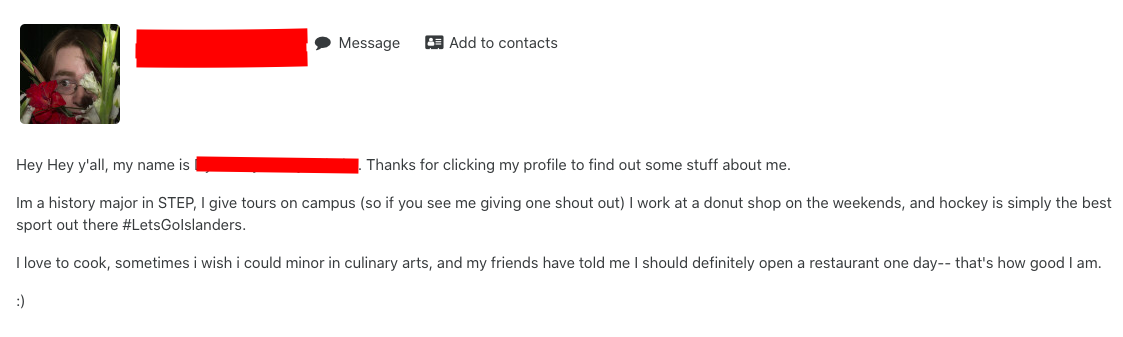
Typical, face-to-face learning environments offer advantages that online learning does not. The same can be said for online learning. This year, in the midst of the chaos of the pandemic and the rushed changes I had to make, I was pleasantly surprised by the many new opportunities my students and I had to communicate and share ideas. I could see all my students’ names and learn how to pronounce them by having students share on Flipgrid. This same video platform also allowed me and my students to share about ourselves without worrying about class time or period ending, as we could post videos and comments on our own pace. Above all, I could see and hear my students’ thinking in online discussions as ALL contributed their ideas.
As “Zoom classrooms” can be very frustrating with distracting noises, intrusion to privacy, and wifi interruptions, it is only natural that we blame the online medium for everything that went wrong in education during the pandemic. However, if we stop and ponder about what fundamentally constitutes the educational experience, especially the relationship between teachers and students, online spaces have much to offer. Online pedagogical practices have the potential to amplify student participation in ways that typical face-to-face environments cannot. So, it is imperative that we take this opportunity to engage in deep reflection about the possibilities technology can offer as we transition to physical buildings and face-to-face environments. Here are a few of my own reflections.
Multiple “Entry Points”
One of the main dilemmas I faced during remote learning was the use of cameras in my class. At first, I quickly condemned the online environment for my students’ apparent lack of participation. However, in digging deeper, I realized that the disruption of typical classroom practices aligned with the stressful conditions of the pandemic might have been a source of anxiety to my students. Instead of focusing on what my students could not do, I started rethinking how I was organizing my virtual synchronous meetings, paying close attention to alternative ways my students could actively engage. This reflection prompted me to reimagine what participation might look like given our difficult circumstances. I found out that helpful alternatives to cameras on included multiple “entry points” for participation based on choice and non-verbal modalities. I started experimenting with multimodal tools, using Jamboard to share emotions and brainstorm and Pear Deck to express ideas via drawing, labeling and polling.
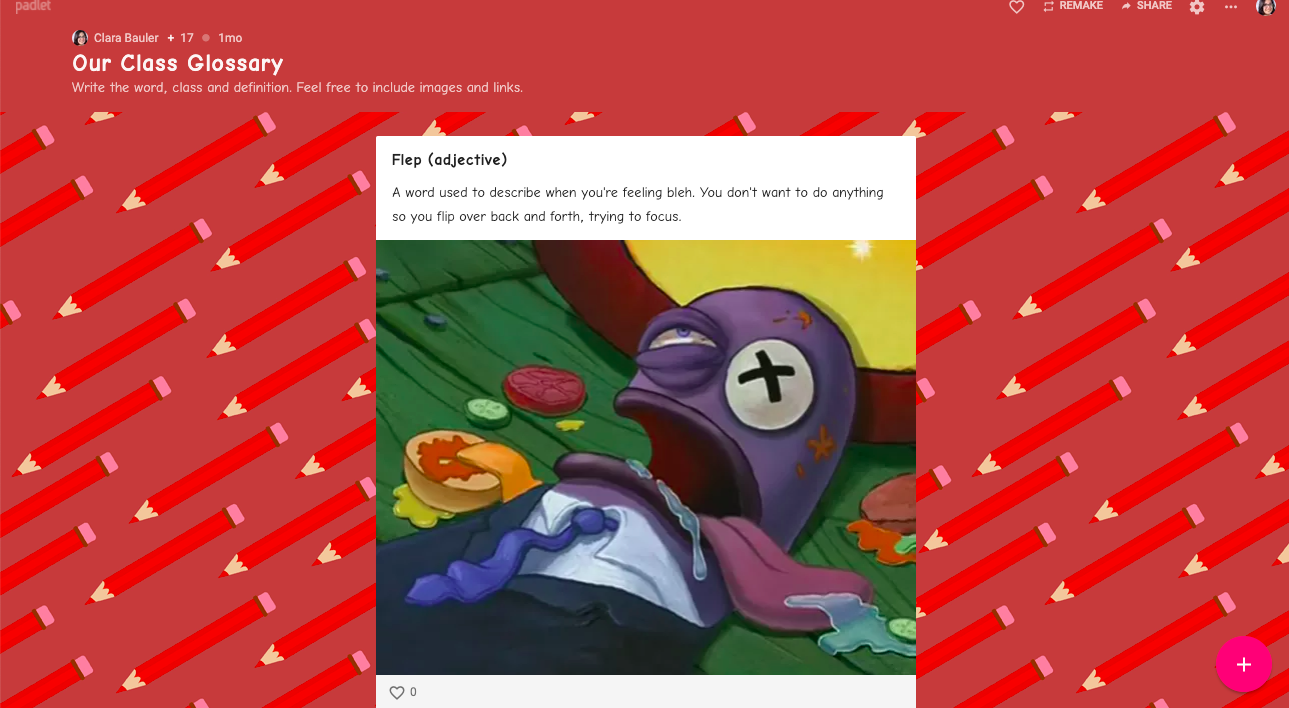
Digital media also helped me foster and support self-expression by allowing students to post images, GIFs, memes, and videos on Padlet. Visuals are widely used for “comprehensible input” or for language receptive tasks. However, there is tremendous power in also using images, drawings and charts for language production. These symbolic tools afford students multiple possibilities to express meaning. Flexibility is key. Below is how we used Padlet to share a create a multimodal class glossary.
Equity and inclusion demand re-examination of our practices. It can be hard to teach with cameras off or to change the ways we organize spaces for education, but allowing multiple entry points to the lesson enabled ALL students to engage. In the face-to-face classroom, students should also have the option of “turning their cameras off.” As teachers, we can focus less on the (often) few students who raise their hands and more on providing a space for EVERYONE to share input, either via writing, drawing or choosing from the many languages students speak. Multilingual learners especially benefit from this rich multimodal environment as they are able to tap into both their linguistic and semiotic resources to engage with varied types of literacy. This flexibility helps in developing reading, writing and vocabulary (Ascenzi-Moreno, Güílamo, & Vogel, 2020). To me, making slides interactive, manipulating and actively using texts, images and symbols to communicate have become indispensable for fostering an equitable and inclusive environment.
A Room for Emotions
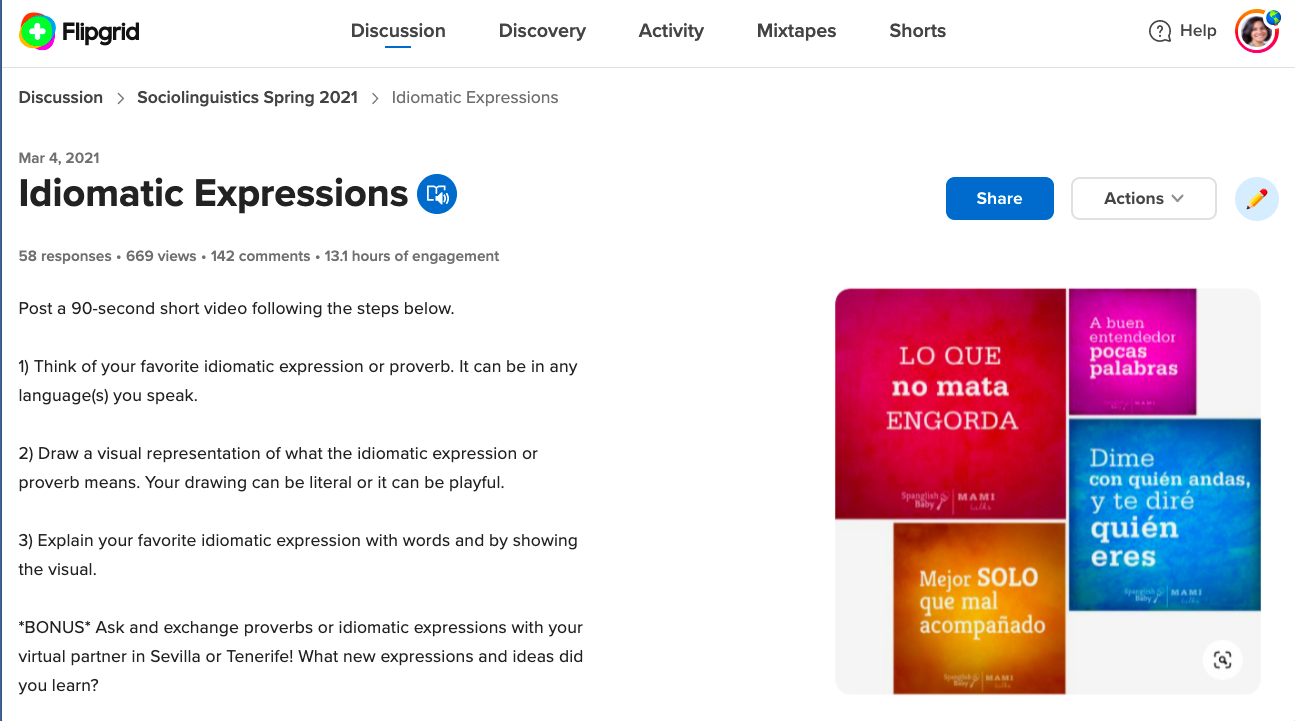
One of the most important things I lost in typical face-to-face teaching practices was the ability to connect and immediately attend to students’ feelings by just approaching students or saying hello. Although dramatically different from physical spaces, the virtual environment also became a place where my students and I could connect. In particular, Flipgrid was very helpful in providing a platform for community building. We shared weekly journals about ourselves, our languages, and our cultural practices. I also used Flipgrid to create a question corner where my students and I could drop videos about anything, from actual questions, to saying hello or provide comments on the topics for the week. When posting on Flipgrid, students could choose to keep cameras on or off. Below is one example of a weekly journal where we shared about our favorite idiomatic expressions.
The old Twitter account has been deleted (because of both the ennazification and enshittification of that site) so is now running on Bluesk...