Most of us are aware that people make snap judgements about us based on regional accents - artcles here and here from this blog give a few more details - but more worrying is this research by an American linguist that suggests people are making assumptions about us based on our ethnic accents (i.e. if you're African-American you'll be turned down for a loan; if you're Mexican-American you'll be assumed to be an illegal immigrant etc.).
Do we make the same assumptions here too, or are so many "urban" accents converging that we can't tell who's black and white, Bangladeshi or Turkish anymore?
Useful for:
ENA5 - Language Change & Varieties
Friday, February 03, 2006
Thursday, February 02, 2006
Learning languages
There's a programme on Radio 4 tonight, Say What You Think, which takes a look at how we learn languages. It covers children's grasp of phonemes, issues like the Critical Period Hypothesis and how our ability to learn new languages declines with age. Looks good for ENA1 CLA students and teachers...


Tuesday, January 31, 2006
Ning, nang, nong
Another day and another article about teen slang, delivered this time from the perspective of trying to translate this bizarre alien language into Standard English for a middle class audience. In The Times yesterday, Michele Kirsch talks about the "scary bitches" on the back seats of the bus, the "nang", "buff" and "grimy" slang terms being chucked around by them and then makes some vaguely patronising comments about mixed race girls before retiring to her Hamsptead home to share her gritty, urban experience with her chums over a nice glass of Chablis.
This time round, much of the slang identified is fairly accurately noted - she talked to some real teenagers as part of the article's research - but it's the representation of the users of slang that might be more interesting to consider from an A Level English Language perspective. Is it just me, or is she treating these teenagers as exotic beasts that she barely understands? Have a read for yourself and see what you think...
Useful for:
ENA5 - Language Change & Varieties
ENA6 - Language Debates
This time round, much of the slang identified is fairly accurately noted - she talked to some real teenagers as part of the article's research - but it's the representation of the users of slang that might be more interesting to consider from an A Level English Language perspective. Is it just me, or is she treating these teenagers as exotic beasts that she barely understands? Have a read for yourself and see what you think...
Useful for:
ENA5 - Language Change & Varieties
ENA6 - Language Debates
Sunday, January 29, 2006
Unpredictable texts
The main causes of language change are generally supposed to be technological advances, the spread of the media and its influence, changing patterns in youth culture, education, movement of peoples, blah blah blah, but what about the influence of technology and its limitations? In an article in today's Observer, Euan Ferguson looks at the ways in which his mobile's predictive text dictionary affects his messages and the wider impact this might have on how we use language. It's an interesting idea, that language change is being driven by almost random forces as well as those well-documented trends above.
E-Julie's Language Legend blog has run some good pieces on this topic, so here are the links to her articles: gobbledegook & kiss/lips
Useful for:
ENA5 - Language Change
E-Julie's Language Legend blog has run some good pieces on this topic, so here are the links to her articles: gobbledegook & kiss/lips
Useful for:
ENA5 - Language Change
Thursday, January 26, 2006
"Ay oop, we're t'monkeys"
...and people say we monkey around.
It can't have escaped the attention of any of you that spotty South Yorkshire teenage ragamuffins are storming the so-called pop charts at the moment. Yes, it's those crazy Arctic Monkeys again. And this time, rather than trying to claim some spurious youth credibility by featuring them on this here blog and pretending I like their music (but I do, dammit: 36 isn't too old to rock out, man) I'd like to look at their fantastic use of regional accent and dialect.
Take, for example, their mighty tune "Red Light Indicates Doors Are Secure" on their number 1 album: delivered in a proud Sheffield accent, the lyrics contain a mass of non-standard grammar and lexis and are all the better for it. This stuff is so much better than the focus group-led bobbins that passes for mainstream pop, or the miserable cliche-ridden angst rock of emo no-hopers, or dumb gangstas like 50 Cent and his idiotic tales of crack-slinging in da hood, or da club, or wherever:
Have a look at the subject - verb agreements of "she were", the lexical choice of "our end" for a start. Meanwhile, any band that can rhyme "Ford Mondeo" with "don't have to say 'owt" gets my vote as best lyricists of the decade. It's almost enough to get me nostalgiac about the glory days of Shed Seven.
Useful for:
nowt but a bit of a laff and ENA5 Language Varieties
It can't have escaped the attention of any of you that spotty South Yorkshire teenage ragamuffins are storming the so-called pop charts at the moment. Yes, it's those crazy Arctic Monkeys again. And this time, rather than trying to claim some spurious youth credibility by featuring them on this here blog and pretending I like their music (but I do, dammit: 36 isn't too old to rock out, man) I'd like to look at their fantastic use of regional accent and dialect.
Take, for example, their mighty tune "Red Light Indicates Doors Are Secure" on their number 1 album: delivered in a proud Sheffield accent, the lyrics contain a mass of non-standard grammar and lexis and are all the better for it. This stuff is so much better than the focus group-led bobbins that passes for mainstream pop, or the miserable cliche-ridden angst rock of emo no-hopers, or dumb gangstas like 50 Cent and his idiotic tales of crack-slinging in da hood, or da club, or wherever:
Ask if we can have six in, if not we'll have to have 2
You're coming up our end aren't you? So I'll get one with you
Oh won't he let us have six in? especially not with the food
He coulda just told us no though, he dint have to be rudeSee her in the green dress? She talked to me at the bar
How come its already two pound fifty? We've only gone about a yard
Dint ya see she were gorgeous, she was beyond belief
But this lad at the side drinking a Smirnoff ice came and paid for her tropical ReefAnd I'm sitting going backwards, and I didn't want to leave
It's high green mate, via hillsborough pleaseHow funny was that sketch earlier, up near that taxi rank
Oh no you will have missed it, think it was when you went to the bank
These two lads squaring up proper shouting, bout who was next in the queue The kind of thing that would seem so silly but not when they've both had a fewCalm down temper temper, you shouldn't get so annoyed
Drunken plots hatched to jump it, ask around are ya sure?
You're acting like a silly little boy
They wanted to be men and do some fighting in the street
No surrender, no chance of retreat
Went for it but the red light was showing
And the red light indicates doors are secured
Have a look at the subject - verb agreements of "she were", the lexical choice of "our end" for a start. Meanwhile, any band that can rhyme "Ford Mondeo" with "don't have to say 'owt" gets my vote as best lyricists of the decade. It's almost enough to get me nostalgiac about the glory days of Shed Seven.
Useful for:
nowt but a bit of a laff and ENA5 Language Varieties
Government leaflets "lack sense"
It's shocking and surprising I know, but a story on the BBC news website claims that the government is talking sh*te.
In this article, the Department for Work and Pensions is criticised for spending £31m on publishing 250 different leaflets last year, most of them incomprehensible to their target audiences.
Apparently, "The NAO found people often needed a reading ability above the national average to understand the leaflets, with words such as "disability, incapacity and entitlement" causing difficulties." while they also add that "about 16% of UK adults - or five million people - have literacy skills equivalent to those expected of an 11-year-old, according to official figures".
So is it intentional? Some have argued that these leaflets are deliberately designed to confuse, so government money can go unclaimed and be spent on more exciting projects like John Prescott's council tax bill or Cherie Blair's lifestyle coach.
Useful for:
ENA1 - Language & Representation
In this article, the Department for Work and Pensions is criticised for spending £31m on publishing 250 different leaflets last year, most of them incomprehensible to their target audiences.
Apparently, "The NAO found people often needed a reading ability above the national average to understand the leaflets, with words such as "disability, incapacity and entitlement" causing difficulties." while they also add that "about 16% of UK adults - or five million people - have literacy skills equivalent to those expected of an 11-year-old, according to official figures".
So is it intentional? Some have argued that these leaflets are deliberately designed to confuse, so government money can go unclaimed and be spent on more exciting projects like John Prescott's council tax bill or Cherie Blair's lifestyle coach.
Useful for:
ENA1 - Language & Representation
Pubic speaking (sorry...)
Firstly, I must apologise for the title of this post, but it's been a long day and I need to entertain myself.
Apparently, according to a story on the BBC news website, having sex helps us overcome stress and makes us more effective public speakers. Of course, with SFX being a catholic institution, I have to add that the pope only sanctions such behaviour between loving, married, opposite sex partners. So that rules out the Lib Dem leadership challengers...
But please don't use too little/too much sex as an excuse for not performing well in the forthcoming powerpoint presentations on child language or you'll get no sympathy from me.
Useful for:
ENA7 - persuading gullible members of the opposite/same sex to help you "do your homework"
Apparently, according to a story on the BBC news website, having sex helps us overcome stress and makes us more effective public speakers. Of course, with SFX being a catholic institution, I have to add that the pope only sanctions such behaviour between loving, married, opposite sex partners. So that rules out the Lib Dem leadership challengers...
But please don't use too little/too much sex as an excuse for not performing well in the forthcoming powerpoint presentations on child language or you'll get no sympathy from me.
Useful for:
ENA7 - persuading gullible members of the opposite/same sex to help you "do your homework"
Friday, January 20, 2006
Left right blue green
This is from the British Psychological Society's Research Digest, but should be of interest to Language students too, particularly those studying language & thought/ language & representation on ENA1. It relates to our old friends Sapir and Whorf...
Whereas I might say a jumper is blue or red, female acquaintances of
mine refer to all sorts of gradations in between, such as navy blue,
shocking pink, and many others that I can’t even recall. But does the
richness of their colour vocabulary mean they can actually see more
colours than me? This is the issue at the heart of the Sapir-Whorf
hypothesis – the idea that our perception of the world is anchored in
the language that we use. Now Aubrey Gilbert and colleagues have tested
the suggestion that if language does affect perception, then it ought to
do so more on the right side of space than on the left, because it is
the language-dominant left-hemisphere with which we process the right
side of space.
In an initial experiment, 13 participants had to distinguish between
four similar shades of colour. In terms of wavelength, the shades
differed from each other in equally-sized, incremental steps, but two of
the shades were what we’d call ‘green’, whereas the other two shades
were ‘blue’. Consistent with the Sapir-Whorf hypothesis, participants
were quicker at distinguishing between a ‘green’ and a ‘blue’ than
between two ‘greens’ or two ‘blues’. Crucially, however, this advantage
only pertained when the colours appeared on the right-hand side of space.
A second experiment showed that this right-hand side advantage for
discriminating between shades on either side of the blue/green boundary
disappeared when participants were distracted by a simultaneous verbal
task, but not when they were distracted by a concurrent spatial task.
“The left hemisphere appears to sharpen visual distinctions between
lexically defined categories and to blur visual distinctions within
these categories, whereas the right hemisphere does so much less”, the
researchers said.
If these results can be generalised to the real world, the researchers
said “…our representation of the visual world may be, at one and the
same time, filtered and not filtered through the categories of language”
depending on whether we’re looking to the left or to the right.
Wednesday, January 18, 2006
Swearing like a bloody trooper
Swearing is neither big nor clever. Good, let's just get that out of the way. But sometimes it is funny... and inventive... and great to study in English Language. Sometimes - like outside the gates of a primary school and in front of lots of impressionable young kids - it's not a great idea to swear loudly and talk about how you're going to "land one on the f*cking bitch". That doesn't stop one mum at my sons' primary school though...
A piece in today's Guardian reports on guide books for foreign tourists which are now warning them about having their delicate sensibilities offended by the natives of London's swearing habits. Or, as the Lonely Planet website rather more eloquently puts it "London's contrasts and cacophonies both infuriate and seduce".
Read it here. But are we getting worse? Is swearing more common place than it used to be? Do we accept it more these days? And do we react to swearing more negatively when it comes from women rather than men? All valid and fascinating topics for a bit of further investigation...
Some links from a bit of googling throw up the following pieces of research that have already been done:
male/female talk in Nigerian students
differences in male female language styles used in online communication
Advertising Standards Authority survey of swearing from 2000
Useful for:
EA4C - Language Investigation
ENA3 - Male/female conversation
A piece in today's Guardian reports on guide books for foreign tourists which are now warning them about having their delicate sensibilities offended by the natives of London's swearing habits. Or, as the Lonely Planet website rather more eloquently puts it "London's contrasts and cacophonies both infuriate and seduce".
Read it here. But are we getting worse? Is swearing more common place than it used to be? Do we accept it more these days? And do we react to swearing more negatively when it comes from women rather than men? All valid and fascinating topics for a bit of further investigation...
Some links from a bit of googling throw up the following pieces of research that have already been done:
male/female talk in Nigerian students
differences in male female language styles used in online communication
Advertising Standards Authority survey of swearing from 2000
Useful for:
EA4C - Language Investigation
ENA3 - Male/female conversation
Sledging: bad. Carpet beating: bad
According to an article on the BBC website, many old laws still exist in the statute books, including the following gems: You must not wear armour to Parliament (Royal Prerogative 1279); fire a cannon close to a dwelling house (Met Police Act 1839); use any slide upon ice or snow (Town Police Clauses Act 1847). That's my weekend ruined then...
But what's this got to do with language? Well, many of these old laws are being displayed by the Law Society and the wording of them is something to behold. Perhaps an investigation into legal language would be an idea for coursework in A2? Maybe looking at changes (or perhaps a lack of any change) in the language of law would be an interesting focus.
On another level though, the laws of the time are a bit like the language: they reflect a society's concerns and preoccupations at a given time and are interesting to look at as a result.
Useful for:
EA4C - Language Investigation
ENA5 - Language Change
But what's this got to do with language? Well, many of these old laws are being displayed by the Law Society and the wording of them is something to behold. Perhaps an investigation into legal language would be an idea for coursework in A2? Maybe looking at changes (or perhaps a lack of any change) in the language of law would be an interesting focus.
On another level though, the laws of the time are a bit like the language: they reflect a society's concerns and preoccupations at a given time and are interesting to look at as a result.
Useful for:
EA4C - Language Investigation
ENA5 - Language Change
Saturday, January 14, 2006
H.E.I.D.I.s thrive while Ladults leer
This post started with an article in Michael Quinion's World Wide Words newsletter which got me chasing up some links. In it he reports on the rise of two new words, "Ladult" - a blend of "lad" and "adult" supposedly describing a particular type of bloke in 2005 - and "HEIDI" - an acronym standing for Highly Educated Independent, Degree-carrying Individuals, a particular type of woman.
For more on each word, read on:
Enter the Ladult
What seems to be driving this change is not supply and demand, but a very 21 st century phenomenen: consumerism and its reinvention of existing material, marketed in a new way, to sell us what we already have, or don't actually need. In other words, the creation of "new" social groups and their subsequent promotion in lifestyle magazines and newspaper articles is part of a process that targets us as consumers. So "new words" might be seen as complicit in all of this - they make these new classifications seem exciting or sexy.
Or am I being paranoid? Do we really take these words at face value and unthinkingly adopt them as part of our vocabulary? Probably not: we're clever enough to raise a quizzical eyebrow, laugh it off and get on with our lives most of the time. But it's an interesting idea, I think, that new words are being created as part of a commercial strategy.
Useful for:
ENA1 - Language & Representation
ENA5 - Language Change
For more on each word, read on:
Enter the Ladult
A year after the wristband generation sought to Make Poverty History, we are on the brink of a nouveau hippy movement, combining spirituality, care for the environment and other people and a life code , says Ian Pearson, futurologist at BT. 'We've had Make Poverty History and this is part of the same trend. It only needs one or two charismatic people to trigger it, which could happen at any moment,' he said.
The New Man and the Metrosexual are dead. Long live the Ladult. He is single, assured, solvent and secure in his new-found masculinity. Aged between 25 and thirtysomething, the Ladult works moderately hard at middle management. His suits and shirts come from Paul Smith, Zegna, Thomas Pink and Reiss. He spends a lot on gadgets and DVDs, and enjoys poker, online gambling and even fly fishing. He irons his own shirts and can cook simple meals. He has no problem with the notion that women are his equals, but secretly thinks they are different.
Further up the age spectrum, the baby boomers are hitting 60, which could ignite generational conflict. 'They're the best-off, best-educated parents ever,' said Tom Bentley, director of the think-tank Demos. 'They have a postwar consensus mindset that tells them not to sink quickly into middle age. They want to make the most of the consumer and spending power they have. But the thirtysomething generation - the David Cameron generation - is moving into instrumental positions and has different priorities.' These include climate change; will the baby boomers do their bit, or turn into grumpy old men and women?
Highly Educated Independent, Degree-carrying Individuals, or HEIDIs, are set to become one of the most influential sectors in modern British society and any self-respecting brand ignores them at their peril. According to a 2005 study by Allegra Strategies and The Future Laboratory’s findings from its 2,500-strong LifeSigns Network, there are almost 7.2m HEIDIs in the UK.
They are in their late 20s and 30s and their contribution to the economy is vast. A typical HEIDI is selfmotivated, in control and articulate about herbespoke needs and brand-related purchases. Thanks to an affluence born of credit, lifestyle is her buzzword, and achieving one that is smooth, luxurious, immersive, hassle-free and aspirational is her goal.
What seems to be driving this change is not supply and demand, but a very 21 st century phenomenen: consumerism and its reinvention of existing material, marketed in a new way, to sell us what we already have, or don't actually need. In other words, the creation of "new" social groups and their subsequent promotion in lifestyle magazines and newspaper articles is part of a process that targets us as consumers. So "new words" might be seen as complicit in all of this - they make these new classifications seem exciting or sexy.
Or am I being paranoid? Do we really take these words at face value and unthinkingly adopt them as part of our vocabulary? Probably not: we're clever enough to raise a quizzical eyebrow, laugh it off and get on with our lives most of the time. But it's an interesting idea, I think, that new words are being created as part of a commercial strategy.
Useful for:
ENA1 - Language & Representation
ENA5 - Language Change
Wednesday, January 11, 2006
Politician in talking sense horror!
After this morning's narky post about Tony Blair's language, here's one to redress the balance and prove that not all politicians use weasel words and Nu-Labour jargon to hide the absence of any real policies (there I go again...).
Tony Banks, who died last week, was one of the few decent lefties left in the Labour Party, but more to the point a man that had a wicked way with words and was a master of put-downs. An article in The Guardian a couple of days ago reprinted some of his wittiest quips. Worth a look for a bit of entertainment and to see some good language play in action...
Tony Banks, who died last week, was one of the few decent lefties left in the Labour Party, but more to the point a man that had a wicked way with words and was a master of put-downs. An article in The Guardian a couple of days ago reprinted some of his wittiest quips. Worth a look for a bit of entertainment and to see some good language play in action...
R-E-S-P-E-C-T find out what it means to me...
When he's not steam-cleaning graffiti off estate walls, imposing ASBOs on 4 year olds with ADHD or strumming a Foreigner tune on his Stratocaster, Tony Blair is giving language enthusiasts exciting new meanings to words. Praise be to our glorious leader!
"Respect" is his latest one. Not that it's a new word:it briefly appeared as a slang term on the streets before Ali G made it fashionable as a parody of urban speech; George Galloway's bunch of Islamo-Trot chancers adopted it for their party a couple of years back (and now see Galloway showing no self-respect in the Big Brother house); but now it's different. Respect isn't just respect anymore. No, it's so much more.
As Simon Jenkins points out in today's Guardian, what are really needed are not new words and cryptic jargonistic phrases, but local communities having real power. What's the point of inventing a "Baby ASBO" or "Sin-bins" for anti-social families when people don't feel they actually have any say in how their local communities are run? I could go on, but I fear it will turn into a rant, so I'll just link to a site or two where people actually involve the local community in decision-making and leave it at that.
"Respect" is his latest one. Not that it's a new word:it briefly appeared as a slang term on the streets before Ali G made it fashionable as a parody of urban speech; George Galloway's bunch of Islamo-Trot chancers adopted it for their party a couple of years back (and now see Galloway showing no self-respect in the Big Brother house); but now it's different. Respect isn't just respect anymore. No, it's so much more.
As Simon Jenkins points out in today's Guardian, what are really needed are not new words and cryptic jargonistic phrases, but local communities having real power. What's the point of inventing a "Baby ASBO" or "Sin-bins" for anti-social families when people don't feel they actually have any say in how their local communities are run? I could go on, but I fear it will turn into a rant, so I'll just link to a site or two where people actually involve the local community in decision-making and leave it at that.
Monday, January 09, 2006
Defending PC
A report by the Civitas think tank earlier in the week about PC sparked debate on several radio stations and crowing articles in the right wing press. The main arguments can be found in this posting.
But in yesterday's Observer, columnist Will Hutton makes a number of good points defending PC, or rather what he terms courtesy, arguing that we're not living under some liberal jackboot (a bizarre and distinctly unsexy image, like Simon Hughes in drag) but in a society where words matter and can create division and hatred.
Interestingly, Hutton ties in language used to label and discriminate with the racist or totalitarian societies that produced them, arguing:
(Thanks to Anjuli for this link.)
Useful for:
ENA1 - Language & Representation
ENA6 - Language Debates
But in yesterday's Observer, columnist Will Hutton makes a number of good points defending PC, or rather what he terms courtesy, arguing that we're not living under some liberal jackboot (a bizarre and distinctly unsexy image, like Simon Hughes in drag) but in a society where words matter and can create division and hatred.
Interestingly, Hutton ties in language used to label and discriminate with the racist or totalitarian societies that produced them, arguing:
"Derogatory words laden with prejudice not only degrade those they describe, who find themselves categorised in ways they do not deserve - they degrade the social currency. The aggressive, dysfunctional language of hatred of the American South, Nazi Germany or Mao's China helped both to create and sustain those societies. Words were crucial to the governing ideologies".So, while the trendy argument on the right of the political spectrum seems to be that PC is taking away our rights to free speech, Hutton makes the persuasive point that PC is in fact defending our rights to live in a peaceful society free from abuse.
(Thanks to Anjuli for this link.)
Useful for:
ENA1 - Language & Representation
ENA6 - Language Debates
Sunday, January 08, 2006
Ladies first
Today's Sunday Times runs a story reporting on the American Dialect Society's annual meeting. According to one of the speakers at the event, Sali Tagliamonte associate professor of linguistics at the University of Toronto, “Girls are the single most powerful force in the English language today”. Young women are leading the way when it comes to lexical change: in other words, girls are picking up on new words and coining new expressions much more readily than boys, leading the way in changing our language.
So are young women more innovative with language or do they just talk about each other more and therefore find new ways to bitch about each other? "Muffin top":a bulge of flesh over low-cut jeans, and "whale tail": the appearance of a thong above the waistband, are just great two great examples of phrases used to describe other women's appearance!
If girls are leading the way, how much of what they come up with will be picked up by boys? Will it be like the pattern that many linguists have noted in conversation between males and females, where women introduce many more topics than men, only to have men reject nearly every topic they start?
The implications for research into changing slang and varieties of English could be pretty interesting...
So are young women more innovative with language or do they just talk about each other more and therefore find new ways to bitch about each other? "Muffin top":a bulge of flesh over low-cut jeans, and "whale tail": the appearance of a thong above the waistband, are just great two great examples of phrases used to describe other women's appearance!
If girls are leading the way, how much of what they come up with will be picked up by boys? Will it be like the pattern that many linguists have noted in conversation between males and females, where women introduce many more topics than men, only to have men reject nearly every topic they start?
The implications for research into changing slang and varieties of English could be pretty interesting...
Friday, January 06, 2006
Az you like it
Last week's BBC article about a survey of businesspeople responding to accents started people thinking again about prejudices that lurk under the surface of our society towards people who speak in non-standard ways or with a pronounced regional accent.
According to the article, covered by this blog here, strong regional accents suggest a variety of negative impressions from untrustworthiness (Cockney and Scouse) to failure (Brummie and West Midlands).
I followed up my initial interest in this and emailed the Aziz Corporation to find out more about their survey, so here's what the helpful Elspeth sent back - I think it makes interesting reading. Obviously, the Aziz Corporation have a vested interest in making us feel like we're likely to be disregarded if we don't speak RP or softened versions of regional accents (they earn a living by coaching speakers) , but equally that doesn't mean prejudices aren't there. The extra detail provided here adds a bit weight to the media coverage last week:
According to the article, covered by this blog here, strong regional accents suggest a variety of negative impressions from untrustworthiness (Cockney and Scouse) to failure (Brummie and West Midlands).
I followed up my initial interest in this and emailed the Aziz Corporation to find out more about their survey, so here's what the helpful Elspeth sent back - I think it makes interesting reading. Obviously, the Aziz Corporation have a vested interest in making us feel like we're likely to be disregarded if we don't speak RP or softened versions of regional accents (they earn a living by coaching speakers) , but equally that doesn't mean prejudices aren't there. The extra detail provided here adds a bit weight to the media coverage last week:
We are a company that specialises in helping senior executives become stunning communicators (not really a group of James Bond supervillains - honest!) and we regularly undertake surveys about business behaviour. The respondents are senior business people who receive our monthly newsletter, e-communique.
For the purposes of this survey, we used a company called "Survey Monkey" - respondents were asked a simple series of questions that asked them to rate different accents. They were not given the opportunity to add any further comments. I guess what we're trying to say is, that although it's not politically correct to believe that accents matter nowadays, it's apparent from our research that certain prejudices still exist.
When it comes to doing business, the majority of British bosses regard someone with an overseas accent, including American, Continental European and Indian or Asian, as more likely to succeed than someone with an accent from the English regions. Businessmen with Indian or Asian accents are also considered by their peers to be more hardworking and reliable than any of their colleagues from the UK or overseas.
The survey, carried out by the UK’s leading executive communications consultancy The Aziz Corporation, reveals a strong prejudice against regional accents, with 79 per cent of business men and women believing that a strong regional accent is a disadvantage in business. Business people with a Home Counties accent are considered to be generally successful by 77 per cent of those in business, followed by those with an American accent (73 per cent), a Scottish accent (63 per cent), a Continental European accent (52 per cent) or an Indian or Asian accent (25 per cent).
By contrast 64 per cent of business people regard those with a Liverpudlian tone as being generally unsuccessful, closely followed by those with a Birmingham or West Midlands accent (63 per cent), a cockney accent (52 per cent) and Geordie or West Country accents (48 per cent). Businessmen who speak with an Indian or Asian accent are considered to be hardworking and reliable by 69 per cent of their peers, a higher rating than those with any other accent.
Those with accents from America are considered to be diligent by 66 per cent of their peers, followed by those with a Scottish accent (61 per cent) and a Home Counties accent (50 per cent). By contrast, only 24 per cent of executives consider those with a Liverpudlian accent to be hardworking, with just 29 per cent viewing those with either a Welsh or West Country accent to be hardworking.
Khalid Aziz, Chairman of The Aziz Corporation, comments: “Although it may not be politically correct to believe that accents matter nowadays, it is very apparent from our research that popular prejudices still exist. If you want to get ahead in business and don’t speak the Queen’s English, it is better to sound as if you are from America, Europe, India or indeed Scotland than from any English region.
“Accents can speak louder than words. Even if you think like Albert Einstein, the reality is that if you sound like Vera Duckworth you will face prejudices in the business world.”
The research also found that businessmen with certain accents face particularly strong prejudices. 27 per cent believe those with a Liverpudlian accent to be generally dishonest and untrustworthy, while 25 per cent think the same of those with a cockney accent. By contrast those with a Scottish accent are highly regarded, with 63 per cent viewing them as successful, 61 per cent as hardworking and reliable and 63 per cent as honest and trustworthy.
Khalid Aziz comments: “In the light of these results we would advise individuals to consider softening rather than changing broad accents. Experience shows that the key is to avoid using localised vocabulary, which others may not recognise. Sloppy speech can also be a major obstacle to making yourself understood and people of all accents can be guilty of this.”
Thursday, January 05, 2006
La meplu de ma tante est sous la bleta, innit?
With slang becoming a bit of an obsession on this blog, I'm grateful to Simon in Cornwall (off the excellent English Language List for A Level English Language teachers) for this link to articles about French street slang, and in particular the slang known as Verlan.
The word itself gives you something of a clue as to its meaning: it's an inversion of the syllables of "l'envers" or for English speakers, "the opposite" or "back to front". So what you do is switch syllables round (a bit like the weird backspeak some people use at school or college): famille (family) becomes "mifa"; bizous (kisses) becomes "zibou" etc.
According to an article in USA Today, Verlan has achieved some prominence as the slang of dispossessed urban youth in the banlieus (see the La Haine posts earlier in the year) despite the fact it's been knocking around for hundreds of years and is hardly a new phenomenen.
So what's this got to do with English Language? Well, lots obviously. Just because it's French doesn't mean it has to be rubbish, despite what I might claim drunkenly about their wine producers. The patterns at work with French slang seem to be the very same in our own - and that shouldn't really be a surprise, as slang is driven by the same social tides and ripples, whatever country you're from.
Looking at what the author of the USA Today report tells us about middle class youths picking up Verlan as a badge of "ghetto credentials" is a bit like hearing about "homies" from Norfolk who talk about "gats", "bitches" and "whips" when the nearest thing they've got to a "whip" is a Massey Ferguson tractor and the nearest thing they've got to a "gat" is a glimpse of their father's shotgun as he blasted a pheasant in the arse (for the sake of tradition, obviously).
Two other articles - Do you speak verlan? and Parlez-vous verlan? - also suggested by Simon in Cornwall, give you more details about Verlan and its roots and potential future.
The word itself gives you something of a clue as to its meaning: it's an inversion of the syllables of "l'envers" or for English speakers, "the opposite" or "back to front". So what you do is switch syllables round (a bit like the weird backspeak some people use at school or college): famille (family) becomes "mifa"; bizous (kisses) becomes "zibou" etc.
According to an article in USA Today, Verlan has achieved some prominence as the slang of dispossessed urban youth in the banlieus (see the La Haine posts earlier in the year) despite the fact it's been knocking around for hundreds of years and is hardly a new phenomenen.
So what's this got to do with English Language? Well, lots obviously. Just because it's French doesn't mean it has to be rubbish, despite what I might claim drunkenly about their wine producers. The patterns at work with French slang seem to be the very same in our own - and that shouldn't really be a surprise, as slang is driven by the same social tides and ripples, whatever country you're from.
Looking at what the author of the USA Today report tells us about middle class youths picking up Verlan as a badge of "ghetto credentials" is a bit like hearing about "homies" from Norfolk who talk about "gats", "bitches" and "whips" when the nearest thing they've got to a "whip" is a Massey Ferguson tractor and the nearest thing they've got to a "gat" is a glimpse of their father's shotgun as he blasted a pheasant in the arse (for the sake of tradition, obviously).
Two other articles - Do you speak verlan? and Parlez-vous verlan? - also suggested by Simon in Cornwall, give you more details about Verlan and its roots and potential future.
Tuesday, January 03, 2006
Is political correctness destroying our culture?
We've looked at this argument before on the blog, but today a report from a right wing "think tank" (whatever that might be - probably a bloke down the pub) claims that Political Correctness is destroying British life and denying us freedoms.
Radio 5 Live have been covering the report and adding to the debate this morning: you can listen again through this link.
So what's under discussion? What is political correctness and is it really the scourge of civil liberties that some commentators are claiming? Part of the problem is the definition: many people are talking at cross purposes, conflating arguments about removing offensive terms from the language with arguments about what are acceptable topics for discussion in a multicultural society.
So while most people are probably fine with the idea that calling people with cerebral palsy "spastics" or black people the n-word is unacceptable, and that PC alternatives should be found, many others would feel uncomfortable if they were told that it was offensive to discuss the problems of integrating white, black and Asian communities in inner city areas, or issues like treatment of women in different religions.
For more on political correctness check this link from Wikipedia and follow the links from there.
Useful for:
ENA1 - Language & Representation
ENA6 - Language Debates
Sunday, January 01, 2006
Class & accent
Another follow-up, this time to last week's post about the Aziz Corporation and their survey on regional accents and how businesspeople respond to them. Again, in today's Observer, diarist Cristina Odone writes about the link between accent and class in Britain. Good ammunition for debate on language varieties!
The ram's testicles
Following on from Thursday's plug for the Balderdash & Piffle programme (tomorrow 9pm on BBC2), here's a link to an article in today's Observer in which Victoria Coren makes a number of interesting points about what the current upsurge of interest in all matters English Language might tell us about our national identity. Plus there's some good stuff on etymology and more about what's shaping up to be a good programme.
Friday, December 30, 2005
A brain like Albert Einstein and a voice like Vera Duckworth
A bizarre combination, but one introduced by Khalid Aziz whose Aziz Corporation has carried out a survey of businesspeople to explore attitudes to accents in the workplace.
"Even if you think like Albert Einstein, the reality is that if you sound like Vera Duckworth you will face prejudices in the business world," claims Aziz, before going on to say, "Experience shows that the key is to avoid using localised vocabulary, which others may not recognise".
So, do prejudices to accent and dialect exist in our society, and if so will they really hold you back? It's an interesting question and one that is probably not best answered by businesspeople themselves. Who are the Aziz Corporation? They sound a bit like a group of James Bond supervillains to me... And is the focus of their survey accent or dialect (the way we speak or what we say)? It seems a touch unclear.
Howard Giles once carried out a telling piece of research - the matched guise experiment - that has been replicated by students all over the country in coursework investigations. He found that while many respondents claimed to like regional accents for their warmth and friendliness (both rather vague judgements about the personality of the speakers who used them) they were much more likely to regard the speakers of RP as having more authority and expertise. (I've summarised this a little loosely, but that's the gist of it: a more detailed look at regional variations can be found in this extract from Peter Trudgill's book.)
So, is this what's happening with attitudes to regional and national accents in Aziz's survey? It seems to be, but we'd need to know more about the way the survey was conducted and the nature of the responses. I might just follow this up with him...
Meanwhile, for all the talk of multi-ethnic youth dialect and growing tolerance towards non-standard varieties, are we maybe kidding ourselves that the people who make the big decisions that really affect us (like giving us a job, a mortgage or a payrise) are as fair as we might want them to be? Perhaps there's still a huge reservoir of prejudice towards accents that aren't seen as "normal" - whatever that might be.
Useful for:
ENA5 - Language Varieties
"Even if you think like Albert Einstein, the reality is that if you sound like Vera Duckworth you will face prejudices in the business world," claims Aziz, before going on to say, "Experience shows that the key is to avoid using localised vocabulary, which others may not recognise".
So, do prejudices to accent and dialect exist in our society, and if so will they really hold you back? It's an interesting question and one that is probably not best answered by businesspeople themselves. Who are the Aziz Corporation? They sound a bit like a group of James Bond supervillains to me... And is the focus of their survey accent or dialect (the way we speak or what we say)? It seems a touch unclear.
Howard Giles once carried out a telling piece of research - the matched guise experiment - that has been replicated by students all over the country in coursework investigations. He found that while many respondents claimed to like regional accents for their warmth and friendliness (both rather vague judgements about the personality of the speakers who used them) they were much more likely to regard the speakers of RP as having more authority and expertise. (I've summarised this a little loosely, but that's the gist of it: a more detailed look at regional variations can be found in this extract from Peter Trudgill's book.)
So, is this what's happening with attitudes to regional and national accents in Aziz's survey? It seems to be, but we'd need to know more about the way the survey was conducted and the nature of the responses. I might just follow this up with him...
Meanwhile, for all the talk of multi-ethnic youth dialect and growing tolerance towards non-standard varieties, are we maybe kidding ourselves that the people who make the big decisions that really affect us (like giving us a job, a mortgage or a payrise) are as fair as we might want them to be? Perhaps there's still a huge reservoir of prejudice towards accents that aren't seen as "normal" - whatever that might be.
Useful for:
ENA5 - Language Varieties
Thursday, December 29, 2005
Balderdash & Piffle
Just a quick plug, for a new programme called Balderdash & Piffle on BBC2 next week (Monday 9pm) about origins of words and phrases in English, produced in association with the Oxford English Dictionary. Could be very handy for studying Language Change units.
Festive language round-up
I hope everyone who reads this blog has had a good Christmas break (so far). I'll keep this post brief as there are lots of other things to do.
A couple of articles which have appeared over the last week or so are worth a look at: first off is the list of most popular baby names for the year. According to the Guardian and Independent, it's back to the future with these: old-fashioned names top the list, while those influenced by celebrity births and popular TV characters show a rise as well (although I should add that we called our daughter Ruby well before we realised she was a character in Eastenders, and she's named after our favourite food, in cockney rhyming slang, or something like that...).
'New old-fashioned' Jack is most popular name for 11th year
Jessica and Jack are top baby names
Second up is the news that predictive text dictionaries are being updated to include new words and phrases. Like traditional lexicographers, the firms who create dictionaries for new technologies are having to keep pace with lexical change in English. But what's driving these changes and is new technology causing some of these changes? Someone told me recently of an appearance of the word "book" as a new slang term for "cool" because it's what appears in predictive text when you type the latter. We're all aware of processes like blending, conversion, compounding and borrowing in language change, but what do we call it when it's just a technological blip?
At a stroke: Asbo, smlirt, podcast enter predictive text dictionary
And finally (as Trevor McDonald used to say), to the word "Christmas" itself. Has political correctness "gone crazy" (copyright Daily Mail mentalist posse) again? The Sun - always a bastion of accurate reporting and fairmindedness - has been crusading against "loony" councils who have allegedly banned the word "Christmas" so as not to offend religious minorities. Except, they're struggling to find that many examples of it happening and not quite getting it right even when they do find examples. There is a similar trend in the USA media, but perhaps with a slightly different slant. Have a look at the selection of articles here and make up your own mind! And have a Happy New Year.
Pupils in 'c'-word ban
Nativity scenes are out, carols are banned, and don't dare wish anyone merry Christmas: the festive season, US-style
Don't mention the C-word
Christmas under threat from political correctness
A couple of articles which have appeared over the last week or so are worth a look at: first off is the list of most popular baby names for the year. According to the Guardian and Independent, it's back to the future with these: old-fashioned names top the list, while those influenced by celebrity births and popular TV characters show a rise as well (although I should add that we called our daughter Ruby well before we realised she was a character in Eastenders, and she's named after our favourite food, in cockney rhyming slang, or something like that...).
'New old-fashioned' Jack is most popular name for 11th year
Jessica and Jack are top baby names
Second up is the news that predictive text dictionaries are being updated to include new words and phrases. Like traditional lexicographers, the firms who create dictionaries for new technologies are having to keep pace with lexical change in English. But what's driving these changes and is new technology causing some of these changes? Someone told me recently of an appearance of the word "book" as a new slang term for "cool" because it's what appears in predictive text when you type the latter. We're all aware of processes like blending, conversion, compounding and borrowing in language change, but what do we call it when it's just a technological blip?
At a stroke: Asbo, smlirt, podcast enter predictive text dictionary
And finally (as Trevor McDonald used to say), to the word "Christmas" itself. Has political correctness "gone crazy" (copyright Daily Mail mentalist posse) again? The Sun - always a bastion of accurate reporting and fairmindedness - has been crusading against "loony" councils who have allegedly banned the word "Christmas" so as not to offend religious minorities. Except, they're struggling to find that many examples of it happening and not quite getting it right even when they do find examples. There is a similar trend in the USA media, but perhaps with a slightly different slant. Have a look at the selection of articles here and make up your own mind! And have a Happy New Year.
Pupils in 'c'-word ban
Nativity scenes are out, carols are banned, and don't dare wish anyone merry Christmas: the festive season, US-style
Don't mention the C-word
Christmas under threat from political correctness
Friday, December 16, 2005
Multi-ethnic youth dialect - thanks!
Thanks for all the completed questionnaires already posted or emailed. This is going to be a much bigger project than I'd originally envisaged but it should prove very interesting as a result.
Thanks!
Thanks!
Thursday, December 15, 2005
Pryor Convictions

It was really sad to hear that the comedian Richard Pryor had died earlier this week. He was one of the most influential stand-up comedians of his generation and creator of some hilarious sketches and characters.
I can't really add anything to what's appeared in various obituaries and tributes, but it's maybe worth thinking about looking at some of his - and other stand-ups' - sketches as a source of data for linguistic analysis on research investigations.
For a study of laughter and what it does to us, check this Telegraph online article. Meanwhile have a look at some of the links to Richard Pryor websites for more info about this comic genius.
Monday, December 12, 2005
Multi-ethnic youth dialect (rewind)
Following on from yesterday's post about the rise of "multi-ethnic youth dialect" it would be good to have some responses to a little bit of data collection we've initiated. If you go to the SFX resources site, you can download a grid that asks you to fill in your colloquial version of various common expressions or phrases, such as greetings or words for things that are good or bad.
If you fill it in and return it to me at either the college email address or the address on the website. we'll crunch up the data and share the findings.
If you fill it in and return it to me at either the college email address or the address on the website. we'll crunch up the data and share the findings.
Sunday, December 11, 2005
Multi-ethnic youth dialect
I don't know how many of you read this blog from beyond south London, where our college is based, but it would be handy to have as many of you contribute to this debate as possible, wherever you're from.
Various pieces of research and comment from linguists such as Roger Hewitt in the late 80s/early 90s, Roxy Harris in the 90s and Paul Kerswill, Sue Fox and David Britain this year, seem to be suggesting that there is a new youth dialect emerging in the UK. This dialect is not regionally based, as many have been in the past, but linked to a whole range of other factors: ethnicity, age, identification with a particular way of life or subculture (or "communities of practice" as linguists seem to be calling it now).
According to an article in today's Sunday Times (which, it has to be said, is a pretty badly cobbled together piece) this dialect is spreading far and wide. Read the article and let us know what you think. And more usefully, in weeks to come we'll be running our own research to see how well known certain slang terms are and what they mean to you around the country.
Useful for:
ENA5 - Language Change and Varieties
Various pieces of research and comment from linguists such as Roger Hewitt in the late 80s/early 90s, Roxy Harris in the 90s and Paul Kerswill, Sue Fox and David Britain this year, seem to be suggesting that there is a new youth dialect emerging in the UK. This dialect is not regionally based, as many have been in the past, but linked to a whole range of other factors: ethnicity, age, identification with a particular way of life or subculture (or "communities of practice" as linguists seem to be calling it now).
According to an article in today's Sunday Times (which, it has to be said, is a pretty badly cobbled together piece) this dialect is spreading far and wide. Read the article and let us know what you think. And more usefully, in weeks to come we'll be running our own research to see how well known certain slang terms are and what they mean to you around the country.
Useful for:
ENA5 - Language Change and Varieties
Motherese, Parentese, Gesturese?
We all know that interaction with children is believed to help them with their language acquisition - Lev Vygotsky, Jerome Bruner and loads of others tell us so - but did we know that our body language could affect this too?
An article in today's Scotsman newspaper, citing research from Maria O'Neill at Portsmouth University, suggests that simple non-verbal communication like "Pointing at objects such as a dog while repeating the name; Tapping when counting items; Nodding and head shaking when saying yes or no" can rapidly improve a child's understanding of language.
This may not sound like such a revolutionary concept (and maybe it isn't, but you can never rely on a newspaper to tell you the full story!) and it's fairly clear that you can't really help children label things around them without some body language to identify the things they're labelling, but the real success of this approach seems to be with kids who haven't developed as quickly as others. Maybe it means that certain "learning styles" (a trendy area of teaching at the moment) can be applied to one year olds as well as 14 year olds and the rest of us.
Or perhaps it just means that we should be careful about slapping our heads and miming "d'oh" when our children can't identify their names on a Christmas card and open their brother's instead...
Useful for:
ENA1 - Child Language Acquisition
An article in today's Scotsman newspaper, citing research from Maria O'Neill at Portsmouth University, suggests that simple non-verbal communication like "Pointing at objects such as a dog while repeating the name; Tapping when counting items; Nodding and head shaking when saying yes or no" can rapidly improve a child's understanding of language.
This may not sound like such a revolutionary concept (and maybe it isn't, but you can never rely on a newspaper to tell you the full story!) and it's fairly clear that you can't really help children label things around them without some body language to identify the things they're labelling, but the real success of this approach seems to be with kids who haven't developed as quickly as others. Maybe it means that certain "learning styles" (a trendy area of teaching at the moment) can be applied to one year olds as well as 14 year olds and the rest of us.
Or perhaps it just means that we should be careful about slapping our heads and miming "d'oh" when our children can't identify their names on a Christmas card and open their brother's instead...
Useful for:
ENA1 - Child Language Acquisition
Friday, December 09, 2005
Boy George Savaged by Beast
Politics - and the language of political rhetoric - is back on the front pages of the national press (which makes a change from I’m A Celebrity and Robbie Williams in Not Gay Shocker), with David Cameron being elected to lead the Tory party and facing his first exchanges with Tony Blair in Prime Minister’s Questions on Wednesday.
But it’s an older fighter, rather than a new pretender, who hit the headlines yesterday: Dennis Skinner aka The Beast of Bolsover, a Labour MP known for his fierce socialism and hatred of the pampered rich, got himself excluded from The House of Commons for goading the new Shadow Chancellor, George Osborne, over his alleged use of cocaine.
In an exchange over rates of growth in the economy in the 1980s, Skinner commented "The only thing that was growing then was the lines of coke in front of Boy George and the rest of the Tories." Skinner wouldn’t retract his statement, so was excluded for the day.
A more – apparently – conciliatory approach was taken by David Cameron towards Tony Blair in PMQ on Wednesday, but an article in The Independent takes a look at the pragmatics and hidden implicature present in the first bout between the two leaders. Reading between the lines they can see that Cameron's ostensibly affable style hides a sharper, steelier core:
Useful for:
ENA1 – Language & Representation
ENA3 – Spoken Language
But it’s an older fighter, rather than a new pretender, who hit the headlines yesterday: Dennis Skinner aka The Beast of Bolsover, a Labour MP known for his fierce socialism and hatred of the pampered rich, got himself excluded from The House of Commons for goading the new Shadow Chancellor, George Osborne, over his alleged use of cocaine.
In an exchange over rates of growth in the economy in the 1980s, Skinner commented "The only thing that was growing then was the lines of coke in front of Boy George and the rest of the Tories." Skinner wouldn’t retract his statement, so was excluded for the day.
Marginally higher up the scale of subtlety (but not much) was the playwright, Harold Pinter’s blistering attack on the USA and its foreign policy in his Nobel Prize acceptance speech. In The Guardian, Michael Billington, the newspaper's theatre critic, analyses the content and delivery of Pinter’s speech, commenting:
The full text of Pinter's speech can be read here.Warming to his theme, Pinter argued that while language is, for the dramatist, an ambiguous transaction, it is something that politicians distort for the sake of power. And, in making his point, Pinter deployed a variety of tactics: the charged pause, the tug at the glasses, the unremitting stare at the camera. I am told by Michael Kustow, who co-produced the lecture, that after a time he stopped giving Pinter any instructions. He simply allowed him to rely on his actor's instinct for knowing how to reinforce a line or heighten suspense.
Although the content of the speech was highly political, especially in its clinical dissection of post-war US foreign policy, it relied on Pinter's theatrical sense, in particular his ability to use irony, rhetoric and humour, to make its point. This was the speech of a man who knows what he wants to say but who also realises that the message is more effective if rabbinical fervour is combined with oratorical panache.
A more – apparently – conciliatory approach was taken by David Cameron towards Tony Blair in PMQ on Wednesday, but an article in The Independent takes a look at the pragmatics and hidden implicature present in the first bout between the two leaders. Reading between the lines they can see that Cameron's ostensibly affable style hides a sharper, steelier core:
David Cameron: "I want schools to control their own admissions. That's what's in the White Paper and let's see it turns into the Bill."
What he meant: I am going to do all that I can to drive a wedge between the Prime Minister and Labour backbenchers on the sensitive issue of admissions
Tony Blair: "It's obvious that we disagree on the issue of admissions. I think if schools are free to bring back selection at the age of 11 that would be regressive for our country. So I'm afraid in this grand new consensus we have to disagree on that point."
What he meant: Phew! Thank goodness I've found something to disagree with him on. Hopefully this will reassure some of the Labour doubters.
Useful for:
ENA1 – Language & Representation
ENA3 – Spoken Language
Friday, December 02, 2005
K - A - T
The government has ordered a shake-up of primary teaching, with more emphasis in the early years to be placed on the teaching of synthetic phonics. Just for once, this might be a good piece of government intervention (and you don't have to look too far to see that this isn't usually the case: city academies sponsored by religious fundamentalists; league tables; paying sixth form college teachers much less than their secondary counterparts etc).
Synthetic phonics is a relatively new way of teaching phonics, and one that has attracted some controversy as it does away with the names of letters and instead focuses on the sounds. Phonics themselves are generally seen to be a highly useful way of teaching the sounds of our language and helping children's phonological development, but it's their use in reading that has sparked debate. Many teachers have argued that teaching phonics on their own detracts from the joy of reading books and that synthetic phonics in particular is a very dry and joyless way of teaching children.
Personally I think they're wrong. As we've already seen, in the article last month about spelling reform, the English Language is a difficult and inconsistent beast for many people to master, so teaching the sounds of language - as they sound not how they are named (e.g. the letter "c" is learnt as a "k" sound) - seems a step in the right direction. Also, the teaching of synthetic phonics breaks down all words into these sounds and then allows children to blend sounds into more difficult patterns ("Sh" and "Ch"). This can be as exciting as the teachers (and resource makers!) allow it to be: there's no reason why this type of learning should be any more dry than learning to read through books and memorising the shapes and meanings of words as has been done for decades in British schools. It's also a bit like saying that English Language A Level is dry because it's analytical and strips language down to its syntax and morphology. Poppycock and balderdash, in other words (and there are other words, but they're a bit rude, so I'll stick to these old ones).
Giving people tools to either learn or dissect language is absolutely vital and (I would argue) truly democratic. Under the old system of teaching reading, many young children would miss out because they wouldn't be able to make the leap from seeing a word on the page to grasping how its sound was actually created: they might grasp the meaning but then that's probably down more to memeory than semantic or phonological understanding. Under synthetic phonics, every child can be taught the individual sounds and then blends, before being unleashed upon the slightly more baffling irregularity of the English spelling system.
My own boys are 4 now and learning synthetic phonics at their Tower Hamlets primary (a Local Education Authority that has been at the cutting edge of this style of teaching for a good few years now, and has shown huge increases in its English attainment - not bad for one of the most deprived boroughs in the whole country and one with a huge proportion of English as a second language kids in primary schools) and they love it. Now all I have to do is stop singing alphabet songs to them and learn the sounds of the words. After three, "K - A - T".
Interim Report (Word document)
Guardian Q&A on phonics
Useful for:
ENA1 - Child Language Acquisition (although strudying reading and writing aren't AQA A requirements on this unit, the phonological development inspired by synthetic phonics could be fair game)
Synthetic phonics is a relatively new way of teaching phonics, and one that has attracted some controversy as it does away with the names of letters and instead focuses on the sounds. Phonics themselves are generally seen to be a highly useful way of teaching the sounds of our language and helping children's phonological development, but it's their use in reading that has sparked debate. Many teachers have argued that teaching phonics on their own detracts from the joy of reading books and that synthetic phonics in particular is a very dry and joyless way of teaching children.
Personally I think they're wrong. As we've already seen, in the article last month about spelling reform, the English Language is a difficult and inconsistent beast for many people to master, so teaching the sounds of language - as they sound not how they are named (e.g. the letter "c" is learnt as a "k" sound) - seems a step in the right direction. Also, the teaching of synthetic phonics breaks down all words into these sounds and then allows children to blend sounds into more difficult patterns ("Sh" and "Ch"). This can be as exciting as the teachers (and resource makers!) allow it to be: there's no reason why this type of learning should be any more dry than learning to read through books and memorising the shapes and meanings of words as has been done for decades in British schools. It's also a bit like saying that English Language A Level is dry because it's analytical and strips language down to its syntax and morphology. Poppycock and balderdash, in other words (and there are other words, but they're a bit rude, so I'll stick to these old ones).
Giving people tools to either learn or dissect language is absolutely vital and (I would argue) truly democratic. Under the old system of teaching reading, many young children would miss out because they wouldn't be able to make the leap from seeing a word on the page to grasping how its sound was actually created: they might grasp the meaning but then that's probably down more to memeory than semantic or phonological understanding. Under synthetic phonics, every child can be taught the individual sounds and then blends, before being unleashed upon the slightly more baffling irregularity of the English spelling system.
My own boys are 4 now and learning synthetic phonics at their Tower Hamlets primary (a Local Education Authority that has been at the cutting edge of this style of teaching for a good few years now, and has shown huge increases in its English attainment - not bad for one of the most deprived boroughs in the whole country and one with a huge proportion of English as a second language kids in primary schools) and they love it. Now all I have to do is stop singing alphabet songs to them and learn the sounds of the words. After three, "K - A - T".
Interim Report (Word document)
Guardian Q&A on phonics
Useful for:
ENA1 - Child Language Acquisition (although strudying reading and writing aren't AQA A requirements on this unit, the phonological development inspired by synthetic phonics could be fair game)
Thursday, November 24, 2005
Half-castes, mongrels and skinheads
It’s the 25th anniversary of the release of the track Embarrassment by one of my favourite bands of the time, Madness. The song tells the story of one of the band member's teenage sisters who had become pregnant, and - to the shock and resentment of some family members - a black man was the father. As the article about the song goes on to explain, attitudes towards mixed relationships have not always been very positive, and in a time (late 70s/early 80s) when issues of race were high on the national agenda and scumbags like the National Front were active in many areas of the country, the song struck a chord with many people. Using the song as a starting point, it's perhaps interesting to look at the way labels to describe people born of mixed parental ethnicity have changed over time. And maybe also to look at the way "skinheads" have been stereotyped with labels too.
It might also have appeared a brave move for a band like Madness - who had a large working class skinhead following - to make a stand on a race issue, but maybe not if you look at the true history of skinheads: their adoption of Caribbean culture, their fierce pride in their working class roots, and their prominent role in anti-racist and anti-fascist groups like the first incarnation of the Anti-Nazi League and SHARP (Skinheads Against Racial Prejudice), then later such militant groups as Red Action and Anti-Fascist Action. All too often, when people hear the word "skinhead" they conjure up an image of a knuckle-dragging racist, when the majority of skinheads were quite the opposite. "Bonehead" was always a more popular term among anti-fascist skins for their dim-witted racist nephews!
So getting the skinhead history out of the way, what about the labels for people of mixed parentage? Terms like "half-caste" have been around for a while, but are often seen as being derogatory because they suggest someone is less than complete (as John Agard points out in his poem of the same name). The word "mongrel" is clearly offensive, carrying with it connotations of being on the same level as an animal and it sparked a storm of controversy in the 1997 General Election when a Tory MP John Townend used it to describe the changing ethnic make-up of the country; the term "half-breed" which is chucked around by some people apparently does the same, causing offence because of its connection to animals and its dehumanising effects on those it's applied to. Clearly, these words - which have all been used to describe people of mixed parentage - reflect the nastier side of human nature.
So what of attempts to find neutral alternatives? "Mixed race" is now seen as a suitable term here in Britain, while in America, "dual heritage" seems to be more popular (but then when the USA starts giving us lessons in race relations it's time to start taking lessons from them on foreign policy!). These have got to be better than "other" which is what had to be ticked on the UK census form until recently!
And in a very roundabout way that takes us back to the original inspiration for this: the lyrics to Embarrassment by Madness.
Useful for:
ENA1 - Language & Representation
ENA6 - Language Debates
It might also have appeared a brave move for a band like Madness - who had a large working class skinhead following - to make a stand on a race issue, but maybe not if you look at the true history of skinheads: their adoption of Caribbean culture, their fierce pride in their working class roots, and their prominent role in anti-racist and anti-fascist groups like the first incarnation of the Anti-Nazi League and SHARP (Skinheads Against Racial Prejudice), then later such militant groups as Red Action and Anti-Fascist Action. All too often, when people hear the word "skinhead" they conjure up an image of a knuckle-dragging racist, when the majority of skinheads were quite the opposite. "Bonehead" was always a more popular term among anti-fascist skins for their dim-witted racist nephews!
So getting the skinhead history out of the way, what about the labels for people of mixed parentage? Terms like "half-caste" have been around for a while, but are often seen as being derogatory because they suggest someone is less than complete (as John Agard points out in his poem of the same name). The word "mongrel" is clearly offensive, carrying with it connotations of being on the same level as an animal and it sparked a storm of controversy in the 1997 General Election when a Tory MP John Townend used it to describe the changing ethnic make-up of the country; the term "half-breed" which is chucked around by some people apparently does the same, causing offence because of its connection to animals and its dehumanising effects on those it's applied to. Clearly, these words - which have all been used to describe people of mixed parentage - reflect the nastier side of human nature.
So what of attempts to find neutral alternatives? "Mixed race" is now seen as a suitable term here in Britain, while in America, "dual heritage" seems to be more popular (but then when the USA starts giving us lessons in race relations it's time to start taking lessons from them on foreign policy!). These have got to be better than "other" which is what had to be ticked on the UK census form until recently!
And in a very roundabout way that takes us back to the original inspiration for this: the lyrics to Embarrassment by Madness.
Useful for:
ENA1 - Language & Representation
ENA6 - Language Debates
Thursday, November 17, 2005
Literature txts and deranged algebra
Dot mobile's PR department will be very chuffed with themselves this morning. Several papers have picked up on their story (in the loosest sense of the word) about sending plot summaries to students' mobile phones in text speak. So, according to The Independent, Pride and Prejudice becomes:
Fantastic news! But do stories like this actually throw any light on the way language changes or are they just silly gimics to market new products to us, the gullible public? Getting John Sutherland on board (a man whose article on texting was used in an ENA6 paper a couple of years ago, AQA factspotters!) lends the project a dubious form of linguistic credibility, but perhaps the whole silly focus on the reductive nature of this type of exercise devalues the more serious points about how technology changes the ways we communicate with one another.
Guardian story
Daily Mail
Useful for:
ENA5 - Language Change
ENA6 - Language Debates
5SistrsWntngHsbnds.NwMenInTwn-Bingly&Darcy Fit&Loadd.
BigSisJaneFals4B,2ndSisLizH8sDCozHesProud. SlimySoljrWikamSysDHsShadyPast.
TrnsOutHesActulyARlyNysGuy&RlyFancysLiz. SheDecydsSheLyksHim. Evry1GtsMaryd.
Fantastic news! But do stories like this actually throw any light on the way language changes or are they just silly gimics to market new products to us, the gullible public? Getting John Sutherland on board (a man whose article on texting was used in an ENA6 paper a couple of years ago, AQA factspotters!) lends the project a dubious form of linguistic credibility, but perhaps the whole silly focus on the reductive nature of this type of exercise devalues the more serious points about how technology changes the ways we communicate with one another.
Guardian story
Daily Mail
Useful for:
ENA5 - Language Change
ENA6 - Language Debates
Sexist!
Tube Tips for Women has been withdrawn following complaints, according to this report on the BBC website. It's political correctness gone mad, I tells ya...
Sunday, November 13, 2005
Tube tips for women
Hot on the heels of Hull City Council's problem with "ladies", comes another issue that concerns language and the representation of women. The government has recently produced a document (reproduced below in images) giving women tube travellers advice on a range of personal safety issues, like, umm, always carry a cereal bar with you and don't use your party shoes to wedge a carriage door open.
Zoe Williams, writing in yesterday's Guardian Weekend, takes issue with not only the graphology of the leaflet but its patronising lexical choices, arguing that the whole leaflet is demeaning and outrageous.
A storm in a teacup, or a reasonable cause to complain? You can decide...


Useful for:
ENA1 - Language & Representation
Zoe Williams, writing in yesterday's Guardian Weekend, takes issue with not only the graphology of the leaflet but its patronising lexical choices, arguing that the whole leaflet is demeaning and outrageous.
A storm in a teacup, or a reasonable cause to complain? You can decide...


Useful for:
ENA1 - Language & Representation
Wednesday, November 09, 2005
This man walks into a bar. "Ouch," he says...
Alright, so that's not the funniest joke in the world, but if you're a woman you might have liked it more than a man, because (according to research from Stanford University) women analyse the language of humour more than men. So the hilarious homophone (lexeme that sounds the same as another with a different meaning, or telephone used by the gay community, whichever definition you prefer) in the joke above (that's the word "bar", for those of you in Croydon) might be what women find more amusing.
So what's all this brain gender stuff about? And where does it lead us? I worry a little bit that any biological/genetic discussion about the different behaviour of the genders slips into the "I can't help it; it's in my genes" school of thought. In other words, we make excuses for our dubious behaviour by claiming we're genetically predisposed towards not washing up/leering at young women in short skirts/ not liking David Baddiel (take your pick), when in fact gender is only one part of our make-up as human beings.
And maybe this applies as well to arguments about language and gender, and particularly gender and conversation. How much of our talk is determined by our gender and how much by our status in society, age, ethnic background, our feelings towards other people we're talking to at any one given point in time?
I don't know, but then I'm a man and I'm not programmed to think...
Useful for:
ENA3 - Male/female conversation
Tuesday, November 08, 2005
Fanning the flames?
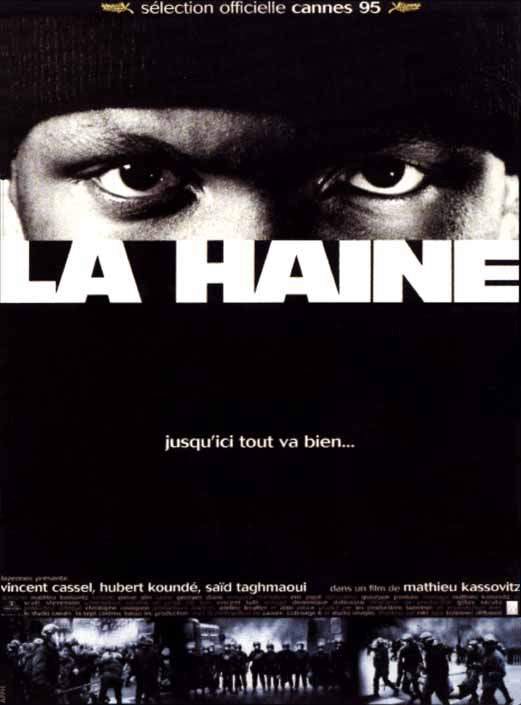
With France gripped by riots for the last 2 weeks, it might seem odd to start looking at language. After all, petrol bombs are petrol bombs and riotous mobs are riotous mobs, aren't they? Well maybe not...
French politician Nicolas Sarkozy has got himself in trouble for describing rioters as "racaille", which has been translated as "scum" or "rabble" in various English newspapers. As a report in The Guardian's newsblog reveals, the term "racaille" has its own etymology and its own history of derogatory connotations. So is Sarkozy fanning the flames of hatred when he uses this word, perhaps suggesting the rioters are lowlife scum who deserve no sympathy? Or could they be seen as disaffected, inner city working class youth whose protests are a last ditch mayday call?
Well again, words can play tricks. First off, are they really from the inner city? The areas affected by rioting (particularly those in Paris) are what are called "banlieus", which translates into English as "suburbs". This has totally different connotations in English: we assume suburbs to be hubs of middle class life, affluent, quiet and probably quite respectable (bar the odd wife-swapping party or alleged Steve McFadden "dogging" incident), not some strife-torn ghetto. This comes down to human geography rather than language, I suppose: British inner cities have historically been the home of generation after generation of migrants from the Hugoenots through to the Jews, Irish, Caribbeans, Indians and Bangladeshis, and now maybe the East European building trades, all of whom move out towards the fringes as they gain prosperity. But in France, the new arrivals have been housed on the edges of society, perhaps literally.
Secondly, are the rioters really working class? Well, if your definition of working class is that people work, then probably not. Figures suggest that up to 40% of the residents of the banlieus are unemployed and - according to the report in today's Guardian - make their money from state benefits, petty crime and drug dealing. Sounds like work of a sort, but not the stereotype of manual labour, the term "working class" usually brings to mind.
While France burns up like something out of La Haine and even La Haine's director Mathieu Kassovitz weighing into the debate in today's Guardian, maybe we should have a look at the language we use to label social groups here in Britain: while one Tory party pretender calls some of you the "wristband generation", you can be sure as hell that other people in his party - and of course more widely across society - are calling you something else, a lot less pleasant.
But of course, how important is language when the real problem is how society is structured and controlled? Do the terms we use to label people simply reflect our attitudes or shape them? And how much does a term like "racaille" contribute to the feelings of resentment of the rioters - who've suffered at the hands of a system that segregates and scapegoats them, and a police force that's notorious for its racism - or simply reflect the attitudes of those disgusted and ashamed by what they see happening to their cities?
Useful for:
ENA1 - Language & Representation
Monday, November 07, 2005
Is that a ladder in your tights or a stairway to heaven?
"Call God, because heaven must be missing an angel". Or how about, "this face leaves in 5 minutes and I want you on it"? Classy, eh?
An article in this week's Independent on Sunday looks at the dubious art of chat-up lines (or "chirpsing" as I believe the youth of south London call it) and seeing as at least one of our students is doing this for a language investigation (hi Femi) and others probably use them at the weekends (hi Max, Jerome and Niall - only joking) I thought it might be a useful article to look at.
The article is here but I've pasted it below as well. How about taking a framework analysis (lexis, semantics, grammar, pragmatics, phonology etc) of a range of chat-up lines and looking for patterns? Or even testing them out on unsuspecting members of the public as a weird form of social anthropology?
By Roger Dobson and Jonathan Thompson
Published: 06 November 2005
Useful for:
ENA3 - Conversation Analysis
EA4C - Language Investigation
An article in this week's Independent on Sunday looks at the dubious art of chat-up lines (or "chirpsing" as I believe the youth of south London call it) and seeing as at least one of our students is doing this for a language investigation (hi Femi) and others probably use them at the weekends (hi Max, Jerome and Niall - only joking) I thought it might be a useful article to look at.
The article is here but I've pasted it below as well. How about taking a framework analysis (lexis, semantics, grammar, pragmatics, phonology etc) of a range of chat-up lines and looking for patterns? Or even testing them out on unsuspecting members of the public as a weird form of social anthropology?
'Excuse me, beautiful, do you have space in your handbag for my Merc keys?' And if you think that's excruciating, you should hear the successful chat-up lines...
By Roger Dobson and Jonathan Thompson
Published: 06 November 2005
Having sweated over the origins of the universe and split the atom, academics have finally tackled the question that has perplexed mankind since the dawn of time: what are the best chat-up lines?
For millions of males forced to do a swift about- turn in nightclubs, the advice is simple. The way to a woman's heart is to dazzle her with a bit of culture and suggest that you're a fine specimen of a man.
Think long term, even if that is not your intention. For, according to psychologists from Edinburgh and Central Lancashire universities, the opening gambit is much more than a simple introduction. They tried 40 "verbal signals of genetic quality" on 205 people.
Dr Christopher Bale, who led the research, explained the findings. "The highest-rated lines were those reflecting the man's ability to take control of a situation, his wealth, education or culture, and spontaneous wit. A direct request for sex received a low score, but it was not the least effective gambit."
So what are the words of wonder that researchers believe will secure a night of passion? Apparently: "It's hot today isn't it? It's the best weather when you're training for the marathon."
Another winner, they assure us, is to steer conversation towards your favourite music, so you can drop the line: "The Moonlight Sonata or, to give it it's true name, Sonata quasi una fantasia. A fittingly beautiful piece for a beautiful lady."
By now, you may be wondering what the worst lines were. Well, "You're the star that completes the constellation of my existence" is unlikely to make her swoon.
The Independent on Sunday decided to road test the research at London's fashionable Match Bar near Oxford Circus. We began with one of the top five offerings.
"Ten-ton polar bear."
"What," replied the young brunette at the bar. "Well, it breaks the ice, doesn't it," we said, optimistically.
The verbal response was unprintable. Undeterred, we pressed on. "Your eyes are blue like the ocean, and baby I'm lost at sea."
The result: "You're an idiot. And you're colour- blind - they're brown."
The lauded marathon line attracted only giggles. We got a better response to the line "There's something in your eye. Nope, it's just a sparkle", but the big winner proved to be our very own: "Is that a ladder in your tights or a stairway to heaven?"
The scientists maintain that while it might be good to hint at having the means to support a potential partner, showing off is not appreciated. "I was just wondering if you had space in your bag for my Merc keys" proved their ultimate flop.Useful for:
ENA3 - Conversation Analysis
EA4C - Language Investigation
Tuesday, November 01, 2005
There ain't no love, no Montagues or Capulets, just banging tunes and DJ sets and dirty dancefloors and dreams of naughtiness
I suppose it's a bit embarrassing at my age to be rambling on about pop lyrics and the music that the youth of today listen to, but why break the habit of a lifetime?
That Arctic Monkeys tune - it's got a good beat, eh? And great lyrics. And lyrics is what this is all about. The genius of Jarvis Cocker (formerly of the Sheffield beat-combo Pulp, for those of you under 25), Eminem (a popular rapper from Detroit, for those of you over 80) , Tupac Shakur (a sadly deceased rapper, for those of you without the internet) and Dizzee Rascal (the talented garage MC who hails from my postcode - E3 in the area etc...). And that's not to mention, the lyrical genius of Mike Skinner from out of The Streets... and maybe even Pete Doherty's junkie/crackhead ramblings.
So are lyrics worthy of linguistic and/or literary analysis? Are they just a debased form of poetry made up by young punks/stoners/thugs (take your pick) high on a lethal cocktail of booze/weed/crack (take your pick), or perhaps the lovesick meanderings of teenage bedroom poets? The jury is out, but some A Level coursework moderators have issues with students tackling lyrics for their A2 Language Investigations and it's not hard to see why. Unless you take a strong linguistic focus on the lyrics you're studying and get away from crazed hero worship, your work may well be shallow and banal. What's needed - it seems to me - is an engagement with the meanings of lyrics within their specific social contexts and a close attention to the various ways in which lyrics reflect or shape the world they describe.
Should we, for example, take the monosyllabic mumblings of a dimwit like 50 Cent at face value, celebrating his hilarious simile skills such as "I'll lick you like a lollypop", or his claims to have been shot nine times (sadly perhaps, not 10 times, but I wouldn't say this to his face...) or should we read his lyrics as the work of a storyteller, building a fantasy around the bare bones of truth in his life story? And what about Eminem's insane tales of killing his ex-wife and mum, or even the extended stalker track, "Stan"? These all seem like fair game for some in depth analysis.
Jarvis Cocker has recently been in the news as "A specially commissioned verse by the singer will be unveiled this week in Sheffield, as part of the Off The Shelf literary festival" according to The Observer, while "the literary critic DJ Taylor described his lyrics on the 1998 album This is Hardcore as 'one of those rare occasions when a pop artist transforms himself without irony into an artist proper'" (again from The Observer).
Meanwhile, the lyrics of all those mentioned earlier: Dizzee Rascal, Eminem andTupac have been discussed at length in various highbrow publications. In a Guardian article in 2001, the writer Giles Foden compared Eminem to the literary giant Robert Browning. Elsewhere, Counterpunch, a political website in the USA described Mr Mathers as "A hired gun from the poor part of town, who preys on the powerless, extorts money from the poor and celebrates a thuggish brand of gangster capitalism".
Dizzee Rascal's lyrics get a look-in here while Tupac's legacy gets the critical overview here, and Mike Skinner of The Streets gets dissected here.
Useful for:
EA4C - Language Investigation
That Arctic Monkeys tune - it's got a good beat, eh? And great lyrics. And lyrics is what this is all about. The genius of Jarvis Cocker (formerly of the Sheffield beat-combo Pulp, for those of you under 25), Eminem (a popular rapper from Detroit, for those of you over 80) , Tupac Shakur (a sadly deceased rapper, for those of you without the internet) and Dizzee Rascal (the talented garage MC who hails from my postcode - E3 in the area etc...). And that's not to mention, the lyrical genius of Mike Skinner from out of The Streets... and maybe even Pete Doherty's junkie/crackhead ramblings.
So are lyrics worthy of linguistic and/or literary analysis? Are they just a debased form of poetry made up by young punks/stoners/thugs (take your pick) high on a lethal cocktail of booze/weed/crack (take your pick), or perhaps the lovesick meanderings of teenage bedroom poets? The jury is out, but some A Level coursework moderators have issues with students tackling lyrics for their A2 Language Investigations and it's not hard to see why. Unless you take a strong linguistic focus on the lyrics you're studying and get away from crazed hero worship, your work may well be shallow and banal. What's needed - it seems to me - is an engagement with the meanings of lyrics within their specific social contexts and a close attention to the various ways in which lyrics reflect or shape the world they describe.
Should we, for example, take the monosyllabic mumblings of a dimwit like 50 Cent at face value, celebrating his hilarious simile skills such as "I'll lick you like a lollypop", or his claims to have been shot nine times (sadly perhaps, not 10 times, but I wouldn't say this to his face...) or should we read his lyrics as the work of a storyteller, building a fantasy around the bare bones of truth in his life story? And what about Eminem's insane tales of killing his ex-wife and mum, or even the extended stalker track, "Stan"? These all seem like fair game for some in depth analysis.
Jarvis Cocker has recently been in the news as "A specially commissioned verse by the singer will be unveiled this week in Sheffield, as part of the Off The Shelf literary festival" according to The Observer, while "the literary critic DJ Taylor described his lyrics on the 1998 album This is Hardcore as 'one of those rare occasions when a pop artist transforms himself without irony into an artist proper'" (again from The Observer).
Meanwhile, the lyrics of all those mentioned earlier: Dizzee Rascal, Eminem andTupac have been discussed at length in various highbrow publications. In a Guardian article in 2001, the writer Giles Foden compared Eminem to the literary giant Robert Browning. Elsewhere, Counterpunch, a political website in the USA described Mr Mathers as "A hired gun from the poor part of town, who preys on the powerless, extorts money from the poor and celebrates a thuggish brand of gangster capitalism".
Dizzee Rascal's lyrics get a look-in here while Tupac's legacy gets the critical overview here, and Mike Skinner of The Streets gets dissected here.
Useful for:
EA4C - Language Investigation
Subscribe to:
Posts (Atom)
Follow EngLangBlog on Bluesky
The old Twitter account has been deleted (because of both the ennazification and enshittification of that site) so is now running on Bluesk...

-
 As part of the Original Writing section of the NEA, students will be required to produce a commentary on their piece. This blog post will pr...
 -
As lots of students are embarking on the Language Investigation part of the Non-Exam Assessment, I thought it might be handy to pick up a fe...
-
I'm on a roll. Nothing from me for ages, then three posts come along! This is a lovely story from the Kenya Times about a dialect called...