Monday, July 25, 2016

Why language is such good sport

Previously, I suggested that coffee chains and their pseudo-Italian-American lexicon provided possible evidence of the way that English was changing its attitudes when it came to borrowings. My argument was that asking for 'a triple-shot mocha with soya to go' made consumers feel part of something exclusive; that it somehow helped 20- and 30-somethings to rediscover the joys of using slang with their teenage friends. In short, coffee shops had become closed language communities of their own. This doesn't have quite the same socio-political implications of Milroy's study, but you get the idea. 

However, I'd hate to be thought of as an inverted coffee snob and so I turned my gaze elsewhere. 

Watching Chris Froome claim his third Tour de France title yesterday got me thinking about the language of sport in all its glorious vagary. It is every bit as elitist as coffee and fine dining in its choice of lexis, often seeming like a different language intended for the few, rather than the many. 

In cycling, it literally is a different a language, filled with borrowings of French origin. Why have a referee when you can have a commissaire? As a noun, it sounds so much more important and sophisticated. Then we have the collective noun for the main group of riders: peloton. And let's not forget that the peloton gets strung out into echelons in strong cross winds, aching to pass under the flame rouge as they go over the final classified climb, supported by their domestiques! It's a delightful lexicon, but what on earth does a novice make of it?

And what of tennis?

As Sue Barker rounds up the day's scores, she casually announces that Federer is through in straight sets with a triple bagel, while Djokovic battled through a five-setter, eventually triumphing three, six, six, two and six, breaking twice in the decider. What does this mean to anyone out of the loop?

Golf offers little reprieve. Spieth leads Day by a single shot at seven under after eagling the par five ninth, while a wild tee shot from Day saw him double bogey the par four eighth. From this, we are meant to know what their scores were before these shots! (Incidentally, it would've meant that Day had led on -8 with Spieth three behind on -5.) 

Of course, there are sports like football where everyone knows the terminology, even though they might not quite grasp the rules, but with the Olympics fast-approaching, viewers are sure to be treated to a whole new world of sporting jargon. The question is, why do we tolerate it?

Because we want to learn. We all want to sound like experts in any field, nodding sagely at the right moments. The commentators are our teachers, describing what we are seeing on our screens so that we can match the words (usually nouns) to the actions. If you don't listen hard, you'll loft one into the deep and find yourself caught out!

Once again, specialist, field specific lexis is a tool that helps us become a part of something from which we would otherwise be excluded. Is it so wrong to want to join the club? Language is used in a self-seeking way from the moment we are born, we just become better practitioners in the art of manipulation as we grow. The ability to feel comfortable on a shared topic in any company is incredibly beneficial, so let's not shun the language's ever-changing vocabulary...let's take in as much as we can and go for gold. Well, a podium finish at least. 

Wednesday, July 20, 2016

Discussing language over a coffee...

Back when I was an A-Level student, I thought I had the concept of borrowings worked out. The textbook definition (as given by my teacher) was that a borrowing must either fill a gap in the borrowing language (usually an abstract concept), or it should name some kind of phenomenon that has gripped the culture of the borrowing language (a more concrete notion).

I suppose words like the German-derived abstract noun 'schadenfreude' (finding pleasure in the misfortune of others - usually a friend) and the Georgian abstract noun 'Shemomedjamo' (eating beyond the point of fullness because the food tastes so good) are fine examples of the first part of the definition because to find an English equivalent to describe such ideas would be too cumbersome. The second part of the definition is more straightforward. The borrowing of the Japanese noun 'karaoke' was beneficial as it gave a name to a new innovation on western shores. 

Where am I going with all this? Well, arguably the traditional circumstances related to borrowings no longer hold true. They appear to have become a cultural issue, designed to fit in with the British class system. Let me give you some examples. 

Two friends are having a tête-à-tête over their suburban garden fence, with one foreshadowing a juicy bit of gossip with the phrase "Strictly entre nous..." The first bit of French means 'head-to-head' (in a friendly sense) and the second means 'between us'. Can English express these ideas without recourse to the Romance languages and without ambiguity? Yes, ultimately making this a middle-class affectation. The late, great comedy writer, John Sullivan bestowed 
such character flaws(?) on Del Trotter as he described attractive women as 'fromage frais' and 


used exclamatives such as 'Chateau Neuf du Pape!' Del always had those middle-class yearnings and Sullivan captured them with warmth and incisive accuracy. 

But let's get to the real point. Return with me to my childhood...

When I was growing up in the 1970s and '80s, my family often popped into a traditional cafe for a drink. Usually, they had tea or coffee but, when feeling extravagant, they would opt for a milky coffee or, in moments of utter recklessness, a frothy coffee! Although you can still ask for such beverages in small tea shops, we know these drinks  better as lattes and cappuccinos today. That's right, I'm about to propose that coffee culture is proof of the changing nature of borrowings. 

Rewind 30 years, enter a cafe and ask for a tall, skinny macchiato with an extra shot to go. What kind of response would you receive? A look of incredulity followed by immediate arrest. Today, however, it's the norm. We speak a different language to many of our grandparents. What's wrong with requesting a small macchiato, made with skimmed milk with an extra drop of coffee thrown in that you wish to take away from the cafe? What's wrong is that, despite its clarity, it sounds like you don't understand; it isn't snappy enough; you're not part of the club - and belonging is everything in today's society. 

And who said size doesn't matter?

If we take the so-called big three coffee chains, we see huge variations in their use of Italio-American jargon to reference the size of drinks available. In Starbucks, you can have (from smallest to largest) short, tall, grande and venti. Meanwhile, Costa limits the choice to primo, medio and massimo while Caffe Nero offers just regular and grande. How do these sizes correlate? I reached the (not unreasonable) conclusion that grande, venti and massimo must all be Italian synonyms for 'large'. I put this to two friends, both fluent in Italian, who laughed at me explaining that the choice of size names were all style over substance. 

Therefore, There exists a reasonable possibility that social class and a desperation to be part of something (moderately) elite has become a factor in why the English language continues to borrow words - even though they don't necessarily mean what we think they do. Isn't it sufficient to ask for small, medium or large? Oh well, c'est la vie!

Friday, July 08, 2016

Brexit: the war of the words

By chance or design, our often fractious relationship with continental Europe has contributed significantly to our proverbial 'mongrel' language which is up there with Finnish and Welsh as one of the continent's most notoriously difficult languages to learn. As if this isn't bad enough, recent events, monolithic institutions and the pseudo-intellectuals in the media have saddled us with a whole new world of linguistic detritus.

Looking back, it was easy: David Cameron promised a straight in/out referendum that we could get our heads around. As time passed, factions emerged in the form of official (and unofficial) Remain or Leave camps. Sadly, as with Brangelina and Jedward, the media outlets needed something...sexier? They found it! After all, who could fail to be seduced after drinking the love potion that is the blended neologism (or blelologism)?

Suddenly, a reporter recalled that the Greek threat to leave the EU had been dubbed Grexit (Greek exit) and so, logically, the concept of Brexit (noun) was born. But Brexit versus Remain lacked balance and harmony. We had the Yin, but why borrow that when we had no Yang to complete the set?  Fortunately, help was forthcoming as a timid hand raised itself from beside the water cooler and suggested that Remain could be renamed Bremain. Everyone present knew it was rubbish, but the noun worked. Shrek had found his Fiona and the blended neologisms were settled upon as the official lexicon of the Breferendum.

From this point on, we saw linguistic change take place at light speed. You were either pro- or anti-Brexit. Already, the new noun had undergone affixation thanks to two tried and tested prefixes. As a consequence it had shifted semantically, evolving from noun to adjective as in the pre-modification present in, '...claimed the pro-Brexit camp.'  The same didn't happen with Bremain because, as a  
noun, it was still rubbish.

Then came the ever-so-slightly-tortured plural noun for the pro-Brexit bunch: Brexiteers. Ostensibly, this is affixation through the use of a a suffix but, however we perceive it, it is difficult to dissociate the connotation of -eers with The Musketeers. Fearless, selfless noblemen risking everything for the side of good? It makes for a compelling image. Meanwhile, The Bremain Camp continued to sound like a dodgy political remake of Carry on Camping.

In truth, it may well have been the war of semantics - not words - that decided the referendum. Brexit always had so much more potential than Bremain and, in the end, three noble horsemen from France contributed to a divorce from that same nation (amongst many others). A result that left many voters feeling a sense of Bregret or Branxiety. Really? The blended neologisms were now forming more abstract nouns. Where will it all Brend?

As for the matter of the the red tops taking the initialism EU and using it as a substitute for the second person pronoun you? We'll leave that abuse of orthography for another time. EU have probably had enough for today.


Monday, June 13, 2016

ENGA3 - Accent & Dialect revision

Accent and Dialect is one of the topics that could appear in Section A for Language Variation but also in Section B for Language Discourses. Over the last few months, I've added lots of links for this topic for the students taking the new A-level (where the topic appears in the 1st year of the course) but all of these are relevant (and some are really excellent) for your work on ENGA3. Here's a selection of useful posts and links:


Sunday, June 12, 2016

ENGA3 - Language Discourses revision

Language Discourses

  • This Word of Mouth episode featuring Oliver Kamm (who we talked about recently) is useful for debates about pedantry and 'proper' English.
  • This Salon article about online communication making us more stupid is a good read and offers some opinions about language change that could be explored (thanks to @QEEnglish for the link).
  • These articles (this one and this one) by Robert Lane Greene focus on arguments about language and offer a linguistically descriptive perspective on such changes. Ideal for exam revision.
  • Jean Aitchison's original Reith Lectures about language can be found here. If you want to hear what she really said about crumbling castles, damp spoons and infectious diseases, go no further than A Web of Worries.
  • An old blog post from here about the prescriptive - descriptive debate is worth a read, especially if you're interested in exploring arguments about views belong along a continuum.
  • Finally for today, Stan Carey has written an excellent article about why slang is not a broken down form of 'proper' English and you can find it here.


Saturday, June 11, 2016

ENGA3 - World Englishes revision

Sorry to neglect you ENGA3ers out there. I've been busy with the new AS level, so put the A2 stuff on the backburner a bit. Here are some things that I hope will help...

World Englishes

  • Have a listen to this Word of Mouth episode about English as a Lingua Franca to get a grasp of what's going on with English around the world.
  • Think about the ideas in this article which suggests native English speakers are often the problem in international conversations using English.
  • This article is also interesting about the ways English is used around the world.
  • David Crystal talks in this clip about the future of English around the world.


Wednesday, June 08, 2016

Paper 2 today - good luck

Hope it all goes well today. Plenty of revision tips on the blog should you want to do any more!


Monday, June 06, 2016

Paper 2: last few revision pointers

Paper 2 is on Wednesday, so good luck with it to everyone. I won't be blogging or tweeting about the AS for a while after then as I'll be marking it and will need to keep my head down and prime my red pen for lots of (I hope) ticks.

I've posted loads of stuff about Paper 2 here and via the Twitter feed, but if you're looking for a few last-minute ideas, why not have a look at the following?

Accent and dialect: Paul Kerswill and Alex Barrata were interviewed on Radio 4 last week and if you listen from 14 minutes in to this link, you'll get a nice overview of some of the attitudes to different accents.

There's been some interesting material emerge from the team behind the English Dialects app and if you want to see how some of their work has been reported have a look here and here.

The area of social groups is perhaps a bit more slippery than that of accents and dialects, so you might want to look at some ideas around social class here and about slang and young people here. Julie Coleman's The Life of Slang is a great book about slang and how it emerges, so a look at some of the reviews of it might help with your revision. Here's one.

There's already a lot about gender out there, but reading and referring to recent posts by Deborah Cameron on her fantastic blog are a great way of showing your examiner (maybe even me!) that you've gone beyond the usual reading that everyone else will be name-checking. This article is great for interaction and gender, while this takes a different tack by looking at gender representation (both of which could appear on Paper 2 for AS and/or A level).

For occupation, have a look at some of the tweets from the last month or two, including this one and this one.

Anyway, good luck; I'm looking forward to reading and marking lots of ace answers.


Saturday, May 21, 2016

Revising AO1 terminology

If you're revising for Paper 1 and want to do some last-minute terminology work, these are good places to look.

The Internet Grammar of English
The Interactive Grammar of English


Saturday, May 14, 2016

Attitudes to accents

If you're revising Paper 2 of the new AS level, there have been some really helpful articles about some of the topics covered, over the last few days.

This piece from The Guardian on Friday (thanks to @ENSFCEnglish) looks at research carried out by Dr Alexander Baratta into accent prejudice in education and quotes some staggeringly ill-informed views about how trainee teachers should speak. The story is also covered in The Sun (thanks to @paulkerswill).

A couple of years ago, this story about a teacher made news when it was suggested she had been told to 'tone down' her northern accent while working in a soft, southern, shandy-drinking school (thanks to @Lisa7Pettifer for that link).

Elsewhere, Rob Drummond at MMU kindly posted the results of a short survey he had carried out into attitudes towards young people's language and you can find them here.

All of this material is useful for both sections of the new Paper 2 (AS and A level) where you might see examples of texts that represent regional and social varieties, along with debates and arguments about the same topics. The sample paper has a Directed Writing task on issues around people changing their accents and these texts give you some handy, up to date reference points for questions like that.

We've covered lots of pieces about accent prejudice on this blog in the past and you can find plenty of links through this page.

Wednesday, May 11, 2016

Paper 1: salience & hotspots

Revision of Paper 1 skills and approaches has been on our agenda recently, so here are a few things that we've been looking at.

Given the limited amount of time to read two substantial new texts and write three answers, I think we probably have to be quite disciplined about time on this paper, so it pays to read for meaning effectively and plan cleverly. For our students, I've been suggesting an approach to planning answers that allows for getting an overview of each text to help with the meanings and representations in Questions 1 and 2 and which also starts to focus on the compare and contrast requirements of Question 3. Underpinning it all is a focus on finding examples of language and describing them accurately.

Here's an outline of what I've given our students to work with. I've been quite pleased with the results this week, so let me know if it works for you.

In the short time you have in the exam, you need to make sure every minute counts. Your note-taking and reading of the texts needs to be smart and give you material for your answers to the text analysis (Questions 1 and 2) and the compare and contrast of Question 3.

The approach I’d suggest is to use the first few minutes to read for meaning. That is, get a decent sense of the following:

• What each text is about – the topic that they share
• What’s being said about that topic
• What different views are being offered

You can also make some initial notes to help with the other parts of the questions, such as:

• What kinds of texts they are - genre
• The mode/s they are in – spoken, written, computer-mediated communication
• Their audiences and purposes

These observations can help you sort out some useful starting points for your notes, which can then help you form the basis of your main paragraphs for each answer. Next, I’d suggest finding 5-6 ‘hotspots’ in each text. These are areas in each text that convey the clearest and most useful ideas. These hotspots could be a single phrase, a section of the text (an image, a headline, the opening or closing lines), a sentence or even a pattern of language across the whole text.

These hotspots should mean something and, in some cases at least, represent the topic or views on the topic in a way that you can pull apart. There’s no point just picking a few words because you can label them with terms that you’ve learnt (“x is a determiner and y is a pronoun”); it’s vital to get to grips with language that means something and contributes to the overall meanings in each text.

With these hotspots, you can explore what things mean and analyse the language used to create these meanings. This means thinking about your language frameworks (or methods, or levels, or whatever you’ve called them this year) and your AO1 terms, making sure you are offering a good range across each text. AO1 is not just about grammatical labels (word classes, phrases, sentences, clauses, tense etc.), but also about things like semantic fields, patterns of meaning (contrast, antithesis and juxtaposition, for example), graphology, interaction patterns (especially in spoken texts or ones using features of spoken language), discourse structure, pragmatics and perhaps phonology too.

 As you discuss the language used in these hotspots, try to cover a range of different language points but concentrate your attention on the ones that are most important in creating meanings and representations. For example, if the topic is a famous actor, perhaps think about the ways in which adjectives modify nouns to describe her performances and how metaphor might be used to describe her career. If the topic is an event like a football match or gig, look at the verb choices, the use of tense and aspect to structure events. If the topic is more of an ‘issue’, look at the patterns of abstract nouns and their meanings, and perhaps the overall discourse structure used to present conflicting ideas.

There will be many different ways to do this and if you’ve selected, meaningful parts of the texts, you’ll be able to explain them effectively. Examiners don’t really want to read about a text having “lots of long sentences to make it flow” or “lots of pronouns to make it personal” because these are meaningless generalisations. Look closely at what is actually meant in each text in its given context.

While analysing these hotspots, keep in mind the bigger picture of what each text is doing and what kind of texts they are. You will need to address these issues a bit more in your answer to Question 3, but they will also be useful in Questions 1 and 2. For example, if the text is typical of a particular genre, you know it will generally do certain things (recipes tell you what to do, stories recount events etc.).

 Another important aspect to consider is not just how the topic of each text is represented but how the text creators (writers, speakers, posters, texters etc.) represent themselves and each other. How do they position themselves in relation to the text receivers? How do they present a face or image to the audience and to each other? How does this relate to what the texts are about?

In the example text you’ve been given, spend 7-8 minutes doing what’s outlined above. Read for meaning, make notes, identify 5-6 hotspots and then get writing. Use the remaining time (25 minutes) to draft your analysis of these hotspots, linking them back to the overall meanings in the text to keep a coherent thread running through your analysis.

We've used different texts to practise on, but a good one supplied by a helpful teacher from another school (thanks Wendy!) is this blog about Alan Rickman, which we then used alongside this article about Rickman (well...more about Snape really).

Friday, April 01, 2016

Argument & counter-argument

While marking my students' recent work for the directed writing task on Paper 2 of the new spec, I've been jotting down a few ideas about how to address the main areas that need improvement. Apart from some of the stuff I've blogged about recently - making the opinion pieces accessible to non-specialist readers, including enough language knowledge to hit the higher levels of AO2 and developing effective openings and conclusions - one thing that has struck me is this part of the mark scheme for AO2:


Under the 'Performance Characteristics' heading (i.e. the general expectations of what students will be doing to be in this Level, rather than the more specific 'Indicative Content' for each paper), the key thing seems to be the notion of identifying different views, approaches and interpretations.

If we assume that students already need to have "show detailed knowledge of linguistic ideas, concepts and research" (Level 3), then what Level 4 seems to be asking for is a sense of alternative ways of looking at the issue and an awareness that other views exist. In an opinion piece, there is clearly an argument that needs to be developed and the Directed Writing Guidance document on the AQA site makes it clear that "students’ writing will necessarily have the purpose of conveying opinions and arguing a case" while "marshalling points and presenting them in a coherent form". But, perhaps most importantly for Levels 4 and 5, "Students can show that they can deconstruct others’ arguments and present their own".

My reading of this is that a single-track opinion piece which ploughs a fairly narrow furrow and doesn't look up, or around, at alternative arguments or opinions, might find it hard to go much higher than Level 3. I might be wrong... and we probably need to remember that the paper hasn't been marked (or even sat) yet.

Anyway, from looking at my own students' work, I've decided that they need to do a bit more work on addressing different opinions and showing awareness (at least), understanding (preferably) and evaluation (optimistically) of other views.

Style models are good for this and some of these are useful for showing how different opinions can be flagged up and then knocked down. David Crystal does a good job of this in his review of Simon Heffer's (awful) Strictly English:

Heffer hides his tastes behind the idea of what is logical, using variants of the word more often than Spock. "Rules in language are made by logic, not by a democratic vote," he writes. If only that were true: it would save grammarians so much bother. In fact, there is no logic behind his recommendations, other than the usual kind favoured by pedants: if I like it, it's logical; if I don't, it isn't.

By quoting Heffer, Crystal can respond directly to the argument, but perhaps remembering a quotation and then deploying it effectively is a bit of a tall order for an AS student in an exam (although, it's always nice to see it happen).

An alternative approach is a little vaguer, but quite effective in its own way. Lindsay Johns' Ghetto Grammar article, which is a favourite of mine for class analysis, takes a lighter touch:

Some educators take a position of cultural relativism. They assert the legitimacy and value of street talk, or at the very least, the importance of teaching young people to "code switch" - how to differentiate in which milieu it is socially acceptable.

I have no time for such an approach. In my experience, young people find it very hard to code switch. Text-speak, poor grammar and street patois routinely pervade the essays I set them, let alone their conversations with me.

What's interesting about this approach is that it's a bit vague about:
a) who the "educators" are (names would help);
b) how what they say can be defined as "cultural relativism";
c) why Johns' own "experience" should trump these educators' assertions.

On the plus side, it's effective in keeping his (for me, almost entirely wrong-headed) argument on track.

A quick task I'm setting my students after Easter is the one below, in which they look at an idea from one side of a debate (in this case, work we've been doing on dialect and slang bans in schools) and then try to come up with a counter-argument. I'm going to encourage the students to come up with a source, quotation or reference point for each argument too, so they can draw on what they've studied in class and support their views, where possible. I'd be interested to see if anyone else has ideas for different arguments that could be brought in or where else to take this.


Saturday, March 26, 2016

Representation and regional variation

One area of Paper 2 of the new AQA English Language AS level I've been trying to address is the focus on how users of language varieties are represented. In the examples I posted in January, stimulus texts taken from stories about schools 'banning' slang and/or dialect touched on how regional varieties and youth sociolects are represented and discussed, so they make a useful starting point. 

Another area though is how fiction represents accent and dialect, often through 'eye dialect': a way of writing words to make them resemble how they are pronounced. It's less precise than using a phonemic alphabet but creates an easy to understand representation of how a regional accent might sounds. Irvine Welsh uses it in Trainspotting, which is set in Edinburgh and through the eye dialect you can hear the sound of the Leith accent coming through:

Third time lucky. It wis like Sick Boy telt us: you’ve got tae know what it’s like tae try tae come off it before ye can actually dae it. You can only learn through failure, and what ye learn is the importance ay preparation. He could be right. Anywey, this time ah’ve prepared.
Another regional variety represented in fiction is the Yorkshire dialect, which features in the work of Barry Hines, whose A Kestrel to a Knave is a classic of working class fiction. In the short extract of dialogue below, you can hear the author's attempts to capture the sounds and words of his characters' voices, capturing also something of their social and personal identity in the process, perhaps in a way that Standard English simply couldn't do:

He stayed in his own half of the bed, groaning and turning over every few minutes. Billy lay with his back to him, listening. Then he turned his cheek slightly from the pillow.
'Jud?'
'What?'
'Tha'd better get up.'
No answer.
'Alarm's gone off tha knows.'
'Think I don't know?'
He pulled the blankets tighter and drilled his head into the pillow. They both lay still.
'Jud?'
'What?'
'Tha'll be late.'
'O, shut it.'
'Clock's not fast tha knows.'
'I said SHUT IT.'
He swung his fists under the blankets and thumped Billy in the kidneys.
'Gi'o'er! That hurts!'
'Well shut it then.'
'I'll tell my mam on thi.'
Jud swung again. Billy scuffled away to the cold at the edge of the bed, sobbing. Jud got out, sat on the edge of the bed for a moment, then stood up and felt his way across the room to light the switch. Billy worked his way back to the centre and disappeared under the blankets.
As the Yorkshire poet, Ian McMillan explains in his piece about Barry Hines (who died last week),  it was something of a rarity for authors to use the voices of working class regional English speakers in a serious and considered way in fiction. For many middle and upper class authors, regional accents were easy markers of social difference to employ and non-standard English speakers were often mocked or ridiculed. McMillan explains how pleased he was to hear his own voice being represented in an authentic and sympathetic way:

I wasn’t only captivated by the characters and the plot, though. What really made me grin and bang the settee arm with my pudgy fist was the way the characters spoke: they talked just like me. Somehow Hines, who died at the weekend, managed to get that minimalist Barnsley poetry down on the page without the apostrophes flying round the paragraphs like racing pigeons.
These text extracts make quite nice examples for analysis and discussion at AS level, because they offer a representation of different characteristics of regional dialects (the use of thi and tha suggesting the Yorkshire pronouns thee and thou, for example). 

Elsewhere, less sympathetic representations still abound and a trip to a local charity shop this week (don't dare say middle-aged teachers never have any fun) meant that I stocked up on old copies of (the extremely rude) Viz comic which I spent a large part of my late teens and early twenties reading when I should have been doing something useful. 

One of the annuals features a strip called The Boy Scouse, in which a young Liverpool boy goes to Scouse Camp (as opposed to Scout Camp - dat's da joke, la) and develops Scouse skills. You can see a bit of it yourself in the extract below:


Unlike the serious examples earlier, the representation of regional variety here is all part of the mockery of a whole group of people, or perhaps the social and regional stereotype around them. 

The pronunciation (th-fronting stopping* in dat, g-dropping in avoidin and shopliftin & /t/-glottalisation /l /substitution** in gerrin), along with local expressions such as la (used like lad or mate, according to this link) and the syntax of colloquial spoken English such as the 'tail' ("Dat'll go great...dat will") are one element of the shorthand used to create the stereotype of the Scouse scally, along with the curly hair, references to unemployment, crime and anti-social behaviour.

The strip itself could be a good way into a wider essay question about how some regional dialects (and/or sociolects) are portrayed negatively in popular culture, as well as a useful wider discussion about the ways in which (often offensive) social stereotypes are easily tapped into through the representation of a particular way of speaking.

*Edited on 27.03.16 to amend th-fronting to th-stopping (cheers to @Nickking6)
** and t-glottalisation to /t/ to /l/ substitution (from Clark & Watson's work here, as suggested by Nick)

Wednesday, March 16, 2016

Opinion pieces: doing the knowledge with style

Over the last week or two, we've been working on the Directed Writing part of Paper 2 and thinking about ways to make the opinion pieces both rich in language knowledge - so the reader is actually informed and educated about language - and able to grasp the main ideas without being a specialist.

Having set a task on the language of social groups in which quite a few students erred on the side of catchiness and style over language content, with a few swinging the other way and writing things that were more like essays than articles, I put together the following as a worksheet for the best part of a double lesson. We're going to use it next week and see if we can get the opinion pieces a bit closer to what I think the mark scheme can reward.

Obviously, there's more to this kind of writing than just aiming to hit the different bands on the mark scheme and I'd encourage students to read as wide a range of opinion pieces - op-eds in papers, online articles like those on Comment is Free and Indie Voices and perhaps a few pieces from better blogs (eg Deborah Cameron's brilliant Language: a feminist guide) to get a real feel for the ways arguments and opinions are structured and shaped, but in the classroom we probably need a bit more scaffolding, so here it is...

Part of your job in the Directed Writing task is to explain linguistic concepts to a non-specialist audience.

This means that
a) you need linguistic ideas to explain and
b) you need to develop a way of making them clear and intelligible to your readers.

In practice, this means you will need to do the following:


  • explain who people are and why you are quoting them or referring to them 
  • give a clear explanation of a technical term (and show an example of it in use) 
  • untangle different ideas and make them more straightforward for your audience 
  • present different arguments and identify where they are coming from 
  • show an overview of issues from which you can then select relevant examples 
  • demonstrate language practices in use with examples that your readers will understand 
  • show your own line of argument and guide your readers through the topic 


In the example below (taken from here), there are some important linguistic ideas and technical terms, but it’s not very accessible.

How would you deal with it to make it more relevant and clear for your target audience?
What are the key bits to focus on?
Which bits can you ignore, summarise or just mention very briefly?
How would you make this relevant to a reader of a broadsheet newspaper in the UK in 2016?

Penelope Eckert (2000) studied the language use of American high school students who called themselves Jocks and Burnouts. These two subcultures were associated with sharply contrasting personal styles. Jocks participated enthusiastically in extra-curricular activities, played sports, served on the school council and hoped to graduate to college. They took the school as their community and hence the basis of their group identity. In the 1980s, when Eckert did her research, they wore smart designer jeans, the girls used candy coloured make-up and the boys had short hair. 

The Burnouts, in contrast, did not participate in school social activities and resisted the corporate identity of the high school and what it stood for. They wore bellbottom jeans, rock concert T-shirts, sweatshirts and auto-plant jackets, and expected to work in local industry when they were older. They were more likely to be out at an all-night party in the town than at the school dance. There were differences, too, in the language styles (pitch, pronunciation and grammar) used. Eckert sees these two subcultural groups as representing two different kinds of response to the school institution, and as involving students in alternative ways of negotiating their individual identities, their ‘meaning in the world’ (Eckert, 2000, p. 41). 

She suggests that Jocks and Burnouts are two different ‘communities of practice’, each involving students who have come together to share ways of doing things and ways of talking, beliefs and values, as a function of their shared engagement in the activity. Individual identity is constructed in collaboration with others in and around these communities of practice. 


How would you then link what’s here to some of the ideas that you covered in your own opinion piece about the language of social groups? Which areas would link to this and provide you with a paragraph before and a paragraph afterwards?

The flipside of this is that you also need to have enough language content to secure plenty of AO2 marks, so you need to do more than just recycle generalised, common sense ideas about language in your piece.

The following extracts are accessible and clear but don’t really tell the reader much that they won’t already know. How can you build on the ideas here with some relevant language studies, references to research and linguistic concepts?

For each of the sections below, think of a relevant linguistic reference and a way of integrating it effectively into the article.

Many people use language in different ways because of the different social groups that they belong to. For example, you could argue that people who are members of one social class (e.g. working class) would use language in different ways to those in a different social class (e.g. upper class). 


Class is one factor in language use, but not the only one. All of us belong to different social groups that relate to our age and activities we engage in. One such group might be young people - a group everyone belongs to at some point in their life – and young people generally use language in different ways to their parents’ generation. One style of language is slang and this is often used by young people to show their own identity and signal their membership of a particular group, as well as showing their distance from others outside their age group. 

The activities we engage in are also an influence on our language patterns. Those who work in certain professions or who engage in leisure activities with others are likely to develop a way of speaking that is different. Doctors, teachers, police officers and lawyers all develop their own ways of using precise, technical language. 

We don’t just behave in fixed ways with language though and often we might choose to alter our style of language to show that we are closer to others (or to distance ourselves from them). An example of this is when the Chancellor, George Osborne used more colloquial speech when addressing Morrisons workers at a warehouse while campaigning in the 2015 General Election. Instead of pronouncing better and got to with the usual ‘t’ sounds, he used a ‘d’ sound and elided the sounds of separate words to create gotta.

Wednesday, February 03, 2016

AS Directed Writing - finding style models

Section B on Paper 2 of the new AQA AS-level sets a directed writing task which means that students will need to get used to writing in a different way about language topics. In Section A of the paper, they will be writing an essay in response to some stimulus data and a "Discuss the idea..." essay prompt.

The sample material on the AQA site has one task (you can find it here and a student response to it with examiner commentary here) asking students to "Write an opinion article in which you discuss the issues surrounding people changing their accents". The stimulus text is a short extract from the Mail Online looking at media celebrity Donna Air changing her working class Geordie accent to something closer to her posh boyfriend's accent and it's pretty clear that this is not the kind of article that students will need to write for themselves, because a) it's very light on language issues (and AO2 is worth half the marks here) and b) it's a very short extract.

We've just been looking in class at possible style models for opinion pieces and come up with a few possibilities for the kinds of articles that appear in the broadsheet press or on their websites, and which offer some solid language content as well as arguing a case effectively. Here are a few ideas:

Julia Snell in The Independent responds to the Sacred Heart School dialect row: plenty of serious language content for AO2 and some nice shaping of an argument for AO5.

Michael Rosen in The Guardian taking on grammar pedants and those who teach a "right and wrong" way of dealing with grammar: a strongly argued piece that picks up a debate from elsewhere and explains the ins and outs of it, making language ideas accessible to a non-specialist but interested reader.

Robert Lane Greene in The Economist's language blog looking at accent prejudice: a range of linguistic references integrated effectively into a clear explanation of the main issues for a non-specialist audience.

In many ways, the kinds of opinion piece that appear as potential Media Texts for the old ENGB4 and Language Interventions for ENGA4 are also worth a look. Various examples of these have been collected here and here on this blog.

If you have found any others that you think are worth a look, please let us know via @EngLangBlog.


Saturday, January 30, 2016

#TwitterTwang

One of the big topic areas on the new AQA English Language AS level (and the A level) is Language Diversity, in which we look at how language varies from person to person and place to place. Much of the work done on this topic has focused on spoken language - accents and dialects, for example - but language can vary in written and electronic forms too.

Twitter has proved a really useful way of both producing and collecting this kind of data and more is explained in an article looking at the work of Brice Russ at Ohio University, who examined the language in some 400,000 tweets, looking initially for how people in different parts of the USA used either soda or pop to describe fizzy drinks.

Gabriel Doyle explains some of the ways in which Twitter can be used to chart change in language and how changes in language spread in this lecture clip.


Rachael Tatman, blogging from the Northwest Linguistics Conference in April of 2015, also noted how Twitter cold be used to identify not just lexical but phonological differences in how people used Twitter: in other words, the ways in which people used different spellings on Twitter to represent the ways they spoke with an accent:

Ok, so people will sometimes spell things differently on Twitter based on their spoken language dialect. What’s the big deal? Well, for linguists this is pretty exciting. There’s a lot of language data available on Twitter and my research suggests that we can use it to look at variation in sound patterns.

So, how is this relevant to those us doing English Language at A level? Here's the plan...

With #TwitterTwang we'll try to gather data from UK A level students using Twitter and a few helpful teachers. Over a 3-4 week period before the end of the Spring term, we'll identify a handful of ways in which data can be elicited in similar ways from students in different places and ask each group of students to hashtag their tweets with #TwitterTwang and a number to indicate where they're from (Essex as 1, Leicester as 2, Hackney as 3, Southport as 4, East Norfolk as 5 etc.). We can then make use of the data collected to see if there are patterns in regional dialect and/or accent apparent in the tweets.

I'm still thinking about different elicitation techniques and open to ideas (so please tweet me @EngLangBlog) if you have good ideas or think mine are rubbish, but here's the tentative plan:


  • a post-lunch tweet to describe what each student has had for lunch
  • a Gogglebox-style tweet/series of tweets about a programme that everyone agrees to either watch at a given time or on catch-up (e.g. Britain's Got Talent, The Voice, Take Me Out etc.)
  • a tweet about a picture/photo that we can all agree on an share
If we can agree on exactly which of these (or all?) to use, we'll have something to start with. We then need to identify a time to get this started. One of the best things about using Twitter for this is that we don't necessarily have to deal with the data as it comes in but can catalogue it using the different hashtags and save it for later. We could even use it for different things (language change, gender, individual tweeting styles) as the course goes on, or use it to compare with data in future years to see if language styles change.

Anyway, that's a start, I hope. If we could work out a plan in more detail through @EngLangBlog that would be great.

Monday, January 25, 2016

Accent and Dialect essays

We're coming close to the end of our work on Accent and Dialect for the new Paper 2 of AQA AS specification and thinking a bit more about the kinds of questions that might appear and how to approach them. One area that we've considered is the issue of why certain dialects (and/or accents) seem to be valued more highly than others, so for this we have been looking at news stories from a few years ago about so-called 'slang bans'. You can find a load of them gathered here as links.

In response to the question, "Discuss the idea that some dialects are viewed more favourably than others" (which we came up with ourselves), we've used short extracts of data from different schools (such as Sacred Heart in Teesside and Colley Lane in Halesowen) for the AO1 part of the question and as a springboard into the wider issues and discussion for AO2.

In terms of how to structure an answer, we've worked on the principle that it's best to address the essay question straight away in the opening paragraph with something along the lines of "The idea that some dialects are viewed less favourably than others is probably true and this is often the result of some privileged forms of English - accents such as RP or a dialect such as Standard English - being valued highly by influential and powerful parts of the population..." before going into the data in more detail.

The data is there, I think, to provide you with the chance to explore different features of language and to be able to see examples that might link back to the wider question, but it's also there to help you get a few AO1 marks early on, so get linguistic on its ass. Use your understanding of language frameworks such as vocabulary, grammar and phonology to describe and label the features of dialect that are apparent, and think too of the wider implications of what the school is doing by presenting this in the way that they do.

[Edited after 2016 exams to add the following. AO1 is assessed a little differently on Paper 2 compared to Paper 1, so it's less about analysing the data than writing coherently and with a good linguistic register. By that, we mean using the right kind of specialist terminology to describe language (e.g. accent, dialect, idiolect, phonemes, being able to describe word classes etc.). Most of the marks for AO1 are from your ability to actually structure an answer that addresses the ideas in the question.]

Once you've worked on the data, the next job is probably to make some links from what's there to the wider question - the idea under discussion in the title - and from there into the range of knowledge about the topic that you have built up by studying it and reading about it.

AO2 isn't all about naming theorists and quoting case studies, but they are important and they often give you a peg to hang a bigger idea on. So, in a question about dialects, it makes sense to think about studies that have looked at non-standard English (Trudgill and Cheshire), studies that have explored different pronunciations (Petyt and Trudgill), studies and surveys about attitudes to accents (Giles, Ryan, ITV Com/Res, YouGov) and any particular examples you have found in your own research or experience. If you've done a study on the dialect of Manchester, Newcastle, the West Country, Essex or Birmingham, you'll have examples you can use of the features of the dialect but also media representations of it. Use them: they will help make your answer more individual and interesting. Equally, if you have a personal take on it - you have been judged for your dialect (and let's face it, if you're from Essex you probably have) or told to "put T-s, T-s, T-s in your mouth" as I was when I moved from school in London to Wiltshire - mention it and offer your considered linguistic perspective on it.

Another part of AO2 is to show an understanding of the wider language issues, so think about the role of Standard English and why it has such importance. Where is it from? Why does it have an important role to play? Does having a standard make us assume that everything else is sub-standard? These are all possible avenues to explore.

Anyway, that's a start, I hope and I'd be interested to see what others are doing for this.

[Updated on May 3rd 2017 to reflect feedback from AS Paper 2 in 2016.]


Saturday, January 23, 2016

English language: the civilising force?

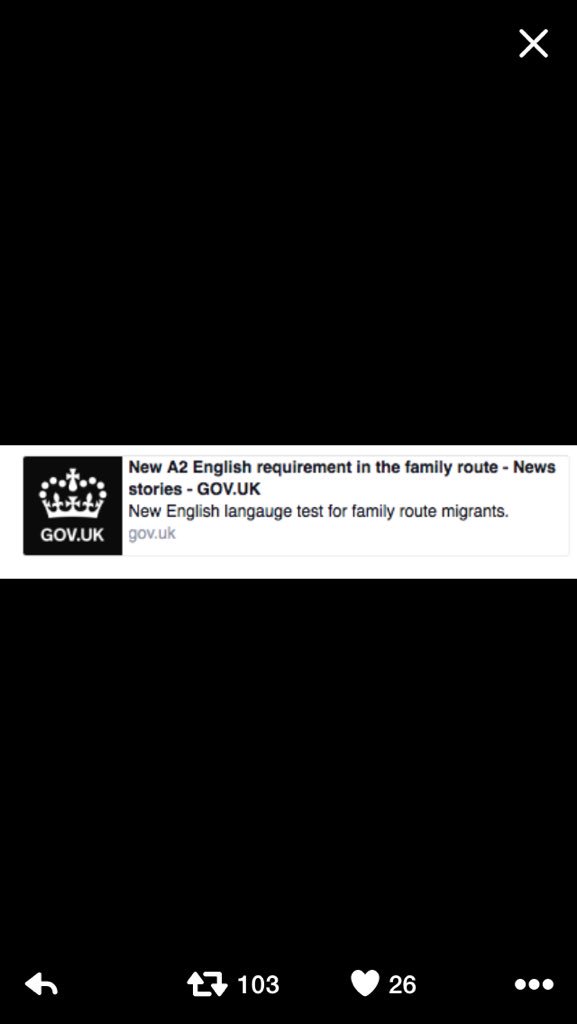
David Cameron's recent comments about the importance of the English language to people moving to, or already settled in, the UK have led to some interesting articles about the value of the language and its use as a political football. Many of Cameron's comments were directly addressed to one section of the community who have been given a kicking in the media in recent times: Muslim women. Cameron's logic goes like this, according to The Daily Telegraph: "one of the main reasons why young men are vulnerable to radicalisation is the "traditional submissiveness of Muslim women" (Cameron's words), which prevents them from speaking out against the influence of the radical Imams". So, is English a powerful force for integration, or is language being used as yet another stick to beat a minority group?

Many of the responses to the ideas concentrated on the fact that at the same time as Cameron is pushing for English to be learned, he has managed to slash budgets for ESOL teaching, thus reducing the chance of non-English speakers actually learning the language. Others noted that along with an encouragement to learn English, the threat of deportation was also lurking. They pointed to the line "We will now say if you don't improve your fluency, that could affect your ability to stay in the UK". Tied to the apparent encouragement for Muslim women to learn English was also a threat to punish them. And why single out Muslim women? Would English ex-pats who live in Spain but don't speak a word of the local language beyond "cerveza" be deported by the Spanish authorities for not speaking  a word? And would the knuckledragging keyboard warriors of far-right organisations - born, bred, and supposedly educated, in this country - be sent back to their mums for not being able to spell "Go hoam immagrnat"?

Finally, Anita Anand noted that the UK government website couldn't actually manage to spell "language" properly in its own tweet. D'oh!

Obviously, English can be a unifying and integrating force for good: if we can all talk to each other, the argument goes, we can all start to get along. But the imposition of English on people has a long history of problems. English is not just a language of the world because it's flexible and absorbent (like your favourite kitchen roll) but because it has often been accompanied with political and social systems that have forced it on others, often at the end of a gun. There's nothing intrinsically better about an English speaker than someone who speaks French, Cantonese or Yoruba, but many still cling to the colonial belief that English can be a "civilising force" on Johnny Foreigner.

But English can also be something that allows people to feel part of a wider community and that's why so many people want to learn it - in the UK and beyond - and one reason why teaching English as a second language is so important. If Cameron were really serious about the power of language, he wouldn't be singling out one group of people or cutting funding to ESOL and the FE sector that are so vital in its provision.

Edited to add:
Frank Monaghan has written an article here which is worth a read.


Saturday, November 07, 2015

A Word of Warning

While some changes to language are roundly condemned by pedants, purists and prescriptivists - creaky voice, rising intonation, split infinitives and literally not actually meaning LITERALLY AT ALL - new words often get an easy ride. People generally like new words and can see why they appear in the language, even if some of them seem a bit silly (Awesome sauce and amazeballs? Really?) or likely to last as long as a David Cameron promise on tax credits (dadbod and mantihose?). In fact, new words now get wall-to-wall media coverage.

So, this week we have seen the latest additions to the Collins Dictionary feature in pieces such as this (from the Dictionary-makers themselves), this from The Guardianthis from the BBC and this from the Daily Fail.

But among the hype and the celebration of an evolving and vibrant language, naysayers complain that some of the new entries are just trendy fads, too ephemeral to be included in esteemed dictionaries.

As Robert Lane Greene explains in a blog for The Economist, the whole process of putting new words in a dictionary is quite an intensive exercise, admittedly now made much easier by the internet: something that early lexicographers could have only dreamt of. A further explanation is given in this helpful video clip from Oxford University Press, which describes how a new word (in this case selfie) might enter their dictionaries. As the clip explains, the naysayers are partly right that things have been changing faster than before, because the new words don't have to have had a very long existence before being added to the online versions of the dictionaries. But in a way, that just reflects the rapid pace of lexical change these days. Perhaps, as John Sutherland argues in this article, language is "evolving at a faster rate now than at any other time in history because of social media and instant messaging".

Is this rapid change leaving some behind? One argument often put forward by more prescriptively-minded people is that if language changes too fast, we lose mutual intelligibility; in other words, one generation may not understand the language of another. Older people (anyone over 30) will lose any semblance of understanding of what young people are talking about, goes the argument, and that will lead to social breakdown and chaos. Indeed, this is the argument peddled in rather dubious articles like this one in yesterday's Daily Fail which claims that parents haven't a clue what their kids are saying because they're using a secret sex and drugs code, grandad!

For example, the seemingly innocuous "netflix and chill" now takes on much more sinister connotations. The innocent Snapchat message from your teenage daughter to her bae saying "Do you want to come over? We could Netflix and chill." actually means "Buy drugs, come to my boudoir and let's have hours of dangerous chemsex". Apparently.

The fear that young people's language is constantly evolving as a nefarious means of hoodwinking their prying parents or to hide other dubious activities (smoking tobacco, drinking alcopops and playing CoD until after bedtime) is one that has been around forever. This piece in The Daily Telegraph from 2013, this one from the Daily Fail (again... almost like they don't like young people), or even these from as far back as the 17th Century, all say similar things.

And if people have been complaining about it and we still manage to communicate fairly effectively with each other after all this time, surely the doom-mongers are barking up the wrong tree.

Tuesday, November 03, 2015

I wonder if we can talk about requests...

Last night I went to a talk, and today I’m blogging about it. The University of York Linguistics Society hosted a talk by Professor Paul Drew from Loughborough University, and since he’s a bit of a big deal in Conversation Analysis, I thought I’d go along. Some of the talk’s content might be of some use to A-Level English Language analyses, so here (in some shape or form) are my generalisations.


The theme of the evening was ‘requests’ (so, aiming to get someone else to do something for us, like asking for a lift), specifically in conversation. Towards the beginning of his talk, Paul quoted Levinson: “language delivers action, not meaning”. It was a little mysterious at first, but it was fascinating to witness this quote unravel throughout the course of the evening. Obviously, language does carry meaning, but it was implied that its primary purpose is to act in some way.


Drew has done a lot of research on telephone call interaction, and therefore we are talking about these requests in the context of telephone conversations. He compared two types of context where we might be making phone calls: informal contexts (e.g. among friends) vs. more formal institutional contexts (key examples of these he gave were out-of-hours calls to doctors and calls to the police).


Broadly speaking, Drew claimed that we tend to begin our requests in an informal context with a modal form (like ‘Could you…’/‘Can you…’), whereas we often tend to go for ‘I wonder if…’ in the institutional context. This comparison can be explained with a continuum of request forms he then went on to talk about…


Continuum of request forms


High entitlement/Low contingency High contingency/Low entitlement


Imperatives I need you to.. Modals (Could../Can..) I wonder if…


As we can see from the above continuum, we can talk about request contexts in terms of degrees of entitlement and contingency. Contingency, in this setting, is about the requester’s knowledge or awareness of the difficulties that might be involved if the ‘requestee’ were to carry out the action.


If we start at one end of the scale (the left side), in high entitlement and low contingency contexts, we can appropriately find imperatives. The simple example Drew gave was in a lecturer-student context. It might be fine to say ‘Pass me that pen’. In that kind of scenario, there is a power relationship where there may be a high level of entitlement. The low contingency might come from the fact that there’s a pen lying on the desk which isn’t being used, and so it isn’t seen as much of a sacrifice to the student to carry out the requested action. Basically, the requester is in a more powerful position, and the request isn’t seen to be a big deal.


On the other side of the spectrum (the right side), we have high contingency and low entitlement. Here, the out-of-hours doctor calls can demonstrate this kind of context. The example Drew provided us with was a man calling with back pain and requesting a doctor to come and visit him with ‘I wonder if you’d come out’. In this kind of scenario, the requester is not necessarily familiar with what’s involved and so quite a conservative (high contingency) form of request has been used, along with the low entitlement, because the doctor, in this case, is seen to be the more knowledgeable party.


Having briefly explored this continuum, we can return to the broad claim Drew made early on, which generalised over the request forms we might make with friends versus those we might make in an institutional context. We’ve just seen an example of an informal setting where ‘I wonder if…’ was used. When we are requesting among friends or family, often we have a better idea of what is involved for that person if the action was carried out, and the power distance is likely to diminish. This means that we can see many situations among friends, where ‘Could you…’/‘Can you..’ might be appropriate, because they are a little further up the scale.

Drew explored a number of telephone calls where these sorts of situations were evaluated and the request form was analysed in relation to it. Of course exceptions were pointed out and more discussion followed, but I think this is a great framework to start us off when we’re looking at requests.

Follow EngLangBlog on Bluesky

The old Twitter account has been deleted (because of both the ennazification and enshittification of that site) so is now running on Bluesk...