Showing posts with label ENGA2. Show all posts

Wednesday, October 22, 2014

Representation alphabet

Are you planning your ENGA2 Investigating Representation coursework? Here's an A-Z of ideas for potential topics put together by various members of the English department at Colchester Sixth Form College.

·         Amal Alamuddin’s and George Clooney’s  wedding as an event, or Amal Alamuddin as an individual.
·         British Muslims: how are Britain’s Muslims represented in the media and how do they feel about it, especially with IS claiming to represent their faith?
·         Calypso. What the flip? You’ll be even more gobsmacked when you hear the UKIP Calypso. But have a look at the debate and responses created by this appalling song. http://www.independent.co.uk/news/uk/politics/mike-reads-calypso-car-crash-for-ukip-campaign-9807020.html
·         Disability: are some people with disabilities not worth the minimum wage? How are disabled people represented in the media?
·         Ebola: coverage of the spread of the disease around Africa, Europe and USA.
·         Ferguson (or #Ferguson). The shooting of Michael Brown, an unarmed black man, by a white police officer in the US state of Missouri sparked protests and violence. It raises questions about racism, policing and social cohesion http://www.theguardian.com/us-news/michael-brown-shooting
·         Gamer Gate: sexism and misogyny in the world of gaming. http://www.theguardian.com/commentisfree/2014/oct/20/gamergate-internet-toughest-game-woman-enemies
·         Hong Kong: representation of pro-democracy protests and the government’s  response
·         I   Immigration: a political hot potato but often used to whip up prejudice and resentment to gain votes. How is it viewed by those who move to Britain, those already here and why do people think there are far more immigrants than there really are?
·         J   Jennifer Lawrence: how has JenLaw been represented around the great Fappening scandal?
·         Kobane: the Syrian town defended by Kurds against IS. How has the battle been represented? What about the Kurdish women soldiers at the forefront of the fight against IS or the Turkish anarchists who have joined them?
·         Linda Bellingham: coverage of the actor’s illness and death
·         M Marriage: gay marriage and equal marriage. An institution under threat or one being redefined for a new century?
·         Nigel Farage: how did a privately-educated, millionaire, ex-banker manage to cast himself as an outsider voice to the Westminster establishment?
·         Oscar Pistorius: coverage of the athlete’s rise to fame and the trial for shooting his partner, Reeva Steenkamp.
·         P  Kevin Pietersen: cricket scandals are over the newspapers again with Pietersen’s autobiography bowling googlies at his former team-mates.
·         Q Queer politics: how are gay people responding to discrimination against them? The recent kiss-in at a Sainsbury’s in Brighton and the homophobic abuse suffered by two men on a bus in London highlight different social attitudes towards LGBT people.
·         Reeva Steenkamp: how has the woman killed by Oscar Pistorius been represented?
·         Sex education: it’s being discussed again by MPs. When should young people get sex education and will it save their lives, protect their health or turn them into leering, sex-crazed perverts?
·         Trolls: sad, lonely people in need of a hug (https://twitter.com/OwenJones84/status/523909281448755200), or dangerous criminals in need of jail?
·         UKIP: their political rise and the different perceptions of them. Unprincipled Knuckledragging Incompetent Parasites or angry voice of the silent majority?
·         Videogamers: representation of them as a social group
·         W Weather events: storms, hurricanes, climate change and natural disasters
·         Xenophobia: with the rise of UKIP and online halfwits like Britain First, why is fear of foreigners fast becoming such a political issue? Does it reflect genuine hatred of different people around the world or a time of insecurity and confusion in British identity?
·         Y  Malala Yusafzai: Nobel Peace Prize winner, girls’ education campaigner and victim of a Taliban shooting
 Z-list celebs: pick any recent vaguely famous non-entity from a reality show and see what’s happened to them in the press since their moment of glory.

Wednesday, September 03, 2014

Feisty sluts being abrasive

There's been lots of good material in the papers recently about language and gender, so it's useful for anyone thinking of investigations at AS into representation of social groups & individuals.

The Telegraph looks at words which only seem to be used to label or describe women, while The Guardian has its own take on the issue. Fast Company also has a look at the ways in which language is used differently for men and women in their performance reviews, with abrasive being used to describe women much more than men.

Elsewhere, the discussion about what slut and sluttish mean - or has meant in the past - is picked up in The Guardian.

Friday, December 06, 2013

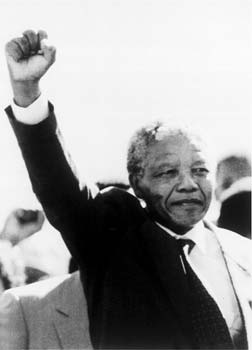
Representing Mandela

Picture from: http://www.freedomarchives.org/audio_samples/Nelson_Mandela.html
With the sad, but sadly inevitable, death yesterday of one of the greatest political figures of the last hundred years it might be a good time to look at how language shapes different representations and how those representations change over time.

For many, Nelson Mandela was always a hero: a man fighting injustice and racial intolerance in a country that had institutionalised racial separatism like no other. Given the almost-universal praise and warmth for Mandela upon his death, you might have thought that this was what people felt at the time, but it wasn't always like this.

While the Special AKA recorded the magnificent single Free Nelson Mandela, making the point that Mandela was not just a figurehead but  - as they put it "only one man in a large army" -  young Conservative Party activists designed tasteless Hang Nelson Mandela t-shirts and posters - an early form of trolling, no doubt - and leading Tory ministers actively campaigned against economic sanctions (probably the same ones who would now support harsher sanctions on Iran) or even (in the case of the current Prime Minister, David Cameron) went to South Africa on a jolly, paid for by an anti sanctions company.

But things move on, and people's views evolve and perhaps mellow as time goes on. Cameron is now singing the praises of Mandela's integrity, leadership and forgiveness. I used to think the Conservative government should be hung, drawn and quartered for their support of apartheid South Africa. Now, just 2 out of those 3 would do for me...

For each person who saw Mandela as a freedom fighter, another saw him as a terrorist. I'd like to think that there were more of us in the former camp, but as this article by Peter Beinhart points out, powerful forces saw Mandela as a dangerous agitator. Even in 2008 - yes, 2008 - the ANC and Mandela were still on a USA terrorist watch-list!

Others, like the excellent Guardian journalist Gary Younge and writer Musa Okwonga offer alternative viewpoints. Younge describes Mandela as "never a revolutionary, always a radical" and Okwonga cautions against a revisionist, sanitised view of Mandela, which removes his anger and replaces it with sainthood.

So, for English Language students there's a lot to consider in the coverage of Mandela's death. If you look back through articles from the 1970s to 80s when he was still in prison and the ANC were seen by the South African state as  a terrorist organisation, the language may well strike you as less sympathetic: often related to violence, struggle and conflict. Fast forward to 1990 when the world's press watched him walk free from prison with all the hope, reconciliation and bridge-building that seemed to embody, and now on to the sanctifying of Mandela as a modern day saint and you'll find the language shifting into a whole range of other fields: tolerance, forgiveness, understanding, inspiration and harmony.

A great man and a great study in how perceptions can change and how language can change the way we see the world.

Edited on 06.12.13 to add link and correct error.

Friday, October 25, 2013

ENGA2 - tackling representation

There's never been a better time to be doing your ENGA2 Investigating Representations, I reckon. We've had some huge stories about not just individuals and events but institutions and issues too, even social groups.

Here's a quick list of suggestions for possible topics and a link or two to get you started.

INDIVIDUALS
Russell Brand calling for global revolution
Is he a trivial twit?
Capitalism is ace, says a capitalist.
Nafeez Ahmed takes a more positive view on Brand

ISSUES
Racism in football rearing its ugly head again
Kick It Out

SOCIAL GROUPS
The Gypsy (Roma) people getting it in the neck again and having their blonde-haired babies taken away from them.
Here's a brief history of the Roma

Muslims: a BBC Newsbeat survey showed polarised attitudes to Muslims.

INSTITUTIONS
The Police and how Plebgate has seen confidence in them fall to a new low.
How can we trust the police?
If the police can stitch up a Government minister, what can they do to the rest of us?

MILEY gets a category all of her own, obviously
Firestorm over twerking
Sinead O'Connor and Miley Cyrus have a row


Thursday, October 03, 2013

A war on the young? More like a unilateral assualt

In a week or so, we'll be looking at the representation of young people as a social group for our ENGA2 AS English Language lessons, so it's kind of nice of David Cameron to give us some extra ammunition for our classes, even if in the process he's basically sticking two fingers up to every under-25 in the country!

Here's Ally Fogg of The Guardian on Cameron's announcement yesterday:

It would be wrong to think of David Cameron's proposals to take key benefits away from the under-25s as a new initiative. They form merely the latest chapter in a chilling horror story that began shortly after the coalition took the reins, with the tripling of university tuition fees, the abolition of educational maintenance allowance and the future jobs fund, and was still under way this summer when the chancellor's spending review slashed another £260m from the further education budget.

It would be also be a mistake to describe this as a "war on the young" as many commentators have done. A war implies two sides vying for supremacy. This is a strictly unilateral assault, a grand act of persecution. Indeed watching the prime minister singling out unemployed youngsters for uniquely punitive measures while pretending it is for their own good, cheered on by a gang of braying chums, it looks less like the behaviour of a national statesman and more like the petty vindictiveness of a schoolyard bully.
 There's some lovely stuff to analyse in there, not just in the language used to characterise the policy announcement - playing on the semantic field/discourse associated with war and conflict - but in the way he represents Cameron and his "chums".

We'll have a look at the whole way in which discourses around young people are often based on fear, threat and otherness, but in the meantime, this makes a good read.

Friday, March 22, 2013

The language of love

There's a short and informative piece by David Shariatmadari in today's Guardian about the changing terminology used to label and describe people of different sexual orientation. In the comment piece, he talks about the terms that have developed over time and the arguments about such language.

Linking his points to a wider discussion of the role of language in shaping or reflecting people's attitudes to sexuality, he asks "Does language change politics, or is it the other way round? Or perhaps language is more like fashion, in having something to do with prevailing attitudes, but not, ultimately, being all that important".

It's a question we've looked at in A2 English language lessons recently, particularly around the language of race and discrimination. Shariatmadari goes on to raise this too.

Language certainly feels important if you've just been shouted at by a racist or a homophobe. But it's worth asking whether zero tolerance of the N-word, for instance, might be a precursor to, or an after-effect of, more enlightened thinking. Or whether in the US, where it is perhaps the biggest linguistic taboo of all, racism has, in fact, ceased to be a problem.

When we've looked at Political Correctness (PC) and the movement to change language or highlight its potential problems, we've often speculated on the relationship between language and attitudes. Can removing bad words remove bad ideas from people's heads? Or does it just create a vacuum for another bad word to rush into?

Shariatmadari argues what is essentially a reflectionist perspective: "Language is the imprint of our culture. It encodes – though it does not determine – the character of the age". The language that is used to label people who are gay, bisexual, transgendered or questioning is changing to reflect the range of sexual identities that are now gaining prominence (but were probably always there) rather than necessarily shaping identities.

There was another article on this topic a few weeks ago, which you can find here. It's good to have a range of references when you're answering ENGA3 questions about Language Change and Language Discourses, so have a read and make a few notes...

Saturday, February 23, 2013

Speak now, pay later

There's always been lively debate among linguists and non-linguists alike about the extent to which language might influence or even control the way we think. At its most extreme, we find the strong version of the so-called Sapir-Whorf hypothesis (largely the work of Benjamin Lee Whorf) which argues that the way we interpret the world around us is heavily influenced by the language available to us:

We cut nature up, organize it into concepts, and ascribe significances as we do, largely because we are parties to an agreement to organize it in this way — an agreement that holds throughout our speech community and is codified in the patterns of our language...

Many have taken this to mean that he believed that language helped control and shape the way we think (a view originally put forward by Wilhelm von Humboldt) but others suggest that Whorf was never really making such a bold claim.

Whatever the rights or wrongs of this, there has been a lot of interest in the idea that the languages we speak, the words we choose and the grammar we use might have an impact on how we view the world. This week's BBC news website carries an account of Professor Keith Chen's research into language and economic habits, wherein he suggests that speakers of languages that have a strong "future time reference" (i.e. use a separate tense to indicate future time) are less likely to plan ahead in terms of money and health. As the BBC story puts it, "... if you speak English you are likely to save less for your old age, smoke more and get less exercise than if you speak a language like Mandarin, Yoruba or Malay".

According to Chen, languages either have a strong or weak FTR (future time reference) and those with a strong FTR tend to separate present and future, making it less likely that the speakers connect present actions with future events. In other words, the stronger the difference between your language's representation of present and future, the weaker the speakers' ability to link present and future. He argues that this then leads to an inability to plan ahead.

Of course, this is a very difficult idea to prove, particularly if you're not actually a linguist (Professor Chen is primarily an economist), and Professor Geoff Pullum cautions against taking the research at face value in an interesting response on Language Log. One of his key points is that Chen is mistaken in claiming that English has strong FTR, given that we tend to use the present tense (I am going to play football to morrow) or modal verbs (I will play football tomorrow).

The story has been picked up elsewhere, including here, where other links between language and thought are discussed, and in this debate between Lera Boroditsky and Mark Liberman.


Thursday, January 24, 2013

Are you a QUILTBAG?

Labels for different social groups are a shorthand way of defining people and we use a lot of them in our language. Recently, we've looked at terms like handicapped, the handicapped, disabled, people with disabilities and wheelchair users as part of our work on ENGA3 Language Change, but on the Johnson blog they take a look at some of the rapidly evolving acronyms and initialisms for groups defined by their sexuality.

So, we have LGB (Lesbian, Gay and Bisexual) and LGBT (Lesbian, Gay and Bisexual and Transgendered) but in the past the labels weren't quite so neutral. Gay has had a fascinating history as a word, and queer has been reclaimed to some extent, but read more of the piece in Johnson to see where we're going now and what a QUILTBAG is...

For a full set of LGBTQIA (and more) terms, have a look here. A term that's fairly new to me, but seems to have been knocking around for a while, is cisgender (explained, I think, here). The recent media firestorm about Julie Burchill's 'transphobic' article in the Observer (removed from the Observer site but reprinted here) brought this term to my attention and it's another example of how language and identity are closely linked, and the ways in which language can be used to hurt others.

Wednesday, October 17, 2012

Redefining misogyny

There's some good discussion about sexism and language in the aftermath of the Australian Prime Minister, Julia Gillard's attack on her male rival for his dodgy attitudes to women. Here, several feminists look at gillard's use of the word misogyny and the Macquarie Dictionary's decision to update their entry for the word in the light of Gillard's use of it.

They are now adding a definition of it, according to this piece from the Australian Financial Review,  so it changes as outlined here:


While this is good material for language and gender, it's also interesting to think about how dictionaries work these days and the ways in which they respond to changing usages. We all know that language changes, but there are different positions adopted by commentators about how much a dictionary should change and respond to - what some might describe as - mistaken or just plain wrong usage. And when you introduce sexism and political correctness to the mix, you have a recipe for some heated debate, like you'll find here and in the comments that follow this piece in The Guardian.

Tuesday, October 16, 2012

Media stereotypes

The Guardian has been running some really useful material for ENGA2 recently. The links here relate to their coverage of research into newspaper front pages and how women are both represented in terms of their construction and depiction in news stories, but also in terms of their representation in the workforce of newspapers as journalists writing front page stories. To cut a long story short, it's pretty bad representation for both...

In this piece, the headline figures are that 78% of front page stories are written by men and 84% of those mentioned or quoted are male.

In this piece, the study by Women In Journalism is looked at in depth. They address the methodology used, the details of their findings and the bleak picture for women in the UK media.

*Thanks to Nikolai for the links.

Tuesday, October 09, 2012

Everyday sexism

In looking at language and representation, we've started to think a bit about the links between language and gender: how language often reflects historically sexist attitudes while also constructing (or reconstructing) those same attitudes. Many of the comments in class along the way have treated sexism or patriarchal attitudes as things of the past, old-fashioned views held by long-dead men, but this disturbing article about the kind of everyday sexism experienced by university students shows that while the sexism still exists it has just shifted its frame of reference.

It's the almost normal way in which slut-dropping, rape and hoes are talked about that makes this so wrong. If the words are treated in such a casual way, doesn't that also suggest that the attitudes are pretty casual too?

There's more about this on the Everyday Sexism Project's site.

Thursday, October 04, 2012

Over two and a half million 'faggots'

We've started to look at language and representation in AS Language recently, so this link might be of interest to you. It uses Twitter to track the use of potentially homophobic language items, such as dyke and faggot.

It's pretty shocking that so many casually abusive words are chucked around so frequently, but is it the whole story?  As we've been looking at with racist and sexist terms, part of the consideration we need to give to some of these words is the context they're used in. For example, slut might mean one thing when shouted across a street or posted by some sleazy internet troll, but might mean something completely different when used in banter with another female.

We've already seen that the n-word (or nigga) mean different things to different people in different contexts, so is a blunt tool like counting the number of times a word is used really going to reveal much abut homophobic attitudes? It's a start, at least, so might then allow a more detailed analysis of the contexts and meanings in each case.

There's more about the real-time Twitter feed here, where you can really look at each tweet as it appears, and yes, most of them are from teenage boys abusing each other or talking rubbish. The questions then might be, does it matter? Is anyone really offended by it? Why is it seen as acceptable for these words to be chucked around with such gay (sorry) abandon by some of these people? Does it reflect a deeply ingrained anti-gay attitude, or just a casual attitude to what words mean and how they can harm?

Some of these questions are addressed here on the No Homophobes site, and it makes for a provocative and interesting read.

Wednesday, October 03, 2012

Teenage dirtbags

The representation of social groups is an area that we're starting to look at in AS English Language this week, so I've been gathering together texts and extracts on different groups to start some discussion. One good area of study is how young people are represented in the media, so this piece in today's BBC News Magazine on the death of the teenage rebel is a good read.

Apparently, recent studies suggest that young people are now less likely to smoke, drink and take drugs than ten years ago. So, why are young people still almost universally slated in the mainstream media?

A study by the children's charity Barnardo's back in 2008 addressed some of these concerns and you can find some of the relevant blog posts about their study and campaign here (along with some older posts about attitudes to young people).

You'll also find these articles, which we'll be looking at in class over the next few weeks, go some way towards answering that question and are worth a read if you're planning ahead and thinking about your potential coursework project.

"Thugs consider ASBOs a diploma" - Daily Mail article
"We see young people as pestilent" - Tanya Byron in The Guardian
Tony Parsons on attitudes to young people

Friday, September 28, 2012

Bitch bad, woman good


Rap's never really had a good reputation for its representation of women. Bitches, hos, big booties bouncing and lollipops getting licked seem to be where it's at for a lot of rappers. But Lupe Fiasco isn't your average rapper and his latest album features a track called Bitch Bad, which pulls apart the construction of the word, its representation of women, its reflection of a materialistic society and its influence on malleable minds.

You can see the video here if it's not embedded above, and read the lyrics here. It's worth looking at how he pulls apart the assumptions and associations around the word, as it's a key part of what we do on ENGA2 when we look at the Investigating Representation task for coursework. Areas like how gender, ethnicity and sexuality are constructed and reflected through language are central to the unit, and it's worth spreading your net wide to gather language examples to focus on and write about.

If you're interested in other areas around words related to gender, try looking for material on this blog last year about Slutwalks. If the language used to describe disability is more your thing then you may want to look at the arguments here about the words mong and spastic.

Saturday, September 22, 2012

Tory toffs, plod and plebs

Tory Minister, Andrew Mitchell is in hot water over his alleged outburst to police officers at the Houses of Parliament. It is reported that he swore at them, using the dreaded f-word, but much worse than that for a Tory government consisting largely of ex-public schoolboys who are generally seen to be aloof, arrogant and out of touch (even by their own nannies), he called the police plebs. Worse than the f-word? Really? Well, it depends on what you think of its significance. Some describe it as "politically toxic".

Plebs is a back-formation from a Latin word plebeian used in ancient Rome, basically meaning "of the common people" as opposed to being from the ruling aritocracy. As this BBC News Magazine article explains, the word gained currency in British public schools which often modelled themselves on ancient classical tradition and in the class divide that such an education created.

Given the timing too - in a week where two police constables were shot dead in what appears to have been an ambush in Manchester - it's not really a great week for a Tory MP to belittle the men and women who are protecting them and shows again the power of language to reflect social attitudes when it's used.


Saturday, September 15, 2012

ENGA2 Investigating Representation

I'm going to be teaching the investigation coursework part of the AS course for the first time in a few years, so have been looking around for ideas that might work. What I am hoping is that this post can become a bit more collaborative than the usual ones, with students and teachers suggesting topics and approaches that have worked for them. So, if you are an A2 student who did an interesting topic last year or a teacher of the A spec who has some good ideas about topics from work you've set/seen, please add your comments.

Conscious of the fact that lots of students have gone for celebrity profiles in the past (representation of individuals) and that these are often a bit pedestrian, I've tried to suggest a couple of issue-based topics below, so any other ideas would be very welcome.

Page 3
Institution: is it an institution? Should it even exist?
Issue: sexism, pornography
Social group: women and representation of gender
Suggested text to start off with: Deborah Orr in The Guardian

Hillsborough
Event: comparison of reporting on event then and now, with The Sun's coverage being of particular interest.
Social groups: football fans, Liverpool fans/Scousers (regional stereotyping)
Institution: the police
Suggested texts to look at: Neil Warnock on memories of the disaster, The Sun's front pages then and now:


Football fans
Following on from coverage of the Hillsborough inquiry, it could also be worth looking at changing representations of football fans, from the hooligans of the 1970s and 80s through to the prawn sandwich munchers of the 2000s.
Social group: football fans
BBC News magazine article on this
Football Supporters Federation - representing fans

Some other possibilities (updated Friday 28th September):

Pussy Riot
Event: jailing of the band
Individuals: as band members
Issue: protest, feminism
Social group: women, activists
There are some sharply contrasting representations of them in the media too.
The Economist covers it here.
Guardian comment piece.
NME interview with jailed band members
Bad taste tweets?

Jeremy Forrest and Megan Stammers
Perhaps a bit too soon to look at this dispassionately, but now they've been found (apparently alive and well), this case and its coverage - particularly the representation of Forrest in the tabloid press and in interviews with his parents - could be a very interesting one to explore.
This link to the press conference where his parents spoke might be a good place to look.
The Sun's coverage a few days into the story.
Event, Individuals, Social groups, Issues could all be covered here.

Tuesday, August 16, 2011

Starkey's "Norman Tebbit moment"

Amid the horrific mayhem and destruction of last week's riots, there were a few moments of grim irony - David Cameron deriding the violence of the British underclass shortly before "declaring war" on gang culture, a Labour MP criticising looters for their "naked greed" having made a claim on his parliamentary expenses the year before for an £8,865 flatscreen TV, Nick Clegg propping up a government who he'd previously warned the public about as being likely to cause riots on the streets - but surely the most bizarre moment of all was historian and TV pundit, David Starkey's appearance on Newsnight last Friday in which he blamed the riots on white people turning black, before clumsily reading out the text of a BBM he said represented the broken English of a looter.

Many media commentators struggled to find the right words to describe what was going on. Were the people smashing up shops and lobbing bricks at the police protesters or looters, scum or terrorists? The Guardian wasn't sure. Were these disturbances race riots, London riots, British riots or English riots? The BBC settled for England riots, which strikes me as odd, given that England weren't even playing. Were the young people using the term feds to describe the police showing the influence of US hip hop and mimicking the antics of the LA rioters back in the early 1990s? The BBC News magazine reflected on these issues and even got some linguists and lexicographers to comment, making it a more informative and nuanced discussion than many others.

But let's go back to David Starkey and his rant on Newsnight. Back in 1996, the linguist Jean Aitchison delivered a series of lectures for the BBC on language (which can be read here or listened to here) in which she talked about the worries that exist for many people about how language changes. In one example, she quoted the then Conservative Minister Norman Tebbit making a direct link between language use and crime:

"If you allow standards to slip to the stage where good English is no better than bad English, where people turn up filthy ... at school ... all those things tend to cause people to have no standards at all, and once you lose standards then there's no imperative to stay out of crime."

So, in David Starkey's diatribe against "Jafaican" I think we have this generation's Tebbit moment. Let's look more closely at what Starkey said and unpick why it's not only racist and wrongheaded but linguistically suspect too. The Independent quotes Starkey's words as follows:

"I think what this week has shown is that profound changes have happened. There has been a profound cultural change. I have just been re-reading Enoch Powell. His prophecy was absolutely right in one sense: the Tiber didn't foam with blood, but flames lambent wrapped around Tottenham, wrapped around Clapham.


"But it wasn't intercommunal violence; this was where he was completely wrong. What has happened is that the substantial section of the chavs that you [Mr Jones] wrote about have become black. The whites have become black. 

"A particular sort of violent, destructive, nihilistic gangster culture has become the fashion. Black and white, boy and girl operate in this language together, this language, which is wholly false, which is this Jamaican patois that has intruded in England. This is why so many of us have this sense of literally a foreign country. 

"Listen to David Lammy, an archetypal successful black man. If you turn the screen off, so you were listening to him on radio, you would think he was white." 

What strikes me as so twisted is Starkey's leap from the assertion that "the whites have become black" to the apparent linking of  "blackness" to "violent, destructive, nihilistic gangster culture". At that point in his argument, he makes no attempt to draw a distinction between skin colour and culture. Later, he offers some (feeble) attempts at mitigation, perhaps when he tries to argue that not all black people - David Lammy, for example - "sound black", but it's still a reductive and idiotic argument. Why? Because in Starkey's mind black = "violent, destructive, nihilistic gangster culture". And your degree of blackness can be identified by the way you talk...

From a linguistic standpoint, his assertion that the "Jamaican patois" that has "intruded in England" and is used by young people involved in the riots is "wholly false" smacks of desperation. As one Twitter user @vivmondo wittily put it, "Asking David Starkey for his views on youth culture is a little like asking Lady Sovereign for her views on Elizabethan shipping law" but even so he goes ahead and gives us the benefits of his massive knowledge. And that's before he launches into his freestyle, which has been remixed for your pleasure and delight in the You Tube clip here.


As Geoff Pullum explains on Language Log, Starkey's views about the insidious influence of Jamaican patois on the native language are ill-informed and wide of the mark. What Starkey quotes in his poorly performed rap is nothing like Jamaican patois and much closer to Multicultural London English (MLE, MEYD or what some dubiously call "Jafaican"). 

Even Katherine Birbalsingh (who normally gets my goat about as much as Toby Young and Richard Littlejohn) gets it right when she says that the language Starkey is talking about is "a kind of fusion of many cultures, including Cockney East End speech. One can also hear some Jamaican influence, general working-class London influence and so on. Does Starkey really believe that Jamaicans go around saying “innit”? “Innit” has a Cockney glottal stop in it! Interestingly, this accent not only is not Jamaican, but neither is it in American gangster culture. What MTV rapper sounds like our kids?".

In yesterday's Evening Standard, Sam Leith made a slightly different point about the language of  Starkey's rant. Annoyingly, he insists on calling the variety of English in question as "Jafaican" with all its connotations of affectation and mimicry, when any good language student knows that what is emerging in London and has been developing for well over two decades is an organic form of language that has its roots in a range of different varieties brought together by contact in urban areas. He can be forgiven though as he's not a linguist and doesn't claim to be an expert on language. Plus he makes some good points elsewhere. 

Discussing Starkey's claim that "so many of us have this sense of literally a foreign country" he agreed that "(Starkey) touches an anxiety more people feel than admit to" before going on to say "it's actually a class and generational anxiety. It finds its most poisonous outlet in fears about race" and concluding by saying "Prof Starkey defended his position by saying that in times like this, "plain speaking" is needed. No. Careful, precise speaking is needed". 

Wise words indeed, and all the wiser because Leith - and Birbalsingh - notice that the people who use the language Starkey so derided are actually all around us: they are our students, our own children, us, our communities, not some alien race. To mark them out as a separate group because of their "wholly false" language use is to misunderstand and misrepresent both young people and the ways in which language works.

*Edited 16.08.11 to change title after inadvertently copying Stan Carey's MacMillan blog title from yesterday. Woops!

Friday, June 03, 2011

Maximum chav-age

There's more on the word chav here on the BBC site, all inspired by the forthcoming book Chavs: The Demonization of the Working Class, by Owen Jones. It looks very promising, if this review by Labour MP John Cruddas is anything to go by.

Looking at arguments about language change and political correctness is all part of ENGA3 Language Discourses, while the language used to represent social groups - in this case, the working class, or sections of it - is covered in the coursework for ENGA2.

Wednesday, May 18, 2011

Hit the pause button

There's nothing I like for breakfast more than a big banana.
Can you pass me the bag of nuts?
I think I'll have the sausage, please.

What connects all of these seemingly innocuous food-related comments? Well, if you're an NBA basketball player, you'd probably want to insert (oo-er) the word pause after each. Why? To avoid sounding like you're gay, obviously. So, "I'm right behind you", "I've got your back" and "That driver was right up my arse" would all qualify as potentially smutty innuendoes requiring the pause treatment. Because to be gay in the macho world of professional sports is to be bad. Hell, it's even worse than being a girl!

Pause - according to Urban Dictionary - is used "to negate the sexual connotation of a comment" and has been recently appearing in spoken language and social networking (often Twitter) comments, perhaps following the patterns of usage of its slightly older brother no homo, which has been around since (apparently) the early 90s in hip hop slang and beyond.

The attempts by some men to police their own language use and avoid the potential embarrassment of letting slip a comment that might be perceived as gay are both interesting and slightly pathetic. Sociolinguists often look in detail at the language markers that help us define our identity and note - like Deborah Cameron does in her Myth of Mars and Venus - that we often use language as  much to define who we are not as who we are. So, in other words, the use of pause or no homo, could be a deliberate attempt to distance some men from gay men (or the stereotypical language styles associated with gay men). But why not just avoid saying things that are... like "gay"...in the first place? Well, that would be missing the point, because the whole point of using pause seems to be to draw attention to your words and encourage salacious connotations to be drawn from them before distancing yourself from the implications of the interpretation. Or something like that...

What's pathetic about it shouldn't be too hard to see. Do gay men really mince around discussing the relative merits of big bananas or succulent sausages? Probably not (unless you're Julian Clary). The whole use of pause might be seen as harmless fun, self-conscious mockery even, but at the same time it's peddling a view that gay men talk in a certain way which is easily identified and ridiculed, and that they are sex-obsessed, double-entendre-fixated "others". Some may be - surely that's up to them - but it's a lazy stereotype to assume it applies to all gay men.

So, is pause homophobic? Possibly. Is it dangerous? I'm not sure. There have got to be worse forms of linguistic homophobia than this - name-calling, abuse - but it probably says more about the speaker's attitudes to homosexuality than it does about gay men themselves.

Jay Smooth's brilliant video clip says it all so much better than me except he argues that pause came before no homo and is now (in his words) "played out", old, boring. 

Edited on 18.05.11 to add some more smutty innuendoes and a genius bit of hip hop linguistics

Tuesday, May 10, 2011

Do the SlutWalk

The slutwalk: a bit like the cripwalk but with fewer clothes

SlutWalks are coming to a town (and dictionary) near you, but if you're a hormone-charged teenage boy don't get too excited: these slutwalks are feminist in nature and all about the ways in which women are viewed and treated by some men.

The SlutWalk is a response to a speech given by a police officer in Toronto, Canada who ill-advisedly told his student audience that if women wanted to avoid being raped they should stop "dressing like sluts". In this article in yesterday's Evening Standard, Rosamund Irwin makes the excellent point that rape is not necessarily something that happens to only scantily-clad young women, but pensioners, children and nearly all types of women in whatever type of clothing. Years ago, feminist friends made it clear to me that while sex is the means of inflicting the attack, rape is more about power and dominance than it is about sexual attraction. As Irwin points out, blaming the victim is "still a frighteningly common response to sexual assault", but it's a mindset that some people can't get out of. The SlutWalks are an imaginative and witty response to this.

This article on the BBC News magazine site takes a linguistic tack and explores the history of the word slut, making the point that very much like the n-word and queer, the word has been reclaimed... or at least, has been claimed to have been reclaimed: these things are never as simple as saying "This word used to mean x, but from now on, this word means y!".

Like other forms of reclamation, there are problems. Unreconstructed racists might still use the n-word in its pejorative and racist sense, while a black teenager from Peckham (or Tim Westwood-lookalikes) might use it in its reclaimed sense. Likewise, supporters of the gay rights movement might use queer in its reclaimed sense while homophobes and other bigots might still use it as a term of abuse. Each word exists in a state of duel identity: it's OK to use it in one context but not another. And tied in with reclamation is the idea that something in the original sense of the word is being celebrated. In the case of queer it's maybe a celebration of deviance as a positive force, with the n-word it's perhaps an embrace of the threatening, brutal aspects of the original word as a way of defiantly chucking an insult back into the faces of racists. With slut it's all about celebrating female independence and a woman's control over her own body and sexual desires.

Slut - like so many other words used to describe women's sexual behaviour and/or attractiveness - is still a loaded word, partly because of its connotations of dirt and "low morals" - but also because it is used by some men (and some women) to cast judgements on the behaviour of others. So what, you might say: lots of words do that.

The difference here, perhaps is that double-standards are at work. Just have a look at adjectives like dirty and filthy. Often these are used as terms of approval by men to describe sexually independent or adventurous women, but equally they can be used by the same men to abuse a woman they consider to be too independent or too adventurous (often because they're not having sex with them, but with someone else...).

Back in the early 1970s, Julia Stanley looked at the proportion of negative words used to label men and women and found a massive disparity, almost always in favour of men. Since then, things have changed - or so we're told. While the terms of abuse used to belittle boys and men tend to revolve around homosexuality - faggot, gay, batty man etc. - the ones used to denigrate girls and women are often related to their availability (or not) for sex with males: sket, slag, whore, junge, tight, frigid and slut.

To put it simply, lots of women - perhaps young women more than others - have to negotiate a world where to lots of boys if you're not tight, you're slack. It's not a level playing field for women, and the language used to describe them is often riddled with double-standards, so I'm all in favour of slutwalks and the rationale for holding them in the first place.

Follow EngLangBlog on Bluesky

The old Twitter account has been deleted (because of both the ennazification and enshittification of that site) so is now running on Bluesk...