Thursday, August 26, 2010
You, sir, are a dandyprat with unfortunate farting-crackers
Lots of people think slang is new, that it's only used by young people, or black people, or dodgy East End geezers who've necked a couple of Britneys down the rub-a-dub. But slang has been around forever and has been used by all sorts of people. Now, one of the very first slang dictionaries from way back in 1699 is about to reprinted. Here's more about this brilliant resource.


Wednesday, August 25, 2010
Disappearing dialect
You wouldn't know that I'm back from holiday and catching up on stuff that I missed, would you? Here's a Daily Telegraph article from early August about old dialect words that have dropped out of use. I think it's interesting to see what kinds of words drop out as other ones enter the vocabulary and why this happens.
What's in this year
The Oxford Dictionary of English has been updated and its latest lexical additions can be found here. Some of these words aren't exactly brand new - haters, chillax and paywall - but they're included for the first time. It's all good ammunition for work on language change at A2.
The Guardian have covered it here.
Meanwhile, The Daily Telegraph looks at a slightly different angle here, reporting on "failed words" that didn't make it into the dictionary. It covers the original story about the words that have made it in here.
The Guardian have covered it here.
Meanwhile, The Daily Telegraph looks at a slightly different angle here, reporting on "failed words" that didn't make it into the dictionary. It covers the original story about the words that have made it in here.
Sheeeeeeeeiiiiiiiiit
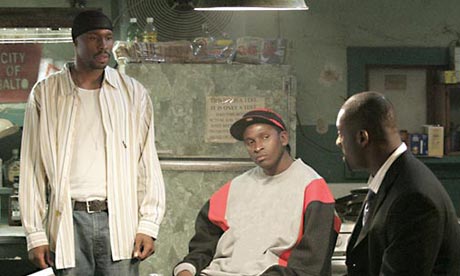
The Guardian article covering this story makes some interesting points about what this tells us about attitudes to African American speech:
Ebonics is described by some linguists as English incorporating the grammar of African languages, but as it also includes many words invented on the streets, it is dismissed by others as mere slang.
Nonetheless, the administration is confused enough to ask firms providing translation services to provide the nine Ebonics translators to cover an area from Washington DC to New Orleans and Miami and even the Caribbean.
The move is a contentious one. American officials have in the past denied that there is any such thing at Ebonics.
There's more on Ebonics here if you're interested. Meanwhile, I am busy writing my letter of resignation (this is becoming a habit) and sending an application to Baltimore. Aight?
Tuesday, August 24, 2010
Men are from Earth and so are women.
A new book by Cordelia Fine called Delusions of Gender takes on many of the same targets that Deborah Cameron's brilliant Myth of Mars and Venus demolished a couple of years ago.
For a while now, the argument that men and women are hard-wired from (or before) birth to be different has been gaining popular support, but many studies suggest that the differences between the sexes are not as pronounced as many might like to believe. And certainly, in terms of verbal abilities, gender seems to account for only a small proportion of difference. Here's a review of Fine's book in last week's Guardian and here's a nice bit about language and gender:
For a while now, the argument that men and women are hard-wired from (or before) birth to be different has been gaining popular support, but many studies suggest that the differences between the sexes are not as pronounced as many might like to believe. And certainly, in terms of verbal abilities, gender seems to account for only a small proportion of difference. Here's a review of Fine's book in last week's Guardian and here's a nice bit about language and gender:
The latter example, on the issue of verbal skills, is particularly revealing, neuroscientists argue. Girls do begin to speak earlier than boys, by about a month on average, a fact that is seized upon by supporters of the Men Are from Mars, Women Are from Venus school of intellectual differences.
However, this gap is really a tiny difference compared to the vast range of linguistic abilities that differentiate people, Robert Plomin, a professor at the Institute of Psychiatry in London, pointed out. His studies have found that a mere 3% of the variation in young children's verbal development is due to their gender.
"If you map the distribution of scores for verbal skills of boys and of girls you get two graphs that overlap so much you would need a very fine pencil indeed to show the difference between them. Yet people ignore this huge similarity between boys and girls and instead exaggerate wildly the tiny difference between them. It drives me wild," Plomin told the Observer.
LOLcats, apps and rickrolling: the language of technology

Monday, August 23, 2010
"Tidal waves of mindless Americanisms"
And following on from the mention of this in Alison Flood's article about attitudes to language change, here's a typically prescriptive perspective from the vile Daily Mail, laying the blame for the decline of our once great language squarely at the door of Johnny Yankie and his foul, colonial distortions of our beautiful tongue. And here's a second link to an earlier (and funnier) rant about American English.
A level results
Congratulations to my ex-students at SFX on your A level results. I hope you got what you wanted/needed to get to university and are happy with your results. I know some of you who have emailed me have done really well, and I'm chuffed for you (and the teachers who didn't desert you). And I hope anyone else reading this blog who isn't an SFX student got good results too and found material on here helpful.
Always complaining
Here's a link to a short article in The Guardian last week, which plugs the new British Library exhibition, Evolving English. (If you haven't already booked a visit, you really should.) The article takes a look at the ways in which there have always been complaints about language change, right back to many centuries ago, and how the current moans and groans about Americanisms, text language, PC and youth slang are just part of a well-established pattern.
Monday, August 02, 2010
Grammar incomprehension
In a sneaky attempt to build up traffic to the other blog I'm working on as part of my new job, here's a cross-posting. A week or two back, the research of Dr Ewa Dubrowska from Northumbria University was reported on in a couple of places, and since then there's been some discussion about what her research proves or doesn't prove. The gist of her work is that some people who have not gained higher level qualifications (gone to university, in other words) find it harder to understand some grammatical structures than those who have those qualifications.
While some might argue that this just proves that some people are smarter than others, it's not quite that simple. Pretty much everyone picks up grammar very quickly as a child, even though we are not taught it explicitly when we are young (or ever, in some cases). Some have argued that her research shows that we don't all have a common grammatical understanding: that the built-in grammar we are told is part of our genetic heritage by the nativist theorists such as Noam Chomsky and Steven Pinker isn't as developed as we have been led to believe.
Others have argued that it raises no such doubts and all Dabrowska's research tells us is that some people are better at taking tests than others. Anyway, there's more here on the Teaching English Grammar in Schools blog, including a link to BBC i-player where you can hear a fairly clear introduction to the debate on the Material World programme broadcast last week (20 minutes into the programme).
While some might argue that this just proves that some people are smarter than others, it's not quite that simple. Pretty much everyone picks up grammar very quickly as a child, even though we are not taught it explicitly when we are young (or ever, in some cases). Some have argued that her research shows that we don't all have a common grammatical understanding: that the built-in grammar we are told is part of our genetic heritage by the nativist theorists such as Noam Chomsky and Steven Pinker isn't as developed as we have been led to believe.
Others have argued that it raises no such doubts and all Dabrowska's research tells us is that some people are better at taking tests than others. Anyway, there's more here on the Teaching English Grammar in Schools blog, including a link to BBC i-player where you can hear a fairly clear introduction to the debate on the Material World programme broadcast last week (20 minutes into the programme).
Thursday, July 29, 2010
Solving crime with linguistics
Forensic linguistics is a really fascinating area of language study, so this lecture by Dr Malcolm Coulthard, one of the daddies of the discipline, is well worth a look. Here he shows how linguistic analysis can be used to piece together the identity/ies of text message senders in criminal cases.
Wednesday, July 28, 2010
Slang rules, ya smell me?
The Sun seems to be having a love-in with slang at the moment, and they've got a piece in today's edition giving lots of examples of different types of slang from various occupational and lifestyle groups. I can't claim it to be a very linguistic take on slang, but there are some funny ones (and a few dodgy ones too, like the definition of bare, which is just wrong).
Monday, July 26, 2010
Five Go Mad on Mephedrone
The news that Enid Blyton's classics children's series, The Famous Five is to have its language updated has upset some and pleased others. The Famous Five books were originally published over 60 years ago and have been huge sellers since then (I even read them when I was a little boy back in the 1970s.) but have often come under fire for their old-fashioned representations of boys' and girls' social roles and for their apparently class-ridden stereotypes. So, will we see the stories themselves updated to meet the demands of a 21st Century audience: teenagers indulging in binge drinking, chopping out lines of miaow-miaow while updating their Facebook profiles, casual threesomes and the like? Not on your nelly.
While the stories will remain the same, Hodder Children, which is revamping them for publication next month, is planning to update the language. So gone will be "we shall have a gay old time", "he's a queer looking fellow" and "school tunic", and in will come "I is cotching at my yard innit" and "Man's gotta make money y'feel me". Well, not exactly... Apparently the changes are relatively minor ones such as explained by Anne McNeil in this extract from The Guardian's piece last week:
For anyone looking at the A2 topic of Language Change, this would be a fertile area for investigation. Why are some expressions being changed and others left the same? Is there any kind of pattern to some of the words being changed? Are they (for instance) dated slang terms that no one will recognise these days, or words that have shifted in meaning? Later in the article, an opponent of changes to the original books makes an interesting point about the names of characters:
Elsewhere, Zoe Williams of The Guardian argues that we shouldn't change the books, claiming that "In expunging the dated words, you strip out their personality: and even if you don't particularly like that personality, it's better than none at all, a skeletal adventure without the flesh of authorial voice".
While the stories will remain the same, Hodder Children, which is revamping them for publication next month, is planning to update the language. So gone will be "we shall have a gay old time", "he's a queer looking fellow" and "school tunic", and in will come "I is cotching at my yard innit" and "Man's gotta make money y'feel me". Well, not exactly... Apparently the changes are relatively minor ones such as explained by Anne McNeil in this extract from The Guardian's piece last week:
Other changes include "housemistress" becoming "teacher", "awful swotter" becoming "bookworm", "mother and father" becoming "mum and dad", "school tunic" becoming "uniform" and Dick's comment that "she must be jolly lonely all by herself" being changed to "she must get lonely all by herself". McNeil said references to a "tinker" have also been changed to "traveller". "Enid Blyton wouldn't have meant that ['tinker'] pejoratively. It's a description of a person, in order to place the character. So 'dirty tinker' has become traveller."
For anyone looking at the A2 topic of Language Change, this would be a fertile area for investigation. Why are some expressions being changed and others left the same? Is there any kind of pattern to some of the words being changed? Are they (for instance) dated slang terms that no one will recognise these days, or words that have shifted in meaning? Later in the article, an opponent of changes to the original books makes an interesting point about the names of characters:
Tony Summerfield, who runs the Enid Blyton Society, said he was "thoroughly against unnecessary changes just for the sake of it, from adults who underestimate the intelligence of children". He added: "I am in approval of changing language which has perhaps become offensive or has different meanings, or any racist references," he said. "And certain words such as 'gay' or 'queer' obviously have different meanings nowadays and it's fair enough to change them. But changes for the sake of them, I disapprove of."
Summerfield had heard Hodder would change the name of the circus boy, Nobby, in Five Go Off in a Caravan, to Ned, which struck him "as very strange". "How can you change Nobby to Ned and yet leave Dick and Fanny? It doesn't make sense.
Elsewhere, Zoe Williams of The Guardian argues that we shouldn't change the books, claiming that "In expunging the dated words, you strip out their personality: and even if you don't particularly like that personality, it's better than none at all, a skeletal adventure without the flesh of authorial voice".
Thursday, July 22, 2010
Street slang has no place in the classroom
That old bugbear, street slang, makes another appearance in the news and this time it's not all "let's all laugh at the white children speaking like they're black" it's like "street slang is really bad for kids". Frankly, as I type this I am kissing my bloodclart teeth.
A new pamphlet (actually a rather poorly researched and sketchy document) published by the Centre for Policy Studies makes the claim that teachers in primary schools are either a) too scared, or b) not allowed to "correct" children's slang use and are therefore hindering their literacy development. It's a typical right wing argument that PC has gone too far and that we are no longer allowed to speak our own language in our own country, and it's therefore no surprise that Boris Johnson writes the foreword to the pamphlet, right wing bozo that he is.
Here's an extract from the report:
Where to start? The conflation of dialect and slang is all too common, so that's maybe a first point to pick out. They're not the same thing at all. Slang is a type of language marked by its informality and its association with particular groups of people who share a common shared interest. It's often used to mark an affiliation or identification with a particular way of life. Dialect is often associated with particular regions and varieties of English. So, for the writer of the document, Miriam Gross, to say that children are taught dialect poetry and then to extend this to street slang is just plain wrong. Yes, students of all ages get to study a range of literature from all over the world, some of it in dialect, but that's not the language they recognise as slang. I suspect the fact that some of it is Caribbean dialect poetry and a lot of recent slang is heavily influenced by Caribbean terms has caused her brain to melt down and assume it's one and the same.
Secondly, Gross then claims that "child-led" education (which she seems to hate more than slang) is a philosophy that prevents teachers from "correcting" children's "misuse" of language. That's news to me. If we're going to get anecdotal (and let's face it, there are no references in Gross's report to actual research so I won't be the first to) my own kids came back from their caring sharing child-led primary school the other week to tell me "Daddy, innit is not a word". So much for not correcting speech in primary schools. Of course, I tell them innit is a perfectly acceptable use of an invariant tag question when used in the appropriate colloquial context, but then they've already gone back to FIFA on the X-box to compare their bare skillz and that.
Thirdly, young people do not find reactions to different language styles "confusing and discouraging". They deal with them, like we all do and adjust their language to suit the purposes and contexts of what they're doing. It's called code-switching and we all do it. Children are taught Standard English at school from a very early age and to claim that what they get is a diet of patois and slang is utter rubbish.
Finally, the whole report has a horrible whiff of Tory back-to-Victorian-values crustiness about it. English is great. Everything that's not proper English is bad. Children need facts not self-expression etc etc.
The Lancaster University linguist Paul Kerswill, in the reader comments to a Guardian piece on this report puts a very convincing case against the report:
A new pamphlet (actually a rather poorly researched and sketchy document) published by the Centre for Policy Studies makes the claim that teachers in primary schools are either a) too scared, or b) not allowed to "correct" children's slang use and are therefore hindering their literacy development. It's a typical right wing argument that PC has gone too far and that we are no longer allowed to speak our own language in our own country, and it's therefore no surprise that Boris Johnson writes the foreword to the pamphlet, right wing bozo that he is.
Here's an extract from the report:
In other European countries argot and slang are not allowed into the classroom; children know exactly what is “correct” usage in their main language, and what is not. In this country, by contrast, primary school teachers – dedicated as many of them are to “child-led” education – don’t feel that it’s their role to interfere with self expression in any shape or form. On the contrary, they encourage children to read poems and stories written in ethnic dialects – in Barbadian patois, for example – which is fine, but they omit to point out that there are linguistic discrepancies. Only later, when they get to secondary school, do these pupils discover that “Street” is not acceptable in their written work. Understandably, they find this both confusing and discouraging.
Where to start? The conflation of dialect and slang is all too common, so that's maybe a first point to pick out. They're not the same thing at all. Slang is a type of language marked by its informality and its association with particular groups of people who share a common shared interest. It's often used to mark an affiliation or identification with a particular way of life. Dialect is often associated with particular regions and varieties of English. So, for the writer of the document, Miriam Gross, to say that children are taught dialect poetry and then to extend this to street slang is just plain wrong. Yes, students of all ages get to study a range of literature from all over the world, some of it in dialect, but that's not the language they recognise as slang. I suspect the fact that some of it is Caribbean dialect poetry and a lot of recent slang is heavily influenced by Caribbean terms has caused her brain to melt down and assume it's one and the same.
Secondly, Gross then claims that "child-led" education (which she seems to hate more than slang) is a philosophy that prevents teachers from "correcting" children's "misuse" of language. That's news to me. If we're going to get anecdotal (and let's face it, there are no references in Gross's report to actual research so I won't be the first to) my own kids came back from their caring sharing child-led primary school the other week to tell me "Daddy, innit is not a word". So much for not correcting speech in primary schools. Of course, I tell them innit is a perfectly acceptable use of an invariant tag question when used in the appropriate colloquial context, but then they've already gone back to FIFA on the X-box to compare their bare skillz and that.
Thirdly, young people do not find reactions to different language styles "confusing and discouraging". They deal with them, like we all do and adjust their language to suit the purposes and contexts of what they're doing. It's called code-switching and we all do it. Children are taught Standard English at school from a very early age and to claim that what they get is a diet of patois and slang is utter rubbish.
Finally, the whole report has a horrible whiff of Tory back-to-Victorian-values crustiness about it. English is great. Everything that's not proper English is bad. Children need facts not self-expression etc etc.
The Lancaster University linguist Paul Kerswill, in the reader comments to a Guardian piece on this report puts a very convincing case against the report:
This is a big debate and we mustn't jump to conclusions. Four points: (1) The English language like all living languages is always in a state of change. There was no Golden Age. (2) London's English has always reflected the city's multiethnic, multilingual character, and today is no exception. We cannot suppress creativity in young Londoners’ use of language, written and spoken. See my short article(3) We empower children economically and socially by helping them achieve literacy, but with the huge technology-driven changes in the way we communicate we should recognise that ‘literacy’ nowadays needs to encompass much more than it did 20 years ago. It goes far beyond a question of apostrophes or whether we should say ‘fewer’ or ‘less’. (4) Teachers and the people who train them need to be absolutely clear about their objectives when teaching literacy skills, and to develop methods accordingly. The Guardian’s report about Miriam Gross’s work suggests this isn’t the case, regrettably.
Wednesday, July 21, 2010
Teh spread of t'intertube wordz
An article by Linton Weeks on the National Public Radio website makes a number of interesting points about the ways in which language spreads from the web and into popular spoken usage. Weeks argues that many words that once only appeared in print/ on screen are now being spoken: LOL, noob and pwned being prime examples. He points out too that as with so many other forms of language change (and linked to the wave model of change), new words start with a core group and spread out to wider society like a ripple effect. So far so simple, but what he also points out is that while the internet is creating new language for us, its own technology is perhaps restricting its use in some ways.
The ways in which search engines operate is being used by headline writers, he argues, to simplify headlines into more straightforward and descriptive summaries of what's in an article, rather than (like with the stupid title of this post) to play around with words and meanings for fun. As Weeks puts it:
So what the internet gives us with one hand - hilarious misspellings like teh and pwn, new blends such as blegging and vlogging, leet words such as n00b, and initialisms like FTW and WTF - it takes away with the other. So, what I should have called this posting is "A posting about how the internet affects language change".
The ways in which search engines operate is being used by headline writers, he argues, to simplify headlines into more straightforward and descriptive summaries of what's in an article, rather than (like with the stupid title of this post) to play around with words and meanings for fun. As Weeks puts it:
One important way that websites lure traffic is through search engines, such as Google, Bing and Yahoo. When someone types in a search term, he is led to a ranked series of websites. Needless to say, websites are extremely competitive when it comes to those search engine rankings. Every website wants to be #1... As search engines have gotten more sophisticated, their crawlers and scrapers have learned to also sort through all the text on the site. So many websites, trying to enhance their SEO, now pepper headlines and stories with nuts-and-bolts, no-nonsense words that pigeonhole the story. The overuse of this tactic is called keyword stuffing. Purists frown on the practice, but it works.
So what the internet gives us with one hand - hilarious misspellings like teh and pwn, new blends such as blegging and vlogging, leet words such as n00b, and initialisms like FTW and WTF - it takes away with the other. So, what I should have called this posting is "A posting about how the internet affects language change".
Everyone's descriptive nowadays
Sarah Palin's recent use of the made up word "refudiate" (an apparent blend of refute and repudiate, neither of which would have been accurate in the context she was speaking) has sparked a discussion about our attitudes towards new words and slips of the tongue.
George W Bush was famous for his mistakes (misunderestimate being one notable example) and Palin was quick to make light of her error by referring to Bush, but also by referring to an apparent slip by Barack Obama (wee-wee'd up) and, more surprisingly, William Shakespeare.
In a tweet a day or two back she stated in her folksy way that "English is a living language. Shakespeare liked to coin new words. Got to celebrate it!". And yes the bard did coin plenty of expressions (whether or not he made them up himself or was the first to put them in print and into wider circulation isn't really clear) as you can see from this link. But is Palin in the same category?
Some have argued not, while others have argued that it's just snobbery to pick out faults in other people's language. You could go further and argue that attacking Palin's language use actually adds to her credibility as an outsider and maverick, by making her look like she's being picked on by an intellectual, liberal elite. So where do we draw the line? Are we all descriptivists now, embracing every change to our language however weird...or wrong? Does anything go? And is it rude to point out mistakes in usage?
For more look here on the OUP blog and here in today's Guardian.So is Sarah Palin really a desriptivist (someone who believes in the natural evolution of language) or just a numbskull (someone who doesn't believe in evolution)?
George W Bush was famous for his mistakes (misunderestimate being one notable example) and Palin was quick to make light of her error by referring to Bush, but also by referring to an apparent slip by Barack Obama (wee-wee'd up) and, more surprisingly, William Shakespeare.
In a tweet a day or two back she stated in her folksy way that "English is a living language. Shakespeare liked to coin new words. Got to celebrate it!". And yes the bard did coin plenty of expressions (whether or not he made them up himself or was the first to put them in print and into wider circulation isn't really clear) as you can see from this link. But is Palin in the same category?
Some have argued not, while others have argued that it's just snobbery to pick out faults in other people's language. You could go further and argue that attacking Palin's language use actually adds to her credibility as an outsider and maverick, by making her look like she's being picked on by an intellectual, liberal elite. So where do we draw the line? Are we all descriptivists now, embracing every change to our language however weird...or wrong? Does anything go? And is it rude to point out mistakes in usage?
For more look here on the OUP blog and here in today's Guardian.So is Sarah Palin really a desriptivist (someone who believes in the natural evolution of language) or just a numbskull (someone who doesn't believe in evolution)?
Monday, July 05, 2010
Cockney's done a runner
Here's a link to Ant Heald's blog where he covers the recent story about the Cockney accent dying out. Well, it's not really a recent story, more the latest instalment in a much longer narrative of dialect levelling and accent change, but it's interesting stuff none the less. And as Ant's covered it I don't have to.
Tuesday, June 22, 2010
ENGA3 exam - good luck
ENGA3 is coming up as you already know, so good luck with it. It's a tough paper and it's really important to know exactly which skills to use on which part of it, so think carefully about how you plan your answers.
The January paper had the following questions:


 A quick look at Question 1 should tell you that it's a language change question , but not one of the "old texts" ones that could crop up on Thursday. Here you're being asked to do different things in different bullet points. The first bullet point is about analysing the texts linguistically (identifying and discussing the effects of language features such as nouns, verbs, tense, sentence types, functions, clause structures etc.) and the second bullet point is much more to do with explaining what you know about language change and how the examples in the texts given to you are part of this (or not). The second bullet point is much more like an essay on language change where you can show your understanding of key theories, major processes of change and what you think of it all.
Question 2 is a language variation one, and you have to be really careful to read the question! On question 1 you were asked to analyse both texts in the first bullet point but on this question you were only asked to analyse the first text. It might not be the same this summer, so read the question carefully. For this question you were being asked to do much the same as you were in question 1 but with a focus on language variation (dialect etc.) rather than change. The other key thing is to think not just about the features of the extract (its non-standard grammar, lexis etc.) but also the views the guy is putting forward - what he means and how he conveys his ideas. The second bullet point is then asking you to do a more essay based answer on the different attitudes towards regional dialects and accents.
Question 3 is very different and you need to have a clear sense of how it's different. Whereas you had a choice of answering either 1 or 2, you get no choice here and anything from A2 could turn up - regional variety, language change, male female variation, age-related variation, social groups and language use, even world Englishes. You have to have covered all the bases just in case (or be very lucky).
The texts you are given for question 3 will be aimed at a non-specialist audience: they're not written for linguistic experts but the general public, so they will often over-simplify, misrepresent or just rant about a language issue. You're being asked on question 3 for your expert opinions as A level Language students (OK...I know...) on what these writers have said. You must pull what they say apart linguistically (breaking down word choices, sentence choices, clause structures just like you did on the first part of the paper) and then evaluate what they have said in the light of what you and others know about the issue. It's supposed to encourage you to put your own ideas forward and take part in a debate about language, so don't be afraid to offer your own views or those of other relevant experts. The topics are usually chosen to give you something to talk about, not to catch you out.
So, in the case of the January paper, the two texts present men and women as homogenous groups. Men pretty much always do this and women pretty much always do that. But that's not right, is it? Most linguistic research (and especially the most recent work by people like Deborah Cameron) suggests that while differences may occur between men and women, there are also huge differences between men and men and women and women. Gender is only one factor in a range of other ones and to claim it's all biologically determined is a load of cobblers. There are many other approaches to take too and these will depend on the topic you're given:
Texting is destroying language! No it isn't.
Political correctness is changing language for the worse! Err, no...
English is the language of the world! Kind of...but think about this too
Anyway, if you have any questions, add them as comments and I'll try to help you (unless it's between 3pm and 5pm tomorrow in which case I will probably be weeping into a can of Stella).
My top tips for Thursday (blind guesswork only, it has to be said):
Question 1: two texts from different times to compare and a discussion about language change over time
Question 2: gender related variation with some data
Question 3: texting and how it's destroying our language.
The January paper had the following questions:


Question 2 is a language variation one, and you have to be really careful to read the question! On question 1 you were asked to analyse both texts in the first bullet point but on this question you were only asked to analyse the first text. It might not be the same this summer, so read the question carefully. For this question you were being asked to do much the same as you were in question 1 but with a focus on language variation (dialect etc.) rather than change. The other key thing is to think not just about the features of the extract (its non-standard grammar, lexis etc.) but also the views the guy is putting forward - what he means and how he conveys his ideas. The second bullet point is then asking you to do a more essay based answer on the different attitudes towards regional dialects and accents.
Question 3 is very different and you need to have a clear sense of how it's different. Whereas you had a choice of answering either 1 or 2, you get no choice here and anything from A2 could turn up - regional variety, language change, male female variation, age-related variation, social groups and language use, even world Englishes. You have to have covered all the bases just in case (or be very lucky).
The texts you are given for question 3 will be aimed at a non-specialist audience: they're not written for linguistic experts but the general public, so they will often over-simplify, misrepresent or just rant about a language issue. You're being asked on question 3 for your expert opinions as A level Language students (OK...I know...) on what these writers have said. You must pull what they say apart linguistically (breaking down word choices, sentence choices, clause structures just like you did on the first part of the paper) and then evaluate what they have said in the light of what you and others know about the issue. It's supposed to encourage you to put your own ideas forward and take part in a debate about language, so don't be afraid to offer your own views or those of other relevant experts. The topics are usually chosen to give you something to talk about, not to catch you out.
So, in the case of the January paper, the two texts present men and women as homogenous groups. Men pretty much always do this and women pretty much always do that. But that's not right, is it? Most linguistic research (and especially the most recent work by people like Deborah Cameron) suggests that while differences may occur between men and women, there are also huge differences between men and men and women and women. Gender is only one factor in a range of other ones and to claim it's all biologically determined is a load of cobblers. There are many other approaches to take too and these will depend on the topic you're given:
Texting is destroying language! No it isn't.
Political correctness is changing language for the worse! Err, no...
English is the language of the world! Kind of...but think about this too
Anyway, if you have any questions, add them as comments and I'll try to help you (unless it's between 3pm and 5pm tomorrow in which case I will probably be weeping into a can of Stella).
My top tips for Thursday (blind guesswork only, it has to be said):
Question 1: two texts from different times to compare and a discussion about language change over time
Question 2: gender related variation with some data
Question 3: texting and how it's destroying our language.
Friday, June 11, 2010
Swear down
The report itself (although I haven't read all 300 pages of it) seems very interesting, with some quite subtle distinctions made between audiences, based on age, ethnicity, gender, whether or not they're parents, etc. and it shows that attitudes are generally softening to some swear words, while for some age groups certain swear words no longer carry much sense of taboo.
The Guardian covered it here yesterday and The Daily Mail got really p*ssed off here, starting a heated debate here too. While swearing is clearly neither big nor clever, it's often lots of good fun and educational too. Looking at changing attitudes to swearing is a good way of looking at language change and thinking about the main reasons for why social changes are reflected in language usage.
Wednesday, June 09, 2010
Texting and literacy - radio debate
This was broadcast a few months ago, but I've only just come across it through this rather splendid blog.
If you click on this link and scroll down to 8.43 you'll get an interview between Dr Clare Wood from Coventry University and the so-called Communications Tsar, Jean Gross all about the impact of texting on young people's literacy.
We've covered lots of this here before (and you can do a quick search through the tags for this post or in the search bar at the top to find them) but it's a good one to listen to if you're revising ENGA3 Language Discourses or Language Change, or even if you're an AS B spec person doing Language and Technology for ENGB1.
If you click on this link and scroll down to 8.43 you'll get an interview between Dr Clare Wood from Coventry University and the so-called Communications Tsar, Jean Gross all about the impact of texting on young people's literacy.
We've covered lots of this here before (and you can do a quick search through the tags for this post or in the search bar at the top to find them) but it's a good one to listen to if you're revising ENGA3 Language Discourses or Language Change, or even if you're an AS B spec person doing Language and Technology for ENGB1.
Subscribe to:
Posts (Atom)
Follow EngLangBlog on Bluesky
The old Twitter account has been deleted (because of both the ennazification and enshittification of that site) so is now running on Bluesk...

-
 As part of the Original Writing section of the NEA, students will be required to produce a commentary on their piece. This blog post will pr...
 -
As lots of students are embarking on the Language Investigation part of the Non-Exam Assessment, I thought it might be handy to pick up a fe...
-
I'm on a roll. Nothing from me for ages, then three posts come along! This is a lovely story from the Kenya Times about a dialect called...