Following on from the last post about how I'm approaching the topic of Language Change, here's a rough plan of the question I'm setting as a way to build up skills and knowledge for Paper 2 of the A level and a few ideas that one of my A level classes came up with this afternoon.
We're heading towards an essay question "Evaluate the idea that language change is either a process of evolution or of decay" and we're trying to build a range of different case studies and examples along the way. As well as that, I'm trying to kill two birds with one stone by looking at some examples of older texts in preparation for Paper 1.
What I'm hoping is that this allows us to do some close work on short texts, thinking about how they use language to convey ideas and represent their subject matter (all part of Paper 1's textual analysis focus) and then the same texts can be sources of examples and evidence for the bigger Paper 2 essay questions. One thing that's different between Paper 2 at AS and A level is the absence of any data prompt with the "Evaluate the idea..." cue, so I think it's important for students to have lots of examples and extracts of data that they can use to illustrate their points.
That's the plan... Any ideas/further suggestions/criticisms welcome.
Showing posts with label 77022. Show all posts
Wednesday, September 21, 2016
Saturday, January 30, 2016
#TwitterTwang
One of the big topic areas on the new AQA English Language AS level (and the A level) is Language Diversity, in which we look at how language varies from person to person and place to place. Much of the work done on this topic has focused on spoken language - accents and dialects, for example - but language can vary in written and electronic forms too.
Twitter has proved a really useful way of both producing and collecting this kind of data and more is explained in an article looking at the work of Brice Russ at Ohio University, who examined the language in some 400,000 tweets, looking initially for how people in different parts of the USA used either soda or pop to describe fizzy drinks.
Gabriel Doyle explains some of the ways in which Twitter can be used to chart change in language and how changes in language spread in this lecture clip.
Rachael Tatman, blogging from the Northwest Linguistics Conference in April of 2015, also noted how Twitter cold be used to identify not just lexical but phonological differences in how people used Twitter: in other words, the ways in which people used different spellings on Twitter to represent the ways they spoke with an accent:
So, how is this relevant to those us doing English Language at A level? Here's the plan...
With #TwitterTwang we'll try to gather data from UK A level students using Twitter and a few helpful teachers. Over a 3-4 week period before the end of the Spring term, we'll identify a handful of ways in which data can be elicited in similar ways from students in different places and ask each group of students to hashtag their tweets with #TwitterTwang and a number to indicate where they're from (Essex as 1, Leicester as 2, Hackney as 3, Southport as 4, East Norfolk as 5 etc.). We can then make use of the data collected to see if there are patterns in regional dialect and/or accent apparent in the tweets.
I'm still thinking about different elicitation techniques and open to ideas (so please tweet me @EngLangBlog) if you have good ideas or think mine are rubbish, but here's the tentative plan:
Twitter has proved a really useful way of both producing and collecting this kind of data and more is explained in an article looking at the work of Brice Russ at Ohio University, who examined the language in some 400,000 tweets, looking initially for how people in different parts of the USA used either soda or pop to describe fizzy drinks.
Gabriel Doyle explains some of the ways in which Twitter can be used to chart change in language and how changes in language spread in this lecture clip.
Ok, so people will sometimes spell things differently on Twitter based on their spoken language dialect. What’s the big deal? Well, for linguists this is pretty exciting. There’s a lot of language data available on Twitter and my research suggests that we can use it to look at variation in sound patterns.
So, how is this relevant to those us doing English Language at A level? Here's the plan...
With #TwitterTwang we'll try to gather data from UK A level students using Twitter and a few helpful teachers. Over a 3-4 week period before the end of the Spring term, we'll identify a handful of ways in which data can be elicited in similar ways from students in different places and ask each group of students to hashtag their tweets with #TwitterTwang and a number to indicate where they're from (Essex as 1, Leicester as 2, Hackney as 3, Southport as 4, East Norfolk as 5 etc.). We can then make use of the data collected to see if there are patterns in regional dialect and/or accent apparent in the tweets.
I'm still thinking about different elicitation techniques and open to ideas (so please tweet me @EngLangBlog) if you have good ideas or think mine are rubbish, but here's the tentative plan:
- a post-lunch tweet to describe what each student has had for lunch
- a Gogglebox-style tweet/series of tweets about a programme that everyone agrees to either watch at a given time or on catch-up (e.g. Britain's Got Talent, The Voice, Take Me Out etc.)
- a tweet about a picture/photo that we can all agree on an share
If we can agree on exactly which of these (or all?) to use, we'll have something to start with. We then need to identify a time to get this started. One of the best things about using Twitter for this is that we don't necessarily have to deal with the data as it comes in but can catalogue it using the different hashtags and save it for later. We could even use it for different things (language change, gender, individual tweeting styles) as the course goes on, or use it to compare with data in future years to see if language styles change.
Anyway, that's a start, I hope. If we could work out a plan in more detail through @EngLangBlog that would be great.
Saturday, January 23, 2016
English language: the civilising force?
David Cameron's recent comments about the importance of the English language to people moving to, or already settled in, the UK have led to some interesting articles about the value of the language and its use as a political football. Many of Cameron's comments were directly addressed to one section of the community who have been given a kicking in the media in recent times: Muslim women. Cameron's logic goes like this, according to The Daily Telegraph: "one of the main reasons why young men are vulnerable to radicalisation is the "traditional submissiveness of Muslim women" (Cameron's words), which prevents them from speaking out against the influence of the radical Imams". So, is English a powerful force for integration, or is language being used as yet another stick to beat a minority group?
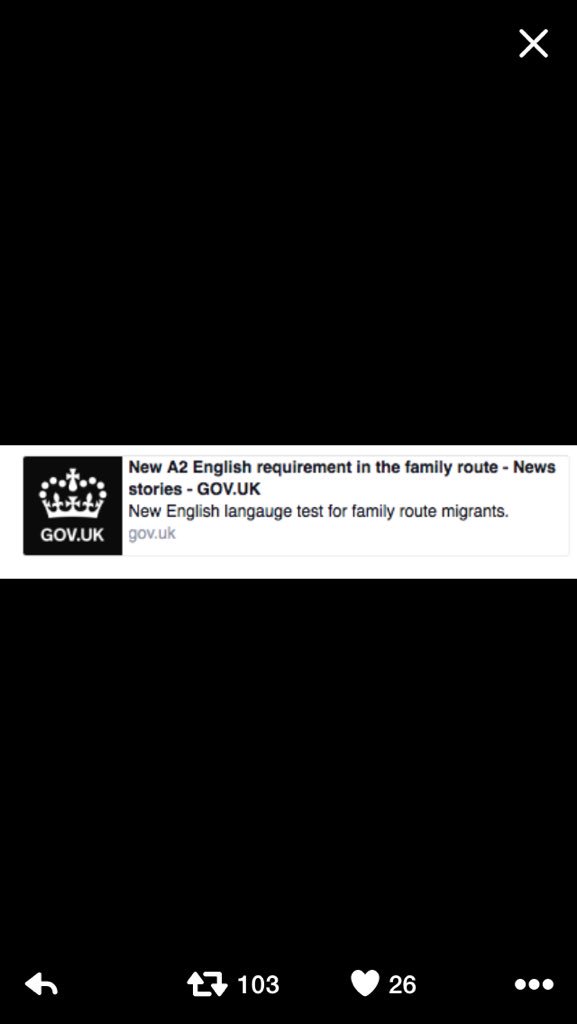
Many of the responses to the ideas concentrated on the fact that at the same time as Cameron is pushing for English to be learned, he has managed to slash budgets for ESOL teaching, thus reducing the chance of non-English speakers actually learning the language. Others noted that along with an encouragement to learn English, the threat of deportation was also lurking. They pointed to the line "We will now say if you don't improve your fluency, that could affect your ability to stay in the UK". Tied to the apparent encouragement for Muslim women to learn English was also a threat to punish them. And why single out Muslim women? Would English ex-pats who live in Spain but don't speak a word of the local language beyond "cerveza" be deported by the Spanish authorities for not speaking a word? And would the knuckledragging keyboard warriors of far-right organisations - born, bred, and supposedly educated, in this country - be sent back to their mums for not being able to spell "Go hoam immagrnat"?
Finally, Anita Anand noted that the UK government website couldn't actually manage to spell "language" properly in its own tweet. D'oh!
Obviously, English can be a unifying and integrating force for good: if we can all talk to each other, the argument goes, we can all start to get along. But the imposition of English on people has a long history of problems. English is not just a language of the world because it's flexible and absorbent (like your favourite kitchen roll) but because it has often been accompanied with political and social systems that have forced it on others, often at the end of a gun. There's nothing intrinsically better about an English speaker than someone who speaks French, Cantonese or Yoruba, but many still cling to the colonial belief that English can be a "civilising force" on Johnny Foreigner.
But English can also be something that allows people to feel part of a wider community and that's why so many people want to learn it - in the UK and beyond - and one reason why teaching English as a second language is so important. If Cameron were really serious about the power of language, he wouldn't be singling out one group of people or cutting funding to ESOL and the FE sector that are so vital in its provision.
Edited to add:
Frank Monaghan has written an article here which is worth a read.
Many of the responses to the ideas concentrated on the fact that at the same time as Cameron is pushing for English to be learned, he has managed to slash budgets for ESOL teaching, thus reducing the chance of non-English speakers actually learning the language. Others noted that along with an encouragement to learn English, the threat of deportation was also lurking. They pointed to the line "We will now say if you don't improve your fluency, that could affect your ability to stay in the UK". Tied to the apparent encouragement for Muslim women to learn English was also a threat to punish them. And why single out Muslim women? Would English ex-pats who live in Spain but don't speak a word of the local language beyond "cerveza" be deported by the Spanish authorities for not speaking a word? And would the knuckledragging keyboard warriors of far-right organisations - born, bred, and supposedly educated, in this country - be sent back to their mums for not being able to spell "Go hoam immagrnat"?Finally, Anita Anand noted that the UK government website couldn't actually manage to spell "language" properly in its own tweet. D'oh!
Obviously, English can be a unifying and integrating force for good: if we can all talk to each other, the argument goes, we can all start to get along. But the imposition of English on people has a long history of problems. English is not just a language of the world because it's flexible and absorbent (like your favourite kitchen roll) but because it has often been accompanied with political and social systems that have forced it on others, often at the end of a gun. There's nothing intrinsically better about an English speaker than someone who speaks French, Cantonese or Yoruba, but many still cling to the colonial belief that English can be a "civilising force" on Johnny Foreigner.
But English can also be something that allows people to feel part of a wider community and that's why so many people want to learn it - in the UK and beyond - and one reason why teaching English as a second language is so important. If Cameron were really serious about the power of language, he wouldn't be singling out one group of people or cutting funding to ESOL and the FE sector that are so vital in its provision.
Edited to add:
Frank Monaghan has written an article here which is worth a read.
Saturday, September 05, 2015
For Starters (part 1)
With the new term starting and new A and AS levels being taught for the first time, I thought it might be handy to think of ways to get classes starting to think about the kinds of things they'll be doing as the course goes on.
I'm sure lots of teachers already have plenty of starters and ice-breakers up their sleeves, but it might be worth thinking about tasks that link to some of the newer areas of the specification. For example, for the first time in ages, we'll be teaching accent, dialect and sociolect to AS/1st year A level students, so why not look at a couple of things connected to that? Here are two ideas based on Language Diversity and another on Textual Variation.
Language fingerprints: ask each student to think about what characteristics make up their own unique language identity.
If each student maps out these ideas, they'll build up a bigger picture of the influences that affect their language. You can introduce social, ethnic and gender/sexuality influences too, if that seems appropriate, or at least flag those up as aspects for students to think about themselves. Each area can then be mapped to the course they are about to start.
Proper English: use some of the links on these posts to find relevant articles about slang bans and school policy on "proper English".
This can lead into discussion of attitudes to Language Diversity (on Paper 2 of the new AS and A levels) and Language Discourses (same).
Found texts: following on from ideas like this one, you might want to ask small groups of students to spend 10 minutes gathering "texts" from around the classroom or form their own pockets and bags before selecting 6 per group to start analysing in a fairly simple way:
Examples of texts might be:
You can decide if you want to include electronic and spoken texts. At this stage, getting phones out and starting to read texts, Tweets, Snapchat messages and the like might not be the best starter in an early lesson, but you can play it by ear.
I'm sure lots of teachers already have plenty of starters and ice-breakers up their sleeves, but it might be worth thinking about tasks that link to some of the newer areas of the specification. For example, for the first time in ages, we'll be teaching accent, dialect and sociolect to AS/1st year A level students, so why not look at a couple of things connected to that? Here are two ideas based on Language Diversity and another on Textual Variation.
Language fingerprints: ask each student to think about what characteristics make up their own unique language identity.
- Where were they born?
- Where else have they lived?
- Which other languages or dialects have they spoken?
- Where were their parents from?
- Do they work part-time or do volunteering?
- Do they spend a lot of time doing certain activities: football, online gaming, going to gigs/festivals, writing, looking after younger children?
If each student maps out these ideas, they'll build up a bigger picture of the influences that affect their language. You can introduce social, ethnic and gender/sexuality influences too, if that seems appropriate, or at least flag those up as aspects for students to think about themselves. Each area can then be mapped to the course they are about to start.
Proper English: use some of the links on these posts to find relevant articles about slang bans and school policy on "proper English".
- Ask students to have a look at the lists of banned words/expressions that feature in many of these stories.
- What's "wrong" with these terms?
- Why might they be used?
- What alternatives are there and why might the schools see these as better?
- Is it right to ban these terms and how can that be achieved?
- What are the problems with trying to change people's language behaviour?
- Is there such a thing as "proper" English and how might that be defined?
This can lead into discussion of attitudes to Language Diversity (on Paper 2 of the new AS and A levels) and Language Discourses (same).
Found texts: following on from ideas like this one, you might want to ask small groups of students to spend 10 minutes gathering "texts" from around the classroom or form their own pockets and bags before selecting 6 per group to start analysing in a fairly simple way:
- Who is it by?
- Who's it aimed at?
- Why is it written in that way?
- How can you characterise the style?
- What do you notice about language patterns?
- What do you notice about visual design?
Examples of texts might be:
- a film poster on the wall of the classroom
- a college diary with the code of conduct
- a letter hone about book deposits
- a book blurb
- the writing on a packet of Wotsits
- the writing on a tube of hand gel/chapstick/tin of vaseline
You can decide if you want to include electronic and spoken texts. At this stage, getting phones out and starting to read texts, Tweets, Snapchat messages and the like might not be the best starter in an early lesson, but you can play it by ear.
Subscribe to:
Posts (Atom)
Follow EngLangBlog on Bluesky
The old Twitter account has been deleted (because of both the ennazification and enshittification of that site) so is now running on Bluesk...
-
As part of the Original Writing section of the NEA, students will be required to produce a commentary on their piece. This blog post will pr...
-
As lots of students are embarking on the Language Investigation part of the Non-Exam Assessment, I thought it might be handy to pick up a fe...
-
I'm on a roll. Nothing from me for ages, then three posts come along! This is a lovely story from the Kenya Times about a dialect called...
