Showing posts with label world englishes. Show all posts

Monday, January 14, 2019

World Englishes


When Dan asked what he should post about next on this blog, one of the most common responses was this, the World Englishes topic.  Maybe this is because it’s relatively new on the AQA spec, especially if you previously did Spec B; but actually many of the issues and debates involved should be familiar from other topics in language diversity or language and power.   I love teaching World Englishes because it’s the most summative of all the topics, so students can use all their knowledge of language diversity and change.  We teach it at the end of year 2 for this reason.  

These are the questions that we cover:


1.    How did English become such a dominant language in the world?

2.    What are the different ways of grouping English-using countries around the world?

3.    What are some characteristics of different global varieties of English and of English as a lingua franca (ELF)?

4.    Who controls the English Language?

5.    What are the political implications of the dominance of English?  Are all groups in English-using countries happy with it?  Why?  Why not?

6.    What effect is English having on languages around the world?  Is it responsible for “killing” other languages?

7.    What is the future of English around the world? 


For question 1, the simple answer (as with all dominant varieties of language) is power; in this case, the power of the British Empire and, later, the cultural, economic and political power of the USA.  David Crystal has a useful 3 minute discussion of this here, and there’s a great one minute animated film from the Open University here.  Depending on your students, you might need to do a bit of a history lesson on the British Empire at this point, but I usually find that at least some of my classes already know plenty about this. 

For question 2, there are several models which organise different global Englishes.  I use Strevens, which looks fairly hierarchical and is useful for showing how English spread around the world; Kachru’s norm providing, norm developing and norm dependent circles; and McArthur’s ‘different but equal’ wheel model.   Students should be able to discuss what these models imply about power and control of language, and all are very useful when discussing questions 3 to 7.

For question 3, there are great resources on ELF in the CUP book ‘Language Diversity and World Englishes’, but if you don’t have access to this or want something extra, there is a short intro from Jennifer Jenkins here  and a great article by Jenkins and Seidlhofer covering definitions, characteristics, issues and debates here.  Mario Saraceni also debates the issues around ELF, and I’ll return to his work when looking at question 7. 

When it comes to looking at varieties of global English, we research and discuss Englishes from India, China, the USA and Australia, then we do a detailed case study of Singapore.  This raises lots of relevant issues and debates about control and gatekeeping of English and about status versus identity; Singapore has a prescriptivist language policy which privileges British and US English as high prestige varieties, and rejects ‘Singlish’ as slang or ‘broken’ English which could adversely affect Singapore’s position as a centre of international trade.  Here’s a sick rap in Singlish so you can hear what it sounds like; an excellent Open University documentary covering the issues here; and a TEDx talk bigging up Singlish as the future of language in Singapore here.  At this point, we also come back to the models we looked at for question 2 to see how each could be applied to Singapore.  This case study also covers questions 4 and 5.  We also look at other language policies, including L’Academie Francais and the proposed language purity law in Germany; both of these are at least partly intended to stop English making inroads into other languages, and students might apply familiar concepts such as Aitchison’s infectious disease metaphors here.

Leading through question 5 and into question 6, we also cover the issue of linguistic imperialism and language death.  2 of the world’s 7000 or so languages die every month, and the power and dominance of super-languages such as English and Spanish shoulders much of the blame; your more ambitious students might want to read a transcript of David Crystal’s lecture on this.  The term linguistic imperialism was coined by Robert Philipson, and there’s an informative and interesting debate between him and Robert McCrum, who is far more upbeat about global Englishes, here.

Finally, for question 7, we look at possibilities for the future of World Englishes.  There’s a nice discussion by David Crystal in this video.

Mario Saraceni thinks that England should accept that we’ve lost control of the English language, and should now think in terms of Englishes, plural.   This means letting go of the idea of standard British English as the ideal ‘correct’ variety.   He uses a nice simile which students find easy to remember; we have as much control of English as Italians do of pizza – if someone wants to stick banana and bacon on it, we’re just going to have to let that go. 

Robert McCrum talks about ‘Globish’ (a term coined and monetised by Jean Paul Nerriere).  This is really a version of English as a lingua franca, and it raises some interesting debates; for example, are native English speakers likely to be disadvantaged by the spread of Globish because our use of idiom and complex grammar will make us difficult to understand? 

Maybe English as a native language will die and various World Englishes will remain; after all, this is what happened to previous lingua franca Latin.  Or perhaps, given the decline of Britain and the USA as global powers, another language such as Spanish or Mandarin will take over as a lingua franca.  Post-Brexit, English is certainly likely to lose some of its importance in Europe, as Juncker pointed out in 2017.

Finally, it’s well worth discussing the idea that elements of World Englishes are finding their way into varieties of British English as a result of globalisation and patterns of migration; we go back to our study of MLE/MUBE at this point.


Saturday, January 23, 2016

English language: the civilising force?

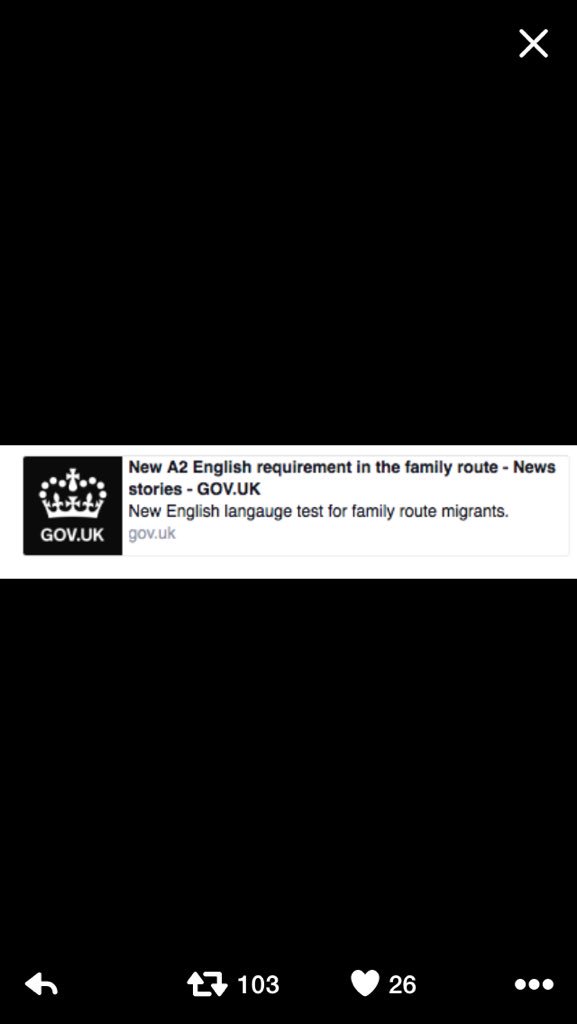
David Cameron's recent comments about the importance of the English language to people moving to, or already settled in, the UK have led to some interesting articles about the value of the language and its use as a political football. Many of Cameron's comments were directly addressed to one section of the community who have been given a kicking in the media in recent times: Muslim women. Cameron's logic goes like this, according to The Daily Telegraph: "one of the main reasons why young men are vulnerable to radicalisation is the "traditional submissiveness of Muslim women" (Cameron's words), which prevents them from speaking out against the influence of the radical Imams". So, is English a powerful force for integration, or is language being used as yet another stick to beat a minority group?

Many of the responses to the ideas concentrated on the fact that at the same time as Cameron is pushing for English to be learned, he has managed to slash budgets for ESOL teaching, thus reducing the chance of non-English speakers actually learning the language. Others noted that along with an encouragement to learn English, the threat of deportation was also lurking. They pointed to the line "We will now say if you don't improve your fluency, that could affect your ability to stay in the UK". Tied to the apparent encouragement for Muslim women to learn English was also a threat to punish them. And why single out Muslim women? Would English ex-pats who live in Spain but don't speak a word of the local language beyond "cerveza" be deported by the Spanish authorities for not speaking  a word? And would the knuckledragging keyboard warriors of far-right organisations - born, bred, and supposedly educated, in this country - be sent back to their mums for not being able to spell "Go hoam immagrnat"?

Finally, Anita Anand noted that the UK government website couldn't actually manage to spell "language" properly in its own tweet. D'oh!

Obviously, English can be a unifying and integrating force for good: if we can all talk to each other, the argument goes, we can all start to get along. But the imposition of English on people has a long history of problems. English is not just a language of the world because it's flexible and absorbent (like your favourite kitchen roll) but because it has often been accompanied with political and social systems that have forced it on others, often at the end of a gun. There's nothing intrinsically better about an English speaker than someone who speaks French, Cantonese or Yoruba, but many still cling to the colonial belief that English can be a "civilising force" on Johnny Foreigner.

But English can also be something that allows people to feel part of a wider community and that's why so many people want to learn it - in the UK and beyond - and one reason why teaching English as a second language is so important. If Cameron were really serious about the power of language, he wouldn't be singling out one group of people or cutting funding to ESOL and the FE sector that are so vital in its provision.

Edited to add:
Frank Monaghan has written an article here which is worth a read.


Wednesday, March 19, 2014

Exaggerating the differences?

On Monday Lynne Murphy, of Sussex University and Separated By A Common Language fame, came to talk to our students at Colchester and it was great to hear her bust the myths of US English 'destroying' English English. As she put it, in many ways American English has (kinda) saved the English Language.

So, it's good timing for all of us doing ENGA3 World Englishes, and especially Language Discourses around American English, that Lynne has also posted an interesting response to an article by the linguist Geoff Pullum about what he sees as the minimal differences between the American and English varieties.

In his original article, Pullum claimed that "the differences have been wildly, insanely overstated" and  "the one thing that has always struck me about the differences, particularly in grammar, is how tiny and insignificant they are". He concludes by saying, "Many people seem to enjoy getting hot under the collar about Americanisms in Britain or Britishisms in America; but it can’t be the linguistic differences that motivate them. Looked at seriously, the tiny differences between standard American and standard British English are trivial, barely even worth mentioning".

And he's kind of right...

Many people do enjoy getting hot under the collar about one variety influencing another, American creeping into English, or Britishisms (yes, they exist!) permeating American conversation. But maybe that's because they are worried about culture and identity, rather than language per se. It's the age-old argument that Henry Hitchings, author of The Language Wars identifies when he says that "These debates quickly become heated because they involve people’s attitudes to – among other things – class, race, money and politics".

But, as Lynne Murphy tells us, to underplay the differences between US English and British English is a bit daft too. As she explains in her recent post on Separated By a Common Language, many of Pullum's grammatical definitions are rather narrow and his article doesn't really address pragmatic differences between the two varieties. As she concludes in her blog post:

Are the differences exaggerated due to cognitive biases and prejudices? Absolutely. Are we still mostly able to communicate easily? Yes, certainly.  But that doesn't make the differences that are there any less interesting to me. And the fact that there are so many biased perceptions about national differences makes me feel like this blog provides a public service in countering the myths. I hope you do too. I even hold out a little hope that Pullum might.

Friday, April 19, 2013

Pidgins and creoles

We've finished work on World Englishes, but if you'd like to see a bit more about two areas we didn't really dwell on, there's some clear and  helpful coverage on creoles and pidgins on the About World Languages website.


Friday, March 22, 2013

Who cares?

Who cares about English? While this is a question I'm increasingly asking myself - especially when I get given A level essays two weeks late, written on Hello Kitty notepaper and handed in with a cheery "It's crap!" - this post isn't part of my usual moaning about students these days and the need to do lots of work for the exam. Well sort of...

Who cares about English? This time, the question isn't aimed at the heavens, but at a panel of experts and kind-of experts. And the answer of course should be, "We all do", or at the very least, "I don't really care, but I can do a very good impression of caring for the purposes of my exam".

Anyway, have a look here where you can watch (and read the answers from) a panel discussion between four language lovers, including one of my favourite people, Henry Hitchings, and the rather unfortunately named Prudence Raper, from the almost as unfortunate Queen's English Society.

The questions they're addressing in this discussion are:“What are the effects of social media, such as Facebook, on English?” and “What is English, given that it is spoken in so many different countries?”, which are exactly the kinds of things a soon-to-be-revising A2 student should be thinking about.


Sunday, January 27, 2013

Vive la resistance

Not for the first time, the French Academy has taken a stand to prevent more English words entering their language. This time, the word is hashtag, which as we have seen from the posts about 2012's Word of the Year, has become a nearly ubiquitous term in lots of online discourse, and even in spoken language too. According to the Academy, the term should, wherever possible, be replaced with the French term mot-diese.

In the Daily Mail, the story is reported with a degree of relish, but look at the comments below and you get an even better sense of how, for many people, ideas about the English language are linked inextricably to a sense of national identity and history.  But among all the celebration that the old enemy, Johnny French, is losing the language battle, there's a realisation even among some of the more rabidly nationalistic Mail readers that while English is spreading around the world, it's not necessarily the same English that's been used in the UK in the past.

As we've looked at here - and as David Crystal, key speaker at next month's emagazine English Language conference, has commented upon many times before - English is changing as it spreads, but also growing differently in different parts of the world. The model is not necessarily one of English getting weaker as it spreads, but separate poles of English varieties growing and evolving in their own distinct ways.

That's probably not much comfort to the French who won't really care if it's English English, American English or Indian English "threatening" their language, but it's part of a bigger global picture of change and variation that is evolving all the time.

Tuesday, November 27, 2012

Say 'Hi' to Hinglish

For those of you doing the AQA A spec, World Englishes is a fairly new topic which appears as part of the ENGA3 exam. Today's BBC News Magazine has a story on the spread of English in India and the growth of what has been termed Hinglish, a new form of English, spoken there.

If you want to find out more about English around the world and issues around how it's viewed, differences in how it's spoken, arguments over intelligibility and influence,  I'd recommend Jane Setter's chapter on it in the EMC's Language Handbook (available here and here and currently helping contribute to my kids' xmas list) and to have a look at some of the other World Englishes links from the last couple of years.

Friday, October 12, 2012

'Anglocreep'

There's more discussion of the two-way traffic between British and American English in the New York Times this week, including some insightful comment from linguists. Anglocreep is a word for the gentle drift of British English terms into the US English vernacular - words like cheers for thank you, mate for friend, ginger for redhead - and it's viewed with the same ambivalence and sometimes outright hostility as American English is in the UK.

We looked at the rising phenomenon of Britishisms here, but it's also been covered since then by The Sun and The Daily Telegraph. This is all good stuff for AQA A's ENGA3 unit, especially the World Englishes section. Have a look at other releavnt blog posts by clicking on the labels below (e.g. ENGA3, American English and World Englishes). Toodle pip, old beans.

Friday, September 28, 2012

The Brits are Coming

Crikey!
The language traffic between the USA and UK is often portrayed as only working in one direction. We get hos, feds, bling, couch and candy while they get Harry Styles and his semi-pubescent chums. But is it really one way traffic? Not really, according to various linguists and language watchers.

The BBC has just run a feature on what they call the Britishisation of American English (note the stiff upper lipness of their -isation rather than limp yankee -ization) and it would appear that some speakers in the USA are picking up terms from here and sprinkling them into their vernacular, without so much as a by your leave or missing you already. So words like snog and ginger have crept up the usage charts (and may even rival 1D's chart positions soon) and fixed expressions like go missing and chat up are also gaining popularity.

The usage graphs themselves are interesting things to have a look at because they show the increasingly scientific approach taken to language study that the digitisation of newspapers and books has given us. Plus, they reflect the influence of UK cultural exports like Harry Potter (and perhaps more precisely, in the case of ginger, Ron Weasley).

Of course, the media love to stoke friendly rivalries between the old colonial masters and their upstart offspring, with articles like this by Matthew Engle kicking off some hardcore peeving over the infectious disease of American English (which we covered on this blog here), but the picture has always been more varied than the caricatures suggest, and with linguistics now taking a much more nuanced turn towards language as performance and a marker of identity rather than simply reflecting fixed categories we fall into (British, American, male, female, working class, posh etc.) it's clear that more attention can be given to individual reasons why some British words might take off in the USA and others not.

All of this is a topic that we'll cover in ENGA3 as part of World Englishes and Language Discourses, because it's a debate about language use and its users that provokes so many different opinions. In the meantime, before we get to studying this in class, I'd recommend Lynne Murphy's excellent blog Separated by a Common Language and reading a bit of David Crystal's Encyclopedia of the English Language to see how American English developed its own distinct identity and continues to be the dominant English form spoken all over the world.

Edited on 28th September to add:
The Guardian have also run a comment piece on this topic today.

Wednesday, May 23, 2012

ENGA3 revision: some links

Here are a few links to recent articles about different topics relevant to ENGA3.

@backwellengdept have provided this link to an article about World Englishes.
Professor Julie Coleman (whose book The Life of Slang is on my summer reading list) has written this short piece about 7 slang words.
Autocorrect is making us bad spellers, apparently from this article...
...or not, if you believe this take on the same story.

Thursday, April 12, 2012

Having a LAFA

Language Variation around the world is the topic that I'm doing with my A2 (ENGA3) students at the moment, so this piece by Afua Hirsch in The Guardian from earlier in the week* is really timely.

In the article, Hirsch looks at the use of Ghanaian English and debates around it, particularly at the ways in which it is pronounced. She outlines the debate early on in the piece:

On one side of the fence are the old-school Ghanaians who were taught throughout their education to mimic received pronunciation – or BBC English, as it is popularly known – with varying degrees of success. On the other side, a backlash is growing against the old mentality of equating a British accent with prestige. Now the practice has a new acronym, LAFA, or "locally acquired foreign accent", and attracts derision rather than praise.

Conveniently for A level students, this is another very neat example of a language discourse or debate around a variety of English, so it's good territory for an ENGA3 paper. And while for many of my current students in Essex, Ghanaian English may seem a long way away, for my old SFX students in south London it was a lot more common. Even if you're not overly familiar with this particular variety of English and can't really tell your Nigerian pidgins from your Jamaican Creoles, the same bigger arguments are at play here: the same pushing and pulling between forces of change and forces of tradition.

Hirsch explains that part of the argument comes down to prestige:

...the idea that sounding "British" carries prestige also has a long history in Ghanaian society, manifesting itself in the country's struggle for independence in the 1940s and 50s, when an ideological difference emerged between an Oxbridge-educated Ghanaian elite and more radical, left-leaning leaders.
As with regional varieties and many other national varieties, the way you say something isn't always treated neutrally. While the sounds themselves don't really mean anything beyond the words they convey, they often signal much more - class, background, outlook and upbringing - so the arguments around how Ghanaian English is pronounced tap into all of these concerns.

 For Question 2 on the ENGA3 paper, the emphasis tends to be more to do with features of language rather than attitudes towards its use (although there is crossover) so this site, linked to in the article, gives an interesting (and bizarre) range of examples of Ghanaian English phrases for you to analyse.


(*thanks to @JaneSetter (blog here) for the link)

Updated on Monday 16th April to add:
This Pakistani-based newspaper website also refers to the Afua Hirsch article and adds its own local dimension to the argument. Definitely worth a read if you're working on World Englishes at the moment.

Friday, November 04, 2011

English for the English; Englishes for the rest?

Does England have any control of what is called "English" or will, as one Telegraph reader wittily claims, "The English ... have as much control over English as the Italians have over pizza and Indians over chicken korma"?

It might seem like a strange question, given that the general consensus is that English (the language) derives from England (the nation), but it's one that is increasingly being asked as new varieties of English spring up all over the world, each with its own distinct character and linguistic identity.

We've already seen that many English speakers get very worked up about "their" language being taken over by Americanisms, but what about when their language is picked up by Malaysians, Indians, Nigerians, and Chinese? For many, these varieties of English are judged as inferior, broken, stripped down and poorly learnt versions of the original and best form, but that's a view that was never popular among linguists and has been the subject of some fairly strongly-worded arguments in English teaching circles over the last twenty or so years.

For a long time, this neo-colonialist view - that a world English (singular) should be taught and that English English was the gold standard - seemed to be the mindset of many English educators (and perhaps their students too) where the focus was very much on teaching Johnny Foreigner the right sort of English.

But then came along Braj Kachru with his circle model of World Englishes (Note the plural!):

from http://metee-translation.blogspot.com/2010/06/you-are-now-officially-welcomed-to.html
The model has the "traditional bases" of English at its centre - the inner circle - and then widens to include countries in the outer circle where English has had an historical or political role, before moving into the expanding circle where English is generally used as a "lingua franca", a language of convenience to communicate between people who do not have English as their first language.

The model is not without its critics though, and some have argued that it neglects the "norms" of English and lets the Englishes at the fringes drift too far away from the core linguistic values of a standard Global English. In fact, Kachru debated this with Randolph (now Lord) Quirk (founder of the Survey of English Usage at UCL, where I work, so I must be careful what I say!).

From the other side of the linguistic divide, the model has been criticised for not being radical enough. It still places England and the USA at its heart and therefore creates the impression that the English language of the expanding circle orbits around them, that England is still at the centre of the universe.

Now, while Jeremy Clarkson and most of the Conservative Party would probably agree with that notion, sitting in the snug bar of a Tunbridge Wells gentleman's club and polishing their miniature soldier figurines,  it's hard to see how England can really claim any ownership over the Englishes spoken beyond its own borders. Even within those borders the language is in a state of constant flux and has a rich history of regional, social and ethnic variation, and that's before you even set foot on an ocean liner to cross the Atlantic or a prison ship to reach Australia.

The most recent debate has been over just this issue, with Dr. Mario Saraceni, a linguist from Portsmouth University, arguing in the September 2011 edition of Changing English (as reported here) that it's time to get away from the mindset that English is "spreading" and that "the psychological umbilical chord linking English in the world to its arbitrarily identified spatio-temporal and cultural centre be decidedly and conclusively severed". It's a bit of a mouthful, as you can see, but he's essentially calling for a clean break to be made between England and English.

To support his case, he quotes Henry Widdowson who said "How English develops in the world is no business whatever of native speakers in England, or the United States, or anywhere else. They have no say in the matter, no right to intervene or pass judgement. They are irrelevant."

In the interview below, Saraceni talks about a student of his, from Malaysia who says he feels like English is a "borrowed language", an idea that Saraceni develops in his paper, arguing that "Language is intimately connected to one's intellect and one's perception of Self and the idea of using a borrowed language, especially when this language is one's main language, has significant implications for the way one sees him/herself in relation to those considered to be the legitimate owners of that language".

In a sense (and I hope I'm getting this right) we shouldn't really be talking about anyone owning the language, that we should grow up and be less sentimental about what is essentially a tool for billions of people.

That's all well and good, but we know from previous language debates that arguments over language are rarely contained to the words, the sounds and the grammar of a language, but are much more often about our views of other people, their habits, their cultures and our own prejudices. So, in that context and to many linguistic nationalists on the comment pages of the Mail or the opinion pages of the Telegraph, what Saraceni says here is incendiary stuff.


Dr Mario Saraceni from University of Portsmouth on Vimeo.
(source: http://www.physorg.com/news/2011-11-queen-english.html)


Wednesday, July 20, 2011

Back in the USA


The BBC has curated a veritable gripefest of peeves about American English in response to Matthew Engel's article and broadcast about his dislike of the spread of American English into mainstream British usage .

As picked up on here last week and discussed at much more length and in more academic detail at Language Log, Engel's piece was fairly reactionary in tone and seemed to be rallying the troops to defend the borders against foreign invasion. And it seems to have done its job, because many readers have sent in their contributions, ranging from fanny packs, medal used as a verb to 24/7 instead of the much catchier and quintessentially English all day every day. Jeez....

Edited on 21.07.11 to add: taken to bits on Language Log here!

Wednesday, July 13, 2011

USA! USA!

There's a good article by Matthew Engel on the BBC News magazine this week which takes a look at the UK's attitudes to American language imports.

He tells us at the beginning that "The Americans imported English wholesale, forged it to meet their own needs, then exported their own words back across the Atlantic to be incorporated in the way we speak over here" which is a model that is fairly well-established in existing writing about American English, but one that comes with a few problems attached.

In one sense it still presumes that English English (or British English) is the standard to which all other varieties aspire and that while the Americans have been busy forging away (possibly a loaded metaphor, suggesting that they're making an inferior copy rather than bashing it with lump hammers and making it new) our language remains unchanged, aloof and just better, dammit. And what do we mean by "our" language anyway?

The title of the article is intriguing, because it suggests - as Lynne Murphy has identified in her tweets about this piece - that Americans aren't people, or at least they're not the "people" to whom Engels was addressing his piece. It's a strange piece of audience positioning for an author who must know that the BBC site is read all across the world... even by Americans. It smacks a bit of marking out territory and dividing lines between languages...which is OK, if that's what floats your Mayflower.

Also, towards the end when he makes a point about enjoying the "vigour and vivacity" of American English (words that always get used, often along with "articulate" when describing a language, or speaker of a language, that you think is good at "keeping it real" but probably not as clever as you) Engels states "...what I hate is the sloppy loss of our own distinctive phraseology through sheer idleness, lack of self-awareness and our attitude of cultural cringe. We encourage the diversity offered by Welsh and Gaelic - even Cornish is making a comeback. But we are letting British English wither". This strikes a fairly prescriptivist note, and suggests that as we import American words our home-grown variety dies out. Is it really like that?

I know that I cringe when I hear UK teenagers talk about the feds rather than the old bill, filth or boy dem (all good, old-fashioned British names for the police) but does that mean that the US word has taken the place of an English word, or just that its temporarily occupying its place while fashions come and go?

In one way, Engels is right that American words are creeping in through popular culture and spreading throughout British society, but in other ways he's not: regional varieties of English are apparently growing in strength, with some dialect terms making a comeback. While the bigger picture might be of a drift towards more Americanisms, it's not all one-way traffic and the drift is not uniform.

The article - despite my misgiving here - is certainly worth a read for anyone looking at global Englishes and the spread of American English around the world, as well as those looking for a good topic for a future Language Discourses question on ENGA3.

You can find a lot more about American English (and British English too!) on Lynne Murphy's excellent blog Separated by a Common Language and by following her on Twitter.

Edited and republished 13.07.11 because I've struggled to distinguish between save and publish on Blogger's new interface. D'oh! No, I mean "dash it!"

Friday, January 28, 2011

Like being flogged with a warm lettuce

some budgie smugglers in action
Australian English is often held up as an example of a variety of English that is full of invention and wit, and I'm not going to argue with that because Australians are also very good at insults. We'll get to the insults in a minute, but for invention and wit, how about taking a look at these Macmillan Dictionary blog posts - one, two and three - and this Oxford Dictionaries article. There are some fantastic turns of phrase here, like tight swimming trunks being referred to as budgie smugglers. The image is an enduring one and reminds me of family holidays in Holland back in the late 1970s where hairy-chested German tourists would strut around the poolside in unfortunately tight Speedos.

Keeping up the theme of tight-fitting garments, the Australian English thong is a particularly dangerous term that gets lost in translation. If I were to get all Sisqo and ask to see you wear that thong-tha-thong-thong-thong, I'd be presented with a flip flop. And rightly so, because in Australian English thong refers to an item of footwear not a cheesewire between the buttocks.

The articles and blog posts above will give you many more excellent examples, including some fantastically rude ones, as well as some fairly obvious abbreviations (beaut, arvo and convo).

Moving on to insults, my colleague Jill (of Australian background herself) has passed on this link to an archive of abuse from the ex-Prime Minister of Australia, Paul Keating, whose way with words puts the tame banter in our own Houses of Parliament to shame.

World Englishes are part of the AQA A English Language course (unit ENGA3) and not just a bit of fun, so you can actually use some of this in your exam.

Monday, December 20, 2010

English, Englishes, Elves and Latin

There's a good introduction by Michael Rosen to the role of English as a world language in the BBC News magazine this week. He looks at the role of Latin as one of the first "world" languages (sort of...) before moving on to think about the ways in which English and its various Englishes have spread around the globe.

Some of the most recent debates around this issue have centred around the existence of a standard form of the language (Global English) or different versions of it (Global Englishes), or more recently around a phenomenon called ELF (English as a Lingua Franca). Anyway, Michael Rosen's article is a good start if you want to find out more about the background to the debate, and you can find some more discussion on this blog post.

Thursday, November 11, 2010

The decline and fall of English?

This morning's Radio 4 Today programme had a good segment on the future of the English language featuring expert opinion from top applied linguist, David Graddol (whose excellent Open University books on language change and diversity, I'd thoroughly recommend). Is English going to remain the world's favourite language, or will it decline as other world powers, like India and China, start to dominate the globe?

You can listen to the clip here.

Monday, June 07, 2010

Cameron on Globish

No not that Cameron, the good one, Deborah Cameron, who starts her review of Robert McCrum's Globish: How the English Language Became the World's Language with some nice scene setting:

Last month, as volcanic ash drifted across the skies of Europe, I found myself in a van travelling from Dubrovnik to Antwerp with a Belgian, a German, a Turkish couple living in Holland, a Russian studying in Dublin, a Chinese woman heading to Beijing via Amsterdam, and two Croatian drivers whose services we had hired. How did we communicate? In English, of course. That "of course" is the starting point for Robert McCrum's book, an account of how English achieved its present status, framed by an argument about the present and future consequences.

She goes on to discuss whether McCrum's book is just another addition to the flag-waving and patriotism that appears in some other accounts of English's rise to international power and decides that it probably is. More important to Cameron  is what McCrum doesn't talk about: the unequal access to English around the world and the different values placed upon different varieties of the language. This last point chimes in with many other arguments about English as a Lingua Franca and/or English as a World Language, and it's an area that's worth a look if you're an A2 student thinking of Language Discourses around this topic for your ENGA3 exam in a few weeks.

Thursday, May 13, 2010

Global Englishes and the future of English

One of the big language debates currently raging around the world is about the ways in which English, as it spreads into new territories, changes to become something different from the English English we native speakers are used to.

Is this stripped down language actually English anymore? Should we be talking about Global Englishes instead - different varieties of English spoken around the world - or insisting that Standard British English be taught as an international language? And then, there's a more recent movement (ELF) which suggests that English is increasingly becoming a Lingua Franca, being used by speakers for whom English is not their first language, and that English as a Lingua Franca should be the umbrella term that covers this mode of communication, that basically (and I hope I get this right) anyone whose first language is not English and who is talking to someone else whose first language is also not English, will be using ELF, whatever variety they choose to speak in. In other words, while Global Englishes are specific varieties around the world (Singaporean English, Chinese English, Australian English etc.), ELF covers the broader function of the language being used.

Anyway, a recent book by Robert McCrum called Globish, takes a look at some of these arguments around English  and a lengthy extract appeared in last Sunday's Observer. Among some other interesting points, this one is probably worth a bit more consideration:

Today there is almost no limit to the scope of this subject. The world's varieties of English range from the "crazy English" taught to the Chinese-speaking officials of the Beijing Olympics, to the "voice and accent" manuals issued by Infosys and Microsoft at their Bangalore headquarters. Thus, English today embodies a paradox. To some, it seems to carry the seeds of its own decay. In the heartlands of the mother tongue, there are numerous anxieties about its future: in the United States, language conservatives agonise about the Hispanic threat to American English. But simultaneously, and more stealthily – almost unnoticed, in fact – the real challenge to the English of Shakespeare and the King James Bible comes less from alien speech than from the ceaseless amendments made to English in a myriad daily transactions across the known world. Here, global English, floating free from its troubled British and American past, has begun to take on a life of its own. My prediction is that the 21st-century expression of British and American English – the world's English – is about to make its own declaration of independence from the linguistic past, in both syntax and vocabulary.


Saturday, August 01, 2009

English around the world

Here's a quick link to an American article offering advice to American English speakers about how to avoid communication difficulties with other English speakers. It covers some of the main areas we'll look at in our A2 course when we look at Language Variation and how English is used around the world, specifically that the English used by non-native speakers is often a very different beast from what we use in the UK and USA. Here's an example:

Common colloquial American phrases will not mean much to a person who does not live in the United States. Telling a colleague that he or she should "go for it" will not take anyone anywhere and saying someone is "out of the loop" will likely put you there.


We've covered World Englishes (as they're often called) in previous posts, so if you want to stay ahead of the game...sorry, prepare so you are ready when we start this unit... have a look at these links:
The End of English - David Crystal's take on World English
Globish
French, English and American
Dirty English infects beautiful Italian

Follow EngLangBlog on Bluesky

The old Twitter account has been deleted (because of both the ennazification and enshittification of that site) so is now running on Bluesk...