If you're revising for Paper 1 and want to do some last-minute terminology work, these are good places to look.
The Internet Grammar of English
The Interactive Grammar of English
Saturday, May 21, 2016
Saturday, May 14, 2016
Attitudes to accents
If you're revising Paper 2 of the new AS level, there have been some really helpful articles about some of the topics covered, over the last few days.
This piece from The Guardian on Friday (thanks to @ENSFCEnglish) looks at research carried out by Dr Alexander Baratta into accent prejudice in education and quotes some staggeringly ill-informed views about how trainee teachers should speak. The story is also covered in The Sun (thanks to @paulkerswill).
A couple of years ago, this story about a teacher made news when it was suggested she had been told to 'tone down' her northern accent while working in a soft, southern, shandy-drinking school (thanks to @Lisa7Pettifer for that link).
Elsewhere, Rob Drummond at MMU kindly posted the results of a short survey he had carried out into attitudes towards young people's language and you can find them here.
All of this material is useful for both sections of the new Paper 2 (AS and A level) where you might see examples of texts that represent regional and social varieties, along with debates and arguments about the same topics. The sample paper has a Directed Writing task on issues around people changing their accents and these texts give you some handy, up to date reference points for questions like that.
We've covered lots of pieces about accent prejudice on this blog in the past and you can find plenty of links through this page.
This piece from The Guardian on Friday (thanks to @ENSFCEnglish) looks at research carried out by Dr Alexander Baratta into accent prejudice in education and quotes some staggeringly ill-informed views about how trainee teachers should speak. The story is also covered in The Sun (thanks to @paulkerswill).
A couple of years ago, this story about a teacher made news when it was suggested she had been told to 'tone down' her northern accent while working in a soft, southern, shandy-drinking school (thanks to @Lisa7Pettifer for that link).
Elsewhere, Rob Drummond at MMU kindly posted the results of a short survey he had carried out into attitudes towards young people's language and you can find them here.
All of this material is useful for both sections of the new Paper 2 (AS and A level) where you might see examples of texts that represent regional and social varieties, along with debates and arguments about the same topics. The sample paper has a Directed Writing task on issues around people changing their accents and these texts give you some handy, up to date reference points for questions like that.
We've covered lots of pieces about accent prejudice on this blog in the past and you can find plenty of links through this page.


Wednesday, May 11, 2016
Paper 1: salience & hotspots
Revision of Paper 1 skills and approaches has been on our agenda recently, so here are a few things that we've been looking at.
Given the limited amount of time to read two substantial new texts and write three answers, I think we probably have to be quite disciplined about time on this paper, so it pays to read for meaning effectively and plan cleverly. For our students, I've been suggesting an approach to planning answers that allows for getting an overview of each text to help with the meanings and representations in Questions 1 and 2 and which also starts to focus on the compare and contrast requirements of Question 3. Underpinning it all is a focus on finding examples of language and describing them accurately.
Here's an outline of what I've given our students to work with. I've been quite pleased with the results this week, so let me know if it works for you.
In the short time you have in the exam, you need to make sure every minute counts. Your note-taking and reading of the texts needs to be smart and give you material for your answers to the text analysis (Questions 1 and 2) and the compare and contrast of Question 3.
The approach I’d suggest is to use the first few minutes to read for meaning. That is, get a decent sense of the following:
• What each text is about – the topic that they share
• What’s being said about that topic
• What different views are being offered
You can also make some initial notes to help with the other parts of the questions, such as:
• What kinds of texts they are - genre
• The mode/s they are in – spoken, written, computer-mediated communication
• Their audiences and purposes
These observations can help you sort out some useful starting points for your notes, which can then help you form the basis of your main paragraphs for each answer. Next, I’d suggest finding 5-6 ‘hotspots’ in each text. These are areas in each text that convey the clearest and most useful ideas. These hotspots could be a single phrase, a section of the text (an image, a headline, the opening or closing lines), a sentence or even a pattern of language across the whole text.
These hotspots should mean something and, in some cases at least, represent the topic or views on the topic in a way that you can pull apart. There’s no point just picking a few words because you can label them with terms that you’ve learnt (“x is a determiner and y is a pronoun”); it’s vital to get to grips with language that means something and contributes to the overall meanings in each text.
With these hotspots, you can explore what things mean and analyse the language used to create these meanings. This means thinking about your language frameworks (or methods, or levels, or whatever you’ve called them this year) and your AO1 terms, making sure you are offering a good range across each text. AO1 is not just about grammatical labels (word classes, phrases, sentences, clauses, tense etc.), but also about things like semantic fields, patterns of meaning (contrast, antithesis and juxtaposition, for example), graphology, interaction patterns (especially in spoken texts or ones using features of spoken language), discourse structure, pragmatics and perhaps phonology too.
As you discuss the language used in these hotspots, try to cover a range of different language points but concentrate your attention on the ones that are most important in creating meanings and representations. For example, if the topic is a famous actor, perhaps think about the ways in which adjectives modify nouns to describe her performances and how metaphor might be used to describe her career. If the topic is an event like a football match or gig, look at the verb choices, the use of tense and aspect to structure events. If the topic is more of an ‘issue’, look at the patterns of abstract nouns and their meanings, and perhaps the overall discourse structure used to present conflicting ideas.
There will be many different ways to do this and if you’ve selected, meaningful parts of the texts, you’ll be able to explain them effectively. Examiners don’t really want to read about a text having “lots of long sentences to make it flow” or “lots of pronouns to make it personal” because these are meaningless generalisations. Look closely at what is actually meant in each text in its given context.
While analysing these hotspots, keep in mind the bigger picture of what each text is doing and what kind of texts they are. You will need to address these issues a bit more in your answer to Question 3, but they will also be useful in Questions 1 and 2. For example, if the text is typical of a particular genre, you know it will generally do certain things (recipes tell you what to do, stories recount events etc.).
Another important aspect to consider is not just how the topic of each text is represented but how the text creators (writers, speakers, posters, texters etc.) represent themselves and each other. How do they position themselves in relation to the text receivers? How do they present a face or image to the audience and to each other? How does this relate to what the texts are about?
In the example text you’ve been given, spend 7-8 minutes doing what’s outlined above. Read for meaning, make notes, identify 5-6 hotspots and then get writing. Use the remaining time (25 minutes) to draft your analysis of these hotspots, linking them back to the overall meanings in the text to keep a coherent thread running through your analysis.
We've used different texts to practise on, but a good one supplied by a helpful teacher from another school (thanks Wendy!) is this blog about Alan Rickman, which we then used alongside this article about Rickman (well...more about Snape really).
Given the limited amount of time to read two substantial new texts and write three answers, I think we probably have to be quite disciplined about time on this paper, so it pays to read for meaning effectively and plan cleverly. For our students, I've been suggesting an approach to planning answers that allows for getting an overview of each text to help with the meanings and representations in Questions 1 and 2 and which also starts to focus on the compare and contrast requirements of Question 3. Underpinning it all is a focus on finding examples of language and describing them accurately.
Here's an outline of what I've given our students to work with. I've been quite pleased with the results this week, so let me know if it works for you.
In the short time you have in the exam, you need to make sure every minute counts. Your note-taking and reading of the texts needs to be smart and give you material for your answers to the text analysis (Questions 1 and 2) and the compare and contrast of Question 3.
The approach I’d suggest is to use the first few minutes to read for meaning. That is, get a decent sense of the following:
• What each text is about – the topic that they share
• What’s being said about that topic
• What different views are being offered
You can also make some initial notes to help with the other parts of the questions, such as:
• What kinds of texts they are - genre
• The mode/s they are in – spoken, written, computer-mediated communication
• Their audiences and purposes
These observations can help you sort out some useful starting points for your notes, which can then help you form the basis of your main paragraphs for each answer. Next, I’d suggest finding 5-6 ‘hotspots’ in each text. These are areas in each text that convey the clearest and most useful ideas. These hotspots could be a single phrase, a section of the text (an image, a headline, the opening or closing lines), a sentence or even a pattern of language across the whole text.
These hotspots should mean something and, in some cases at least, represent the topic or views on the topic in a way that you can pull apart. There’s no point just picking a few words because you can label them with terms that you’ve learnt (“x is a determiner and y is a pronoun”); it’s vital to get to grips with language that means something and contributes to the overall meanings in each text.
With these hotspots, you can explore what things mean and analyse the language used to create these meanings. This means thinking about your language frameworks (or methods, or levels, or whatever you’ve called them this year) and your AO1 terms, making sure you are offering a good range across each text. AO1 is not just about grammatical labels (word classes, phrases, sentences, clauses, tense etc.), but also about things like semantic fields, patterns of meaning (contrast, antithesis and juxtaposition, for example), graphology, interaction patterns (especially in spoken texts or ones using features of spoken language), discourse structure, pragmatics and perhaps phonology too.
As you discuss the language used in these hotspots, try to cover a range of different language points but concentrate your attention on the ones that are most important in creating meanings and representations. For example, if the topic is a famous actor, perhaps think about the ways in which adjectives modify nouns to describe her performances and how metaphor might be used to describe her career. If the topic is an event like a football match or gig, look at the verb choices, the use of tense and aspect to structure events. If the topic is more of an ‘issue’, look at the patterns of abstract nouns and their meanings, and perhaps the overall discourse structure used to present conflicting ideas.
There will be many different ways to do this and if you’ve selected, meaningful parts of the texts, you’ll be able to explain them effectively. Examiners don’t really want to read about a text having “lots of long sentences to make it flow” or “lots of pronouns to make it personal” because these are meaningless generalisations. Look closely at what is actually meant in each text in its given context.
While analysing these hotspots, keep in mind the bigger picture of what each text is doing and what kind of texts they are. You will need to address these issues a bit more in your answer to Question 3, but they will also be useful in Questions 1 and 2. For example, if the text is typical of a particular genre, you know it will generally do certain things (recipes tell you what to do, stories recount events etc.).
Another important aspect to consider is not just how the topic of each text is represented but how the text creators (writers, speakers, posters, texters etc.) represent themselves and each other. How do they position themselves in relation to the text receivers? How do they present a face or image to the audience and to each other? How does this relate to what the texts are about?
In the example text you’ve been given, spend 7-8 minutes doing what’s outlined above. Read for meaning, make notes, identify 5-6 hotspots and then get writing. Use the remaining time (25 minutes) to draft your analysis of these hotspots, linking them back to the overall meanings in the text to keep a coherent thread running through your analysis.
We've used different texts to practise on, but a good one supplied by a helpful teacher from another school (thanks Wendy!) is this blog about Alan Rickman, which we then used alongside this article about Rickman (well...more about Snape really).
Friday, April 01, 2016
Argument & counter-argument
While marking my students' recent work for the directed writing task on Paper 2 of the new spec, I've been jotting down a few ideas about how to address the main areas that need improvement. Apart from some of the stuff I've blogged about recently - making the opinion pieces accessible to non-specialist readers, including enough language knowledge to hit the higher levels of AO2 and developing effective openings and conclusions - one thing that has struck me is this part of the mark scheme for AO2:

Under the 'Performance Characteristics' heading (i.e. the general expectations of what students will be doing to be in this Level, rather than the more specific 'Indicative Content' for each paper), the key thing seems to be the notion of identifying different views, approaches and interpretations.
If we assume that students already need to have "show detailed knowledge of linguistic ideas, concepts and research" (Level 3), then what Level 4 seems to be asking for is a sense of alternative ways of looking at the issue and an awareness that other views exist. In an opinion piece, there is clearly an argument that needs to be developed and the Directed Writing Guidance document on the AQA site makes it clear that "students’ writing will necessarily have the purpose of conveying opinions and arguing a case" while "marshalling points and presenting them in a coherent form". But, perhaps most importantly for Levels 4 and 5, "Students can show that they can deconstruct others’ arguments and present their own".
My reading of this is that a single-track opinion piece which ploughs a fairly narrow furrow and doesn't look up, or around, at alternative arguments or opinions, might find it hard to go much higher than Level 3. I might be wrong... and we probably need to remember that the paper hasn't been marked (or even sat) yet.
Anyway, from looking at my own students' work, I've decided that they need to do a bit more work on addressing different opinions and showing awareness (at least), understanding (preferably) and evaluation (optimistically) of other views.
Style models are good for this and some of these are useful for showing how different opinions can be flagged up and then knocked down. David Crystal does a good job of this in his review of Simon Heffer's (awful) Strictly English:
Heffer hides his tastes behind the idea of what is logical, using variants of the word more often than Spock. "Rules in language are made by logic, not by a democratic vote," he writes. If only that were true: it would save grammarians so much bother. In fact, there is no logic behind his recommendations, other than the usual kind favoured by pedants: if I like it, it's logical; if I don't, it isn't.
By quoting Heffer, Crystal can respond directly to the argument, but perhaps remembering a quotation and then deploying it effectively is a bit of a tall order for an AS student in an exam (although, it's always nice to see it happen).
An alternative approach is a little vaguer, but quite effective in its own way. Lindsay Johns' Ghetto Grammar article, which is a favourite of mine for class analysis, takes a lighter touch:
Some educators take a position of cultural relativism. They assert the legitimacy and value of street talk, or at the very least, the importance of teaching young people to "code switch" - how to differentiate in which milieu it is socially acceptable.
I have no time for such an approach. In my experience, young people find it very hard to code switch. Text-speak, poor grammar and street patois routinely pervade the essays I set them, let alone their conversations with me.
What's interesting about this approach is that it's a bit vague about:
a) who the "educators" are (names would help);
b) how what they say can be defined as "cultural relativism";
c) why Johns' own "experience" should trump these educators' assertions.
On the plus side, it's effective in keeping his (for me, almost entirely wrong-headed) argument on track.
A quick task I'm setting my students after Easter is the one below, in which they look at an idea from one side of a debate (in this case, work we've been doing on dialect and slang bans in schools) and then try to come up with a counter-argument. I'm going to encourage the students to come up with a source, quotation or reference point for each argument too, so they can draw on what they've studied in class and support their views, where possible. I'd be interested to see if anyone else has ideas for different arguments that could be brought in or where else to take this.

Saturday, March 26, 2016
Representation and regional variation
One area of Paper 2 of the new AQA English Language AS level I've been trying to address is the focus on how users of language varieties are represented. In the examples I posted in January, stimulus texts taken from stories about schools 'banning' slang and/or dialect touched on how regional varieties and youth sociolects are represented and discussed, so they make a useful starting point.
Another area though is how fiction represents accent and dialect, often through 'eye dialect': a way of writing words to make them resemble how they are pronounced. It's less precise than using a phonemic alphabet but creates an easy to understand representation of how a regional accent might sounds. Irvine Welsh uses it in Trainspotting, which is set in Edinburgh and through the eye dialect you can hear the sound of the Leith accent coming through:
Third time lucky. It wis like Sick Boy telt us: you’ve got tae know what it’s like tae try tae come off it before ye can actually dae it. You can only learn through failure, and what ye learn is the importance ay preparation. He could be right. Anywey, this time ah’ve prepared.Another regional variety represented in fiction is the Yorkshire dialect, which features in the work of Barry Hines, whose A Kestrel to a Knave is a classic of working class fiction. In the short extract of dialogue below, you can hear the author's attempts to capture the sounds and words of his characters' voices, capturing also something of their social and personal identity in the process, perhaps in a way that Standard English simply couldn't do:
As the Yorkshire poet, Ian McMillan explains in his piece about Barry Hines (who died last week), it was something of a rarity for authors to use the voices of working class regional English speakers in a serious and considered way in fiction. For many middle and upper class authors, regional accents were easy markers of social difference to employ and non-standard English speakers were often mocked or ridiculed. McMillan explains how pleased he was to hear his own voice being represented in an authentic and sympathetic way:
He stayed in his own half of the bed, groaning and turning over every few minutes. Billy lay with his back to him, listening. Then he turned his cheek slightly from the pillow.
'Jud?'
'What?'
'Tha'd better get up.'
No answer.
'Alarm's gone off tha knows.'
'Think I don't know?'
He pulled the blankets tighter and drilled his head into the pillow. They both lay still.
'Jud?'
'What?'
'Tha'll be late.'
'O, shut it.'
'Clock's not fast tha knows.'
'I said SHUT IT.'
He swung his fists under the blankets and thumped Billy in the kidneys.
'Gi'o'er! That hurts!'
'Well shut it then.'
'I'll tell my mam on thi.'
Jud swung again. Billy scuffled away to the cold at the edge of the bed, sobbing. Jud got out, sat on the edge of the bed for a moment, then stood up and felt his way across the room to light the switch. Billy worked his way back to the centre and disappeared under the blankets.
I wasn’t only captivated by the characters and the plot, though. What really made me grin and bang the settee arm with my pudgy fist was the way the characters spoke: they talked just like me. Somehow Hines, who died at the weekend, managed to get that minimalist Barnsley poetry down on the page without the apostrophes flying round the paragraphs like racing pigeons.
These text extracts make quite nice examples for analysis and discussion at AS level, because they offer a representation of different characteristics of regional dialects (the use of thi and tha suggesting the Yorkshire pronouns thee and thou, for example).
Elsewhere, less sympathetic representations still abound and a trip to a local charity shop this week (don't dare say middle-aged teachers never have any fun) meant that I stocked up on old copies of (the extremely rude) Viz comic which I spent a large part of my late teens and early twenties reading when I should have been doing something useful.
One of the annuals features a strip called The Boy Scouse, in which a young Liverpool boy goes to Scouse Camp (as opposed to Scout Camp - dat's da joke, la) and develops Scouse skills. You can see a bit of it yourself in the extract below:

Unlike the serious examples earlier, the representation of regional variety here is all part of the mockery of a whole group of people, or perhaps the social and regional stereotype around them.
The pronunciation (th-fronting stopping* in dat, g-dropping in avoidin and shopliftin & /t/-glottalisation /l /substitution** in gerrin), along with local expressions such as la (used like lad or mate, according to this link) and the syntax of colloquial spoken English such as the 'tail' ("Dat'll go great...dat will") are one element of the shorthand used to create the stereotype of the Scouse scally, along with the curly hair, references to unemployment, crime and anti-social behaviour.
The strip itself could be a good way into a wider essay question about how some regional dialects (and/or sociolects) are portrayed negatively in popular culture, as well as a useful wider discussion about the ways in which (often offensive) social stereotypes are easily tapped into through the representation of a particular way of speaking.
*Edited on 27.03.16 to amend th-fronting to th-stopping (cheers to @Nickking6)
** and t-glottalisation to /t/ to /l/ substitution (from Clark & Watson's work here, as suggested by Nick)
The strip itself could be a good way into a wider essay question about how some regional dialects (and/or sociolects) are portrayed negatively in popular culture, as well as a useful wider discussion about the ways in which (often offensive) social stereotypes are easily tapped into through the representation of a particular way of speaking.
*Edited on 27.03.16 to amend th-fronting to th-stopping (cheers to @Nickking6)
** and t-glottalisation to /t/ to /l/ substitution (from Clark & Watson's work here, as suggested by Nick)
Wednesday, March 16, 2016
Opinion pieces: doing the knowledge with style
Over the last week or two, we've been working on the Directed Writing part of Paper 2 and thinking about ways to make the opinion pieces both rich in language knowledge - so the reader is actually informed and educated about language - and able to grasp the main ideas without being a specialist.
Having set a task on the language of social groups in which quite a few students erred on the side of catchiness and style over language content, with a few swinging the other way and writing things that were more like essays than articles, I put together the following as a worksheet for the best part of a double lesson. We're going to use it next week and see if we can get the opinion pieces a bit closer to what I think the mark scheme can reward.
Obviously, there's more to this kind of writing than just aiming to hit the different bands on the mark scheme and I'd encourage students to read as wide a range of opinion pieces - op-eds in papers, online articles like those on Comment is Free and Indie Voices and perhaps a few pieces from better blogs (eg Deborah Cameron's brilliant Language: a feminist guide) to get a real feel for the ways arguments and opinions are structured and shaped, but in the classroom we probably need a bit more scaffolding, so here it is...
Part of your job in the Directed Writing task is to explain linguistic concepts to a non-specialist audience.
This means that
a) you need linguistic ideas to explain and
b) you need to develop a way of making them clear and intelligible to your readers.
In practice, this means you will need to do the following:
In the example below (taken from here), there are some important linguistic ideas and technical terms, but it’s not very accessible.
How would you deal with it to make it more relevant and clear for your target audience?
What are the key bits to focus on?
Which bits can you ignore, summarise or just mention very briefly?
How would you make this relevant to a reader of a broadsheet newspaper in the UK in 2016?
How would you then link what’s here to some of the ideas that you covered in your own opinion piece about the language of social groups? Which areas would link to this and provide you with a paragraph before and a paragraph afterwards?
The flipside of this is that you also need to have enough language content to secure plenty of AO2 marks, so you need to do more than just recycle generalised, common sense ideas about language in your piece.
The following extracts are accessible and clear but don’t really tell the reader much that they won’t already know. How can you build on the ideas here with some relevant language studies, references to research and linguistic concepts?
For each of the sections below, think of a relevant linguistic reference and a way of integrating it effectively into the article.
Having set a task on the language of social groups in which quite a few students erred on the side of catchiness and style over language content, with a few swinging the other way and writing things that were more like essays than articles, I put together the following as a worksheet for the best part of a double lesson. We're going to use it next week and see if we can get the opinion pieces a bit closer to what I think the mark scheme can reward.
Obviously, there's more to this kind of writing than just aiming to hit the different bands on the mark scheme and I'd encourage students to read as wide a range of opinion pieces - op-eds in papers, online articles like those on Comment is Free and Indie Voices and perhaps a few pieces from better blogs (eg Deborah Cameron's brilliant Language: a feminist guide) to get a real feel for the ways arguments and opinions are structured and shaped, but in the classroom we probably need a bit more scaffolding, so here it is...
Part of your job in the Directed Writing task is to explain linguistic concepts to a non-specialist audience.
This means that
a) you need linguistic ideas to explain and
b) you need to develop a way of making them clear and intelligible to your readers.
In practice, this means you will need to do the following:
- explain who people are and why you are quoting them or referring to them
- give a clear explanation of a technical term (and show an example of it in use)
- untangle different ideas and make them more straightforward for your audience
- present different arguments and identify where they are coming from
- show an overview of issues from which you can then select relevant examples
- demonstrate language practices in use with examples that your readers will understand
- show your own line of argument and guide your readers through the topic
In the example below (taken from here), there are some important linguistic ideas and technical terms, but it’s not very accessible.
How would you deal with it to make it more relevant and clear for your target audience?
What are the key bits to focus on?
Which bits can you ignore, summarise or just mention very briefly?
How would you make this relevant to a reader of a broadsheet newspaper in the UK in 2016?
Penelope Eckert (2000) studied the language use of American high school students who called themselves Jocks and Burnouts. These two subcultures were associated with sharply contrasting personal styles. Jocks participated enthusiastically in extra-curricular activities, played sports, served on the school council and hoped to graduate to college. They took the school as their community and hence the basis of their group identity. In the 1980s, when Eckert did her research, they wore smart designer jeans, the girls used candy coloured make-up and the boys had short hair.
The Burnouts, in contrast, did not participate in school social activities and resisted the corporate identity of the high school and what it stood for. They wore bellbottom jeans, rock concert T-shirts, sweatshirts and auto-plant jackets, and expected to work in local industry when they were older. They were more likely to be out at an all-night party in the town than at the school dance. There were differences, too, in the language styles (pitch, pronunciation and grammar) used. Eckert sees these two subcultural groups as representing two different kinds of response to the school institution, and as involving students in alternative ways of negotiating their individual identities, their ‘meaning in the world’ (Eckert, 2000, p. 41).
She suggests that Jocks and Burnouts are two different ‘communities of practice’, each involving students who have come together to share ways of doing things and ways of talking, beliefs and values, as a function of their shared engagement in the activity. Individual identity is constructed in collaboration with others in and around these communities of practice.
How would you then link what’s here to some of the ideas that you covered in your own opinion piece about the language of social groups? Which areas would link to this and provide you with a paragraph before and a paragraph afterwards?
The flipside of this is that you also need to have enough language content to secure plenty of AO2 marks, so you need to do more than just recycle generalised, common sense ideas about language in your piece.
The following extracts are accessible and clear but don’t really tell the reader much that they won’t already know. How can you build on the ideas here with some relevant language studies, references to research and linguistic concepts?
For each of the sections below, think of a relevant linguistic reference and a way of integrating it effectively into the article.
Many people use language in different ways because of the different social groups that they belong to. For example, you could argue that people who are members of one social class (e.g. working class) would use language in different ways to those in a different social class (e.g. upper class).
Class is one factor in language use, but not the only one. All of us belong to different social groups that relate to our age and activities we engage in. One such group might be young people - a group everyone belongs to at some point in their life – and young people generally use language in different ways to their parents’ generation. One style of language is slang and this is often used by young people to show their own identity and signal their membership of a particular group, as well as showing their distance from others outside their age group.
The activities we engage in are also an influence on our language patterns. Those who work in certain professions or who engage in leisure activities with others are likely to develop a way of speaking that is different. Doctors, teachers, police officers and lawyers all develop their own ways of using precise, technical language.
We don’t just behave in fixed ways with language though and often we might choose to alter our style of language to show that we are closer to others (or to distance ourselves from them). An example of this is when the Chancellor, George Osborne used more colloquial speech when addressing Morrisons workers at a warehouse while campaigning in the 2015 General Election. Instead of pronouncing better and got to with the usual ‘t’ sounds, he used a ‘d’ sound and elided the sounds of separate words to create gotta.
Wednesday, February 03, 2016
AS Directed Writing - finding style models
Section B on Paper 2 of the new AQA AS-level sets a directed writing task which means that students will need to get used to writing in a different way about language topics. In Section A of the paper, they will be writing an essay in response to some stimulus data and a "Discuss the idea..." essay prompt.
The sample material on the AQA site has one task (you can find it here and a student response to it with examiner commentary here) asking students to "Write an opinion article in which you discuss the issues surrounding people changing their accents". The stimulus text is a short extract from the Mail Online looking at media celebrity Donna Air changing her working class Geordie accent to something closer to her posh boyfriend's accent and it's pretty clear that this is not the kind of article that students will need to write for themselves, because a) it's very light on language issues (and AO2 is worth half the marks here) and b) it's a very short extract.
We've just been looking in class at possible style models for opinion pieces and come up with a few possibilities for the kinds of articles that appear in the broadsheet press or on their websites, and which offer some solid language content as well as arguing a case effectively. Here are a few ideas:
Julia Snell in The Independent responds to the Sacred Heart School dialect row: plenty of serious language content for AO2 and some nice shaping of an argument for AO5.
Michael Rosen in The Guardian taking on grammar pedants and those who teach a "right and wrong" way of dealing with grammar: a strongly argued piece that picks up a debate from elsewhere and explains the ins and outs of it, making language ideas accessible to a non-specialist but interested reader.
Robert Lane Greene in The Economist's language blog looking at accent prejudice: a range of linguistic references integrated effectively into a clear explanation of the main issues for a non-specialist audience.
In many ways, the kinds of opinion piece that appear as potential Media Texts for the old ENGB4 and Language Interventions for ENGA4 are also worth a look. Various examples of these have been collected here and here on this blog.
If you have found any others that you think are worth a look, please let us know via @EngLangBlog.
The sample material on the AQA site has one task (you can find it here and a student response to it with examiner commentary here) asking students to "Write an opinion article in which you discuss the issues surrounding people changing their accents". The stimulus text is a short extract from the Mail Online looking at media celebrity Donna Air changing her working class Geordie accent to something closer to her posh boyfriend's accent and it's pretty clear that this is not the kind of article that students will need to write for themselves, because a) it's very light on language issues (and AO2 is worth half the marks here) and b) it's a very short extract.
We've just been looking in class at possible style models for opinion pieces and come up with a few possibilities for the kinds of articles that appear in the broadsheet press or on their websites, and which offer some solid language content as well as arguing a case effectively. Here are a few ideas:
Julia Snell in The Independent responds to the Sacred Heart School dialect row: plenty of serious language content for AO2 and some nice shaping of an argument for AO5.
Michael Rosen in The Guardian taking on grammar pedants and those who teach a "right and wrong" way of dealing with grammar: a strongly argued piece that picks up a debate from elsewhere and explains the ins and outs of it, making language ideas accessible to a non-specialist but interested reader.
Robert Lane Greene in The Economist's language blog looking at accent prejudice: a range of linguistic references integrated effectively into a clear explanation of the main issues for a non-specialist audience.
In many ways, the kinds of opinion piece that appear as potential Media Texts for the old ENGB4 and Language Interventions for ENGA4 are also worth a look. Various examples of these have been collected here and here on this blog.
If you have found any others that you think are worth a look, please let us know via @EngLangBlog.
Saturday, January 30, 2016
#TwitterTwang
One of the big topic areas on the new AQA English Language AS level (and the A level) is Language Diversity, in which we look at how language varies from person to person and place to place. Much of the work done on this topic has focused on spoken language - accents and dialects, for example - but language can vary in written and electronic forms too.
Twitter has proved a really useful way of both producing and collecting this kind of data and more is explained in an article looking at the work of Brice Russ at Ohio University, who examined the language in some 400,000 tweets, looking initially for how people in different parts of the USA used either soda or pop to describe fizzy drinks.
Gabriel Doyle explains some of the ways in which Twitter can be used to chart change in language and how changes in language spread in this lecture clip.
Rachael Tatman, blogging from the Northwest Linguistics Conference in April of 2015, also noted how Twitter cold be used to identify not just lexical but phonological differences in how people used Twitter: in other words, the ways in which people used different spellings on Twitter to represent the ways they spoke with an accent:
So, how is this relevant to those us doing English Language at A level? Here's the plan...
With #TwitterTwang we'll try to gather data from UK A level students using Twitter and a few helpful teachers. Over a 3-4 week period before the end of the Spring term, we'll identify a handful of ways in which data can be elicited in similar ways from students in different places and ask each group of students to hashtag their tweets with #TwitterTwang and a number to indicate where they're from (Essex as 1, Leicester as 2, Hackney as 3, Southport as 4, East Norfolk as 5 etc.). We can then make use of the data collected to see if there are patterns in regional dialect and/or accent apparent in the tweets.
I'm still thinking about different elicitation techniques and open to ideas (so please tweet me @EngLangBlog) if you have good ideas or think mine are rubbish, but here's the tentative plan:
Twitter has proved a really useful way of both producing and collecting this kind of data and more is explained in an article looking at the work of Brice Russ at Ohio University, who examined the language in some 400,000 tweets, looking initially for how people in different parts of the USA used either soda or pop to describe fizzy drinks.
Gabriel Doyle explains some of the ways in which Twitter can be used to chart change in language and how changes in language spread in this lecture clip.
Ok, so people will sometimes spell things differently on Twitter based on their spoken language dialect. What’s the big deal? Well, for linguists this is pretty exciting. There’s a lot of language data available on Twitter and my research suggests that we can use it to look at variation in sound patterns.
So, how is this relevant to those us doing English Language at A level? Here's the plan...
With #TwitterTwang we'll try to gather data from UK A level students using Twitter and a few helpful teachers. Over a 3-4 week period before the end of the Spring term, we'll identify a handful of ways in which data can be elicited in similar ways from students in different places and ask each group of students to hashtag their tweets with #TwitterTwang and a number to indicate where they're from (Essex as 1, Leicester as 2, Hackney as 3, Southport as 4, East Norfolk as 5 etc.). We can then make use of the data collected to see if there are patterns in regional dialect and/or accent apparent in the tweets.
I'm still thinking about different elicitation techniques and open to ideas (so please tweet me @EngLangBlog) if you have good ideas or think mine are rubbish, but here's the tentative plan:
- a post-lunch tweet to describe what each student has had for lunch
- a Gogglebox-style tweet/series of tweets about a programme that everyone agrees to either watch at a given time or on catch-up (e.g. Britain's Got Talent, The Voice, Take Me Out etc.)
- a tweet about a picture/photo that we can all agree on an share
If we can agree on exactly which of these (or all?) to use, we'll have something to start with. We then need to identify a time to get this started. One of the best things about using Twitter for this is that we don't necessarily have to deal with the data as it comes in but can catalogue it using the different hashtags and save it for later. We could even use it for different things (language change, gender, individual tweeting styles) as the course goes on, or use it to compare with data in future years to see if language styles change.
Anyway, that's a start, I hope. If we could work out a plan in more detail through @EngLangBlog that would be great.
Monday, January 25, 2016
Accent and Dialect essays
We're coming close to the end of our work on Accent and Dialect for the new Paper 2 of AQA AS specification and thinking a bit more about the kinds of questions that might appear and how to approach them. One area that we've considered is the issue of why certain dialects (and/or accents) seem to be valued more highly than others, so for this we have been looking at news stories from a few years ago about so-called 'slang bans'. You can find a load of them gathered here as links.
In response to the question, "Discuss the idea that some dialects are viewed more favourably than others" (which we came up with ourselves), we've used short extracts of data from different schools (such as Sacred Heart in Teesside and Colley Lane in Halesowen) for the AO1 part of the question and as a springboard into the wider issues and discussion for AO2.
In terms of how to structure an answer, we've worked on the principle that it's best to address the essay question straight away in the opening paragraph with something along the lines of "The idea that some dialects are viewed less favourably than others is probably true and this is often the result of some privileged forms of English - accents such as RP or a dialect such as Standard English - being valued highly by influential and powerful parts of the population..." before going into the data in more detail.
The data is there, I think, to provide you with the chance to explore different features of language and to be able to see examples that might link back to the wider question, but it's also there to help you get a few AO1 marks early on, so get linguistic on its ass. Use your understanding of language frameworks such as vocabulary, grammar and phonology to describe and label the features of dialect that are apparent, and think too of the wider implications of what the school is doing by presenting this in the way that they do.
[Edited after 2016 exams to add the following. AO1 is assessed a little differently on Paper 2 compared to Paper 1, so it's less about analysing the data than writing coherently and with a good linguistic register. By that, we mean using the right kind of specialist terminology to describe language (e.g. accent, dialect, idiolect, phonemes, being able to describe word classes etc.). Most of the marks for AO1 are from your ability to actually structure an answer that addresses the ideas in the question.]
Once you've worked on the data, the next job is probably to make some links from what's there to the wider question - the idea under discussion in the title - and from there into the range of knowledge about the topic that you have built up by studying it and reading about it.
AO2 isn't all about naming theorists and quoting case studies, but they are important and they often give you a peg to hang a bigger idea on. So, in a question about dialects, it makes sense to think about studies that have looked at non-standard English (Trudgill and Cheshire), studies that have explored different pronunciations (Petyt and Trudgill), studies and surveys about attitudes to accents (Giles, Ryan, ITV Com/Res, YouGov) and any particular examples you have found in your own research or experience. If you've done a study on the dialect of Manchester, Newcastle, the West Country, Essex or Birmingham, you'll have examples you can use of the features of the dialect but also media representations of it. Use them: they will help make your answer more individual and interesting. Equally, if you have a personal take on it - you have been judged for your dialect (and let's face it, if you're from Essex you probably have) or told to "put T-s, T-s, T-s in your mouth" as I was when I moved from school in London to Wiltshire - mention it and offer your considered linguistic perspective on it.
Another part of AO2 is to show an understanding of the wider language issues, so think about the role of Standard English and why it has such importance. Where is it from? Why does it have an important role to play? Does having a standard make us assume that everything else is sub-standard? These are all possible avenues to explore.
Anyway, that's a start, I hope and I'd be interested to see what others are doing for this.
[Updated on May 3rd 2017 to reflect feedback from AS Paper 2 in 2016.]
In response to the question, "Discuss the idea that some dialects are viewed more favourably than others" (which we came up with ourselves), we've used short extracts of data from different schools (such as Sacred Heart in Teesside and Colley Lane in Halesowen) for the AO1 part of the question and as a springboard into the wider issues and discussion for AO2.
In terms of how to structure an answer, we've worked on the principle that it's best to address the essay question straight away in the opening paragraph with something along the lines of "The idea that some dialects are viewed less favourably than others is probably true and this is often the result of some privileged forms of English - accents such as RP or a dialect such as Standard English - being valued highly by influential and powerful parts of the population..." before going into the data in more detail.
The data is there, I think, to provide you with the chance to explore different features of language and to be able to see examples that might link back to the wider question, but it's also there to help you get a few AO1 marks early on, so get linguistic on its ass. Use your understanding of language frameworks such as vocabulary, grammar and phonology to describe and label the features of dialect that are apparent, and think too of the wider implications of what the school is doing by presenting this in the way that they do.
[Edited after 2016 exams to add the following. AO1 is assessed a little differently on Paper 2 compared to Paper 1, so it's less about analysing the data than writing coherently and with a good linguistic register. By that, we mean using the right kind of specialist terminology to describe language (e.g. accent, dialect, idiolect, phonemes, being able to describe word classes etc.). Most of the marks for AO1 are from your ability to actually structure an answer that addresses the ideas in the question.]
Once you've worked on the data, the next job is probably to make some links from what's there to the wider question - the idea under discussion in the title - and from there into the range of knowledge about the topic that you have built up by studying it and reading about it.
AO2 isn't all about naming theorists and quoting case studies, but they are important and they often give you a peg to hang a bigger idea on. So, in a question about dialects, it makes sense to think about studies that have looked at non-standard English (Trudgill and Cheshire), studies that have explored different pronunciations (Petyt and Trudgill), studies and surveys about attitudes to accents (Giles, Ryan, ITV Com/Res, YouGov) and any particular examples you have found in your own research or experience. If you've done a study on the dialect of Manchester, Newcastle, the West Country, Essex or Birmingham, you'll have examples you can use of the features of the dialect but also media representations of it. Use them: they will help make your answer more individual and interesting. Equally, if you have a personal take on it - you have been judged for your dialect (and let's face it, if you're from Essex you probably have) or told to "put T-s, T-s, T-s in your mouth" as I was when I moved from school in London to Wiltshire - mention it and offer your considered linguistic perspective on it.
Another part of AO2 is to show an understanding of the wider language issues, so think about the role of Standard English and why it has such importance. Where is it from? Why does it have an important role to play? Does having a standard make us assume that everything else is sub-standard? These are all possible avenues to explore.
Anyway, that's a start, I hope and I'd be interested to see what others are doing for this.
[Updated on May 3rd 2017 to reflect feedback from AS Paper 2 in 2016.]
Saturday, January 23, 2016
English language: the civilising force?
David Cameron's recent comments about the importance of the English language to people moving to, or already settled in, the UK have led to some interesting articles about the value of the language and its use as a political football. Many of Cameron's comments were directly addressed to one section of the community who have been given a kicking in the media in recent times: Muslim women. Cameron's logic goes like this, according to The Daily Telegraph: "one of the main reasons why young men are vulnerable to radicalisation is the "traditional submissiveness of Muslim women" (Cameron's words), which prevents them from speaking out against the influence of the radical Imams". So, is English a powerful force for integration, or is language being used as yet another stick to beat a minority group?
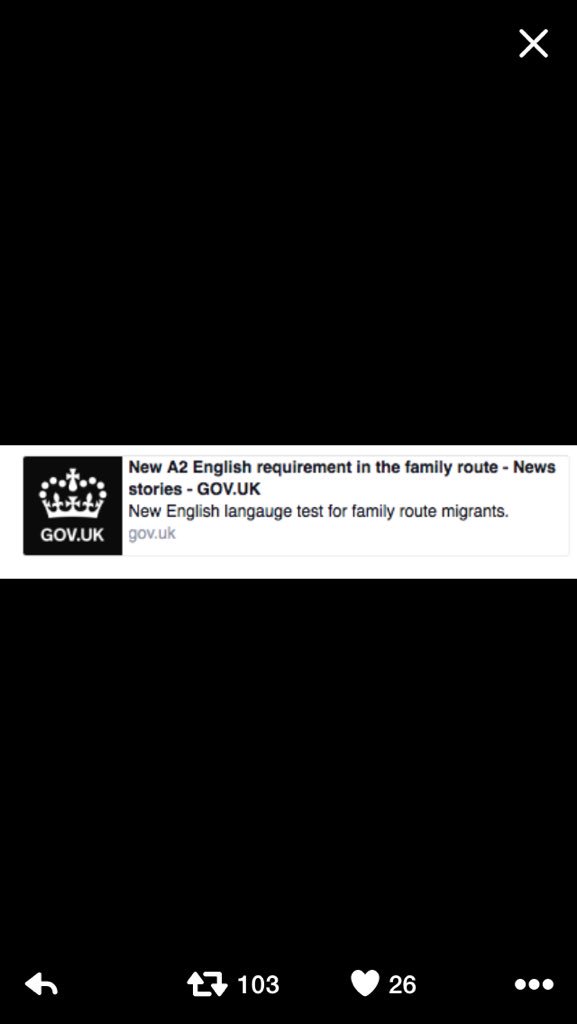 Many of the responses to the ideas concentrated on the fact that at the same time as Cameron is pushing for English to be learned, he has managed to slash budgets for ESOL teaching, thus reducing the chance of non-English speakers actually learning the language. Others noted that along with an encouragement to learn English, the threat of deportation was also lurking. They pointed to the line "We will now say if you don't improve your fluency, that could affect your ability to stay in the UK". Tied to the apparent encouragement for Muslim women to learn English was also a threat to punish them. And why single out Muslim women? Would English ex-pats who live in Spain but don't speak a word of the local language beyond "cerveza" be deported by the Spanish authorities for not speaking a word? And would the knuckledragging keyboard warriors of far-right organisations - born, bred, and supposedly educated, in this country - be sent back to their mums for not being able to spell "Go hoam immagrnat"?
Finally, Anita Anand noted that the UK government website couldn't actually manage to spell "language" properly in its own tweet. D'oh!
Obviously, English can be a unifying and integrating force for good: if we can all talk to each other, the argument goes, we can all start to get along. But the imposition of English on people has a long history of problems. English is not just a language of the world because it's flexible and absorbent (like your favourite kitchen roll) but because it has often been accompanied with political and social systems that have forced it on others, often at the end of a gun. There's nothing intrinsically better about an English speaker than someone who speaks French, Cantonese or Yoruba, but many still cling to the colonial belief that English can be a "civilising force" on Johnny Foreigner.
But English can also be something that allows people to feel part of a wider community and that's why so many people want to learn it - in the UK and beyond - and one reason why teaching English as a second language is so important. If Cameron were really serious about the power of language, he wouldn't be singling out one group of people or cutting funding to ESOL and the FE sector that are so vital in its provision.
Edited to add:
Frank Monaghan has written an article here which is worth a read.
Many of the responses to the ideas concentrated on the fact that at the same time as Cameron is pushing for English to be learned, he has managed to slash budgets for ESOL teaching, thus reducing the chance of non-English speakers actually learning the language. Others noted that along with an encouragement to learn English, the threat of deportation was also lurking. They pointed to the line "We will now say if you don't improve your fluency, that could affect your ability to stay in the UK". Tied to the apparent encouragement for Muslim women to learn English was also a threat to punish them. And why single out Muslim women? Would English ex-pats who live in Spain but don't speak a word of the local language beyond "cerveza" be deported by the Spanish authorities for not speaking a word? And would the knuckledragging keyboard warriors of far-right organisations - born, bred, and supposedly educated, in this country - be sent back to their mums for not being able to spell "Go hoam immagrnat"?Finally, Anita Anand noted that the UK government website couldn't actually manage to spell "language" properly in its own tweet. D'oh!
Obviously, English can be a unifying and integrating force for good: if we can all talk to each other, the argument goes, we can all start to get along. But the imposition of English on people has a long history of problems. English is not just a language of the world because it's flexible and absorbent (like your favourite kitchen roll) but because it has often been accompanied with political and social systems that have forced it on others, often at the end of a gun. There's nothing intrinsically better about an English speaker than someone who speaks French, Cantonese or Yoruba, but many still cling to the colonial belief that English can be a "civilising force" on Johnny Foreigner.
But English can also be something that allows people to feel part of a wider community and that's why so many people want to learn it - in the UK and beyond - and one reason why teaching English as a second language is so important. If Cameron were really serious about the power of language, he wouldn't be singling out one group of people or cutting funding to ESOL and the FE sector that are so vital in its provision.
Edited to add:
Frank Monaghan has written an article here which is worth a read.
Saturday, November 07, 2015
A Word of Warning
While some changes to language are roundly condemned by pedants, purists and prescriptivists - creaky voice, rising intonation, split infinitives and literally not actually meaning LITERALLY AT ALL - new words often get an easy ride. People generally like new words and can see why they appear in the language, even if some of them seem a bit silly (Awesome sauce and amazeballs? Really?) or likely to last as long as a David Cameron promise on tax credits (dadbod and mantihose?). In fact, new words now get wall-to-wall media coverage.
So, this week we have seen the latest additions to the Collins Dictionary feature in pieces such as this (from the Dictionary-makers themselves), this from The Guardian, this from the BBC and this from the Daily Fail.
But among the hype and the celebration of an evolving and vibrant language, naysayers complain that some of the new entries are just trendy fads, too ephemeral to be included in esteemed dictionaries.
As Robert Lane Greene explains in a blog for The Economist, the whole process of putting new words in a dictionary is quite an intensive exercise, admittedly now made much easier by the internet: something that early lexicographers could have only dreamt of. A further explanation is given in this helpful video clip from Oxford University Press, which describes how a new word (in this case selfie) might enter their dictionaries. As the clip explains, the naysayers are partly right that things have been changing faster than before, because the new words don't have to have had a very long existence before being added to the online versions of the dictionaries. But in a way, that just reflects the rapid pace of lexical change these days. Perhaps, as John Sutherland argues in this article, language is "evolving at a faster rate now than at any other time in history because of social media and instant messaging".
Is this rapid change leaving some behind? One argument often put forward by more prescriptively-minded people is that if language changes too fast, we lose mutual intelligibility; in other words, one generation may not understand the language of another. Older people (anyone over 30) will lose any semblance of understanding of what young people are talking about, goes the argument, and that will lead to social breakdown and chaos. Indeed, this is the argument peddled in rather dubious articles like this one in yesterday's Daily Fail which claims that parents haven't a clue what their kids are saying because they're using a secret sex and drugs code, grandad!
For example, the seemingly innocuous "netflix and chill" now takes on much more sinister connotations. The innocent Snapchat message from your teenage daughter to her bae saying "Do you want to come over? We could Netflix and chill." actually means "Buy drugs, come to my boudoir and let's have hours of dangerous chemsex". Apparently.
The fear that young people's language is constantly evolving as a nefarious means of hoodwinking their prying parents or to hide other dubious activities (smoking tobacco, drinking alcopops and playing CoD until after bedtime) is one that has been around forever. This piece in The Daily Telegraph from 2013, this one from the Daily Fail (again... almost like they don't like young people), or even these from as far back as the 17th Century, all say similar things.
And if people have been complaining about it and we still manage to communicate fairly effectively with each other after all this time, surely the doom-mongers are barking up the wrong tree.
So, this week we have seen the latest additions to the Collins Dictionary feature in pieces such as this (from the Dictionary-makers themselves), this from The Guardian, this from the BBC and this from the Daily Fail.
But among the hype and the celebration of an evolving and vibrant language, naysayers complain that some of the new entries are just trendy fads, too ephemeral to be included in esteemed dictionaries.
As Robert Lane Greene explains in a blog for The Economist, the whole process of putting new words in a dictionary is quite an intensive exercise, admittedly now made much easier by the internet: something that early lexicographers could have only dreamt of. A further explanation is given in this helpful video clip from Oxford University Press, which describes how a new word (in this case selfie) might enter their dictionaries. As the clip explains, the naysayers are partly right that things have been changing faster than before, because the new words don't have to have had a very long existence before being added to the online versions of the dictionaries. But in a way, that just reflects the rapid pace of lexical change these days. Perhaps, as John Sutherland argues in this article, language is "evolving at a faster rate now than at any other time in history because of social media and instant messaging".
Is this rapid change leaving some behind? One argument often put forward by more prescriptively-minded people is that if language changes too fast, we lose mutual intelligibility; in other words, one generation may not understand the language of another. Older people (anyone over 30) will lose any semblance of understanding of what young people are talking about, goes the argument, and that will lead to social breakdown and chaos. Indeed, this is the argument peddled in rather dubious articles like this one in yesterday's Daily Fail which claims that parents haven't a clue what their kids are saying because they're using a secret sex and drugs code, grandad!
For example, the seemingly innocuous "netflix and chill" now takes on much more sinister connotations. The innocent Snapchat message from your teenage daughter to her bae saying "Do you want to come over? We could Netflix and chill." actually means "Buy drugs, come to my boudoir and let's have hours of dangerous chemsex". Apparently.
The fear that young people's language is constantly evolving as a nefarious means of hoodwinking their prying parents or to hide other dubious activities (smoking tobacco, drinking alcopops and playing CoD until after bedtime) is one that has been around forever. This piece in The Daily Telegraph from 2013, this one from the Daily Fail (again... almost like they don't like young people), or even these from as far back as the 17th Century, all say similar things.
And if people have been complaining about it and we still manage to communicate fairly effectively with each other after all this time, surely the doom-mongers are barking up the wrong tree.
Tuesday, November 03, 2015
I wonder if we can talk about requests...
Last night I went to a talk, and today I’m blogging about it. The University of York Linguistics Society hosted a talk by Professor Paul Drew from Loughborough University, and since he’s a bit of a big deal in Conversation Analysis, I thought I’d go along. Some of the talk’s content might be of some use to A-Level English Language analyses, so here (in some shape or form) are my generalisations.
The theme of the evening was ‘requests’ (so, aiming to get someone else to do something for us, like asking for a lift), specifically in conversation. Towards the beginning of his talk, Paul quoted Levinson: “language delivers action, not meaning”. It was a little mysterious at first, but it was fascinating to witness this quote unravel throughout the course of the evening. Obviously, language does carry meaning, but it was implied that its primary purpose is to act in some way.
Drew has done a lot of research on telephone call interaction, and therefore we are talking about these requests in the context of telephone conversations. He compared two types of context where we might be making phone calls: informal contexts (e.g. among friends) vs. more formal institutional contexts (key examples of these he gave were out-of-hours calls to doctors and calls to the police).
Broadly speaking, Drew claimed that we tend to begin our requests in an informal context with a modal form (like ‘Could you…’/‘Can you…’), whereas we often tend to go for ‘I wonder if…’ in the institutional context. This comparison can be explained with a continuum of request forms he then went on to talk about…
Continuum of request forms
High entitlement/Low contingency High contingency/Low entitlement
Imperatives I need you to.. Modals (Could../Can..) I wonder if…
As we can see from the above continuum, we can talk about request contexts in terms of degrees of entitlement and contingency. Contingency, in this setting, is about the requester’s knowledge or awareness of the difficulties that might be involved if the ‘requestee’ were to carry out the action.
If we start at one end of the scale (the left side), in high entitlement and low contingency contexts, we can appropriately find imperatives. The simple example Drew gave was in a lecturer-student context. It might be fine to say ‘Pass me that pen’. In that kind of scenario, there is a power relationship where there may be a high level of entitlement. The low contingency might come from the fact that there’s a pen lying on the desk which isn’t being used, and so it isn’t seen as much of a sacrifice to the student to carry out the requested action. Basically, the requester is in a more powerful position, and the request isn’t seen to be a big deal.
On the other side of the spectrum (the right side), we have high contingency and low entitlement. Here, the out-of-hours doctor calls can demonstrate this kind of context. The example Drew provided us with was a man calling with back pain and requesting a doctor to come and visit him with ‘I wonder if you’d come out’. In this kind of scenario, the requester is not necessarily familiar with what’s involved and so quite a conservative (high contingency) form of request has been used, along with the low entitlement, because the doctor, in this case, is seen to be the more knowledgeable party.
Having briefly explored this continuum, we can return to the broad claim Drew made early on, which generalised over the request forms we might make with friends versus those we might make in an institutional context. We’ve just seen an example of an informal setting where ‘I wonder if…’ was used. When we are requesting among friends or family, often we have a better idea of what is involved for that person if the action was carried out, and the power distance is likely to diminish. This means that we can see many situations among friends, where ‘Could you…’/‘Can you..’ might be appropriate, because they are a little further up the scale.
Drew explored a number of telephone calls where these sorts of situations were evaluated and the request form was analysed in relation to it. Of course exceptions were pointed out and more discussion followed, but I think this is a great framework to start us off when we’re looking at requests.
Wednesday, October 21, 2015
Accent’s Place and Placing Accent in Forensic Science
This post aims to bring some application value to the accent strand newly introduced to A’Level English Language. Accent and dialect differences are of course interesting in their own right. However, they can also be useful to real-life applications. Here, I’m going to shed light on just one of these: forensic speech science.
Forensic speech practitioners analyse recordings which might feature as evidence in legal casework. Often, it’ll be telephone calls and we want to answer various questions about the speaker or what was said. One task analysts might be asked to do is called ‘speaker profiling’. Speaker profiling is the task of extracting various identifying information about the speaker in the recording. We could think about this in the context of a ransom telephone call, for example, where we don’t have any information about the speaker, but we want to narrow down the pool of possibilities to assist investigative teams. Information like where the speaker is from, or what speech community he/she belongs to, could be really useful to a cause. A thorough analysis of the speaker’s accent can help us to do this. Outlined below are a couple of real-life cases where speaker profiling/accent analysis played a part.
Case 1: The Yorkshire Ripper
The most famous case involving forensic speaker profiling dates back to the late 1970s - The Yorkshire Ripper case. Around this time, and over a the course of a few years, a serial killer was at large, brutally murdering women across Yorkshire. The lead investigator for the case, George Oldfield, received a recorded message from a male claiming to be the Yorkshire Ripper. Below is what the speaker in the recording said:
I’m Jack. I see you have no luck catching me. I have the greatest respect for you, George, but, Lord, you are no nearer catching me now than four years ago when I started. I reckon your boys are letting you down, George. They can’t be much good, can they? The only time they came near catching me was a few months back in Chapeltown when I was disturbed. Even then it was a uniformed copper, not a detective. I warned you in March that I’d strike again. Sorry it wasn’t Bradford, I did promise you that I couldn’t get there. I’m not quite sure when I’ll strike again but it will be definitely some time this year, maybe September or October, even sooner if I get the chance. I’m not sure where. Maybe Manchester, I like it there, there’s plenty of them knocking about. They never learn, do they, George? I bet you’ve warned them, but they never listen. At the rate I’m going, I should be in the book of records. I think it’s eleven up to now, isn’t it? Well, I’ll keep on going for quite a while yet. I can’t see myself being nicked just yet. Even if you do get near, I’ll probably top myself first. Well, it’s been nice chatting to you, George. Yours, Jack the Ripper. No good looking for fingerprints, you should know by now it’s clean as a whistle. See you soon. Bye. Hope you like the catchy tune at the end. Ha Ha.
This is when Stanley Ellis, a leading dialectologist, was brought in to lend a hand with some expert analysis. With the belief that they had a recording of the perpetrator, they thought that they could identify him. Stanley Ellis’s spanning experience in dialectology and fieldwork equipped him to be able to make an initial broad diagnosis of the speaker’s accent, saying that the speaker sounded like he was from the general Sunderland area in the North-East of England. Using various cues from the recording, Ellis was able to pinpoint, to a finer degree, where he believed the speaker in the recording was from. In his account of the case, here are some cues Ellis used to do this (remember that these were of relevance to these particular varieties back in the 1970s - accent features may have changed since then):
- The vowel quality of the pronoun ‘I’ suggested that Ellis could perhaps eliminate Tyneside or North Yorkshire as possible areas. If the speaker were from Tyneside or Yorkshire, we could perhaps expect an elongated version of the vowel we find in ‘cat’.
- The word ‘strike’ was another useful clue. The speaker’s pronunciation of the vowel in this word was closer to what we would expect in, say, Received Pronunciation, than what we might expect from the spoken variety in the north of County Durham. Typically, speakers in this area would produce a similar vowel to what we might hear in RP ‘steak’ (roughly speaking). This observation therefore meant that the speaker was unlikely to be from north County Durham.
- Also of note was the fact that the speaker in our mysterious recording h-dropped (so, not pronouncing the /h/ in the words ‘have’ and ‘hope’). Having researched this area, Ellis was able to suggest that this means that the speaker is unlikely to be from areas north of the River Wear, where h-dropping is less common.
All kinds of these sorts of cues came together, along with further data collection from this part of the country, to home in on two possible areas: Southwick or Castletown. It is important to note that these kinds of analyses only offer an indication, rather than ground truth results. Forensic analysts present their conclusions in terms of likelihoods.
Based on the outcomes of Ellis’s analysis, police investigation efforts targeted Southwick and Castletown, but there was no luck in identifying a specific individual. However, in 1981, police arrested Peter Sutcliffe, a lorry driver from Bradford (with a Bradford accent), who, it turned out, was responsible for the murders. The tape recording was a hoax, and it wasn’t revealed who the hoaxer was until 2006 - John Humble. Because of advances in techniques, forensic scientists were able to find a DNA match that police had stored from a minor incident Humble was involved in in 1991. It turned out that Humble was indeed from near the areas Ellis had identified. Unfortunately, however, the distraction this hoax created at the time of the Yorkshire Ripper investigation meant that the Yorkshire Ripper was able to go on to murder three more women.
Case 2: Mysterious Bomb Threats to Mr HOW
This case is about 40 year-old Richard Carl who lived 12 miles away from Philadelphia in the US. This case brings together elements of speaker profiling, as well as more specific speaker comparison elements. His wife had been laid off from her job at a company called Mr HOW. Richard Carl called the company and spoke to the supervisor to express that he thought his wife had been unfairly treated. Within a short period of time after this phone call, four phone calls were made to the local police and fire departments claiming that there were bombs and fires at Mr HOW. Richard Carl was accused of making these obscene phone calls, and at this point, Sharon Ash was brought in to make an analysis of the recorded threatening calls with Richard Carl’s speech.
Having closely analysed Carl’s vowels, Ash could confidently express that Carl showed the details of a typical speaker of Philadelphia English. Ash could then analyse the speech of the bomb threat caller and compare the two speakers’ pronunciations. One example of the sort of features Ash looked at was the vowel in ‘gonna’. Ash was able to compare the pronunciation of the first vowel in this word for both the bomb threat caller and Carl. She spotted that while Carl’s vowel matched with the vowels you would find in ‘on’ or ‘off’, the bomb threat caller produced something more like ‘gunna’.
This analysis contributed to Carl’s overall case, and he was acquitted (as a result of a combination of factors).
Practical Challenges
For both Case 1 and Case 2, the accents involved had been previously studied and documented in academic research. We don’t always have access to the sociolinguistic expertise to indicate the specific featural diagnostics which point us towards an overall accent label. For example, in a case, we might have accent varieties which have never been visited in academic research before. Forensic casework, in its nature, is very unpredictable, and caseworkers could be asked to work on anything. As well as this, we know that accents and dialects change, and they change rapidly. This means that our documentation of varieties becomes outdated, and therefore invalid, quite quickly.
My own research aims to make improvements to the way forensic practitioners conduct the speaker profiling task. I have developed the Y-ACCDIST system. Y-ACCDIST is a software tool which can be trained on a database of accents, to then identify what the systematic differences are between these varieties. Given a speech sample of interest, Y-ACCDIST will then process and classify the unknown speaker into one of the previously trained accents. It doesn’t work 100% of the time (I’m not completely deluded), but technological developments are (hopefully) being made in the right direction. The intention is not to replace the forensic analyst in these speaker profiling tasks, but to have the analyst and Y-ACCDIST work in conjunction with one another.
When attitudes to accent might matter
The cases above illustrate how, by being analytical about speakers’ accents, we can perhaps provide an evidential contribution. However, our attitudes to accents can also be significant in a legal context. James Tompkinson and Katherine Weinberg at the University of York are currently researching into this nook of the field. James is looking into listeners perceiving threats. More specifically, he’s looking into how the speaker’s accent affects how threatening the listener finds certain utterances. For example, does a speaker with a Cockney accent come across as more threatening than a speaker of RP? Developing our understanding of this could be valuable to court cases where threats are involved.
Katherine has been looking at threatening speech/language in the context of Anglo Americans’ perceptions of African Americans. Recent relevant cases might include the shooting of Walter Scott, an African American who was shot by law enforcement. It was claimed the the officer responsible felt threatened. However, video footage did not indicate that the victim was threatening the officer in any way. Removing physical appearances from the equation, are there elements of African American speech that Anglo Americans perceive as threatening? Katherine has been analysing phonetic, lexical and grammatical aspects of African American speech and what listeners may associate with these.
With any luck, this post has provided some insight into the murky world of forensic speech science, with particular attention paid to accent analysis. There are many more types of task which forensic analysts have to contend with, but I think this post offers some justification to studying accents. They’re not just interesting, but studying them can also be useful.
Sunday, October 18, 2015
Paper 2: accent, dialect, sociolect and occupational discourse
If you're looking for material on the topics for paper 2 of the new AQA English Language spec, there'll be some posts coming up after half-term. There's plenty on the blog already, though but it's labelled using the old specifications.
- So, if you're looking for stuff on regional variation, try here.
- Accent material can be found here.
- For social variation - class and social groups, try here and here.
- For occupation and language, try here and here.
- And for gender and language, try here.
- And for Language Discourses and attitudes to variation try here and here (but be aware that language change, ethnicity and world Englishes are A-level only topics and don't appear in the AS level).
Analysing meanings and representations 2
In the textual analysis post yesterday I focused on how to analyse language to look at meanings and representations. In this post, I'll take a look at the ways in which you can explore how different opinions and views are put forward in texts and how you can start to do good AO1 and AO3 work on different kinds of texts.
Again, this focuses primarily on Questions 1 and 2, where you are encouraged to look closely at how language creates meanings and representations. On one level, as I said in yesterday's post, this means getting a sense of how the overall subject of each text is being represented. If the topic of the text is the natural environment, how is this topic being represented?
Here is an example taken from a Wildlife Trust leaflet:

Here, you might make the point that the environment is being represented as under threat. How is this achieved? Through a series of different language choices, all contributing their own meanings to an overall representation.
For example:
Overall, these combine to create a particular set of ideas about the situation.
Another kind of text offers you different angles to explore. The text above represents an idea with just one voice, but many texts - for example, spoken conversations and online message boards - give you different people's views, and these are worth looking at in more detail because they might use language in different ways to represent different ideas. Equally, they might share similar views and put them forward with a degree of similarity.
Here's an example of a couple of posts on the Mumsnet forum, that are about school proms (the same topic as the sample AQA AS paper for Paper 1). Look at how the opinions are expressed here, how the posters create particular meanings and offer different representations of their views and the topic as a whole:
The poster 'mumblechum' expresses her (appalled) view of the picture that has been posted using the adjective phrase "utterly chavtastic" in an exclamative sentence, while 'thursdaynamechange' makes use of the emojis on the forum to put forward a representation of her own face (a bit like you might do in a spoken conversation) before ending with a simple sentence that also makes use of a negative adjective phrase "utterly ridiculous".
They both have a very negative view of the lengths to which some people go to impress others at a school prom and make their views very clear with these language choices. What does 'chavtastic' mean? Why choose that adjective, rather than (say) 'chavvy'? Why has the second poster emboldened "primary school" and put scare-quotes around 'environmental'? What do these mean? And how do they work together to represent a view?
There are quite a few other things that you could look at here, as the two posters are not just talking about school proms and how much money some people spend on them, but are also representing themselves (and their daughters) as particular kinds of people. They are using language not just to express ideas, but to position themselves too. This is something we'll have a look at in more detail in some posts later this week.
Again, this focuses primarily on Questions 1 and 2, where you are encouraged to look closely at how language creates meanings and representations. On one level, as I said in yesterday's post, this means getting a sense of how the overall subject of each text is being represented. If the topic of the text is the natural environment, how is this topic being represented?
Here is an example taken from a Wildlife Trust leaflet:

Here, you might make the point that the environment is being represented as under threat. How is this achieved? Through a series of different language choices, all contributing their own meanings to an overall representation.
For example:
- the graphology anchors the themes being talked about and presents us with a clear picture of what is under threat
- the vocabulary uses a lexical field of nature and keeps the focus squarely on key areas, while there are quite specific references to breeds of bird, types of environment and precise figures
- vocabulary choices like the adjective 'iconic' help to represent the natural environment as part of the UK's heritage
- the grammar helps to present the threat as current and ongoing through the present progressive verb phrase "are disappearing" and as a victim of external forces through the passive voice in the second box "...has been lost"
Overall, these combine to create a particular set of ideas about the situation.
Another kind of text offers you different angles to explore. The text above represents an idea with just one voice, but many texts - for example, spoken conversations and online message boards - give you different people's views, and these are worth looking at in more detail because they might use language in different ways to represent different ideas. Equally, they might share similar views and put them forward with a degree of similarity.
Here's an example of a couple of posts on the Mumsnet forum, that are about school proms (the same topic as the sample AQA AS paper for Paper 1). Look at how the opinions are expressed here, how the posters create particular meanings and offer different representations of their views and the topic as a whole:
 |
| from http://www.mumsnet.com/Talk/teenagers/a954953-School-Prom-outrageous-expectations |
The poster 'mumblechum' expresses her (appalled) view of the picture that has been posted using the adjective phrase "utterly chavtastic" in an exclamative sentence, while 'thursdaynamechange' makes use of the emojis on the forum to put forward a representation of her own face (a bit like you might do in a spoken conversation) before ending with a simple sentence that also makes use of a negative adjective phrase "utterly ridiculous".
They both have a very negative view of the lengths to which some people go to impress others at a school prom and make their views very clear with these language choices. What does 'chavtastic' mean? Why choose that adjective, rather than (say) 'chavvy'? Why has the second poster emboldened "primary school" and put scare-quotes around 'environmental'? What do these mean? And how do they work together to represent a view?
There are quite a few other things that you could look at here, as the two posters are not just talking about school proms and how much money some people spend on them, but are also representing themselves (and their daughters) as particular kinds of people. They are using language not just to express ideas, but to position themselves too. This is something we'll have a look at in more detail in some posts later this week.
Saturday, October 17, 2015
Meanings and representations
Paper 1 of the new AQA AS and A level focuses on ideas about how language creates meanings and representations, so I thought it might be useful to look at what could be meant by these terms and what the difference might be.
I suppose the first point to make is that the focus of the first two questions is now very much on how language is used (AO1) to create meanings and represent the topic (AO3), rather than on the types of texts they are (which now comes under the remit of Question 3 and the new AO4).
AO1 and AO3 are quite distinct on the new specification, so you can pick up AO1 marks for labelling and exemplifying word classes, sentence functions and higher level grammar features such as the passive voice, progressive aspect verbs and clause types, but to get AO3 marks you need to explain what these language features do.
For example, you could get yourself a Level 5 mark (9 or 10 AO1 marks) by identifying (correctly!) something like the following range of language features: noun, verb, adjective, 2nd person pronoun, present tense verb, simple sentence, a minor sentence and a relative clause. But if you left it at that, you'd probably get something like 2-3 marks out of 15 for AO3 at best. What we need to see is some useful discussion of what each of these actually means in its context - not just catch-all generalisations such as "The 2nd person pronoun makes the text more personal." - and (crucially) how they help create a representation of whatever it is that's being discussed. Take the example from a Cancer Research UK below:
 If you describe the first sentence as a simple sentence that uses the present progressive, you'll get some good AO1 marks. But to get some AO3 marks, think about what this helps represent: the charity is shown as engaged in an ongoing battle, a fight that they are now taking to the disease and its effects on people. The whole idea of finding cures and treatments for cancer is represented (unhelpfully perhaps?) as a war and the charity and disease as two opposing forces.
If you start with AO3 this time, you might then move on to talk about how time is represented in the rest of the extract above. Several adverbials of time are used: "for a long time", "someday soon" and "anymore". Why are these important? They seem to suggest that time is important and that a turning point is about to be reached.
There's plenty more you could look at in this short extract or in other parts of the ad (like below) but this is a start and (I hope) illustrates what's needed at this level.
 So, what's the difference between meanings and representation? To my mind, it's the difference between looking at the possible effect of a single language choice (e.g. the use of different pronouns to show separate sides) and the overall effect of a number of these choices on how the topics are shown to us (cancer as an opponent in a battle; Cancer Research as an organisation fighting on our behalf).
There will be another post soon, looking at other approaches to meanings and representations.
I suppose the first point to make is that the focus of the first two questions is now very much on how language is used (AO1) to create meanings and represent the topic (AO3), rather than on the types of texts they are (which now comes under the remit of Question 3 and the new AO4).
AO1 and AO3 are quite distinct on the new specification, so you can pick up AO1 marks for labelling and exemplifying word classes, sentence functions and higher level grammar features such as the passive voice, progressive aspect verbs and clause types, but to get AO3 marks you need to explain what these language features do.
For example, you could get yourself a Level 5 mark (9 or 10 AO1 marks) by identifying (correctly!) something like the following range of language features: noun, verb, adjective, 2nd person pronoun, present tense verb, simple sentence, a minor sentence and a relative clause. But if you left it at that, you'd probably get something like 2-3 marks out of 15 for AO3 at best. What we need to see is some useful discussion of what each of these actually means in its context - not just catch-all generalisations such as "The 2nd person pronoun makes the text more personal." - and (crucially) how they help create a representation of whatever it is that's being discussed. Take the example from a Cancer Research UK below:

If you start with AO3 this time, you might then move on to talk about how time is represented in the rest of the extract above. Several adverbials of time are used: "for a long time", "someday soon" and "anymore". Why are these important? They seem to suggest that time is important and that a turning point is about to be reached.
There's plenty more you could look at in this short extract or in other parts of the ad (like below) but this is a start and (I hope) illustrates what's needed at this level.

There will be another post soon, looking at other approaches to meanings and representations.
Tuesday, September 15, 2015
Fry up
Over the summer, you might have read about vocal fry; that’s
the kind of deliberately croaky voice demonstrated here by my favourite sit-com
teenager, Dalia in Suburgatory. Recent coverage of vocal fry has all the
features of typical media stories on language and gender, and is a great
example of why we should be sceptical when reading mainstream media coverage of
linguistic issues. Reading and
analysing mainstream media coverage of linguistic issues is, of course,
something A2 students will need to do in
your exam; you’ll also need to create your own piece for your intervention
coursework.
First, newspapers will pick up on a recent bit of linguistic
research, or maybe something they've seen mentioned on Twitter or YouTube. Journalists are particularly keen on using
headlines which express a clear and simple difference between men and women, so
they will either reduce complex, nuanced findings to simplistic ‘men do this/women
do that’ headlines like this,
or base an article around a flawed bit of research like this. The wonderful Deborah Cameron outlines this
process at length in her snappily titled blog post (which btw would make a
great style model for your intervention) ‘How to Write a Bullshit Article About Women’s Language’.
In the case of vocal fry, it seems that reporters noticed a
story in the academic publication ‘Journal of Voice’. Enterprising journalists realised they could
write a story that combined celebrity click-bait with a
‘men-and-women-are-different’ story and so produced headlines like this
featuring tabloid darlings like Kim Kardashian and Britney Spears. There was even more mileage in the story when
media outlets realised they could use the story to lecture women about how they need to speak more like men, and to blame their failure to do this for inequalities in education
and the workplace. Even feminist writers
in respected, ‘serious’ newspapers got in on the act, presenting the story as a
rallying call to young women; stop talking like a weak and feeble girl!
Never mind the fact that the original research only looked
at young women, and so provided no evidence that only young women use vocal
fry. Never mind the easily demonstrable
fact that men use vocal fry too, as shown in this brilliant post. Never mind the fact
that the original research only looked at young women, and so provided no
evidence that only young women use vocal fry.
Never mind the fact that vocal fry is only seen as a sign of weakness
when women use it.
The lesson here is not to take media coverage of women’s
language (or, indeed, any linguistic issue) at face value. Instead,
do a bit of digging and reading around.
And if you want a different perspective on women’s language, you can
always rely on Professor Cameron.
Subscribe to:
Posts (Atom)
Follow EngLangBlog on Bluesky
The old Twitter account has been deleted (because of both the ennazification and enshittification of that site) so is now running on Bluesk...

-
 As part of the Original Writing section of the NEA, students will be required to produce a commentary on their piece. This blog post will pr...
 -
As lots of students are embarking on the Language Investigation part of the Non-Exam Assessment, I thought it might be handy to pick up a fe...
-
I'm on a roll. Nothing from me for ages, then three posts come along! This is a lovely story from the Kenya Times about a dialect called...